Héctor Ríos Trailers
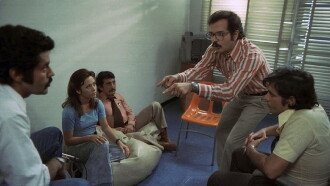
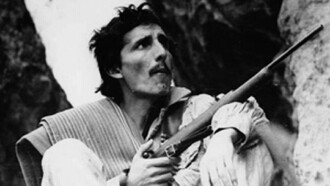
The Wandering Soap Opera TrailerStreet Theatre, My Captain TrailerEl hombre que imaginaba Trailer
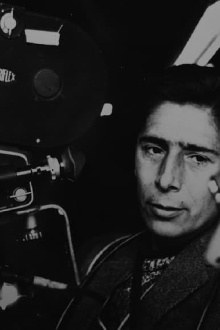
Héctor Ríos was one of the most important names in Chilean cinema in its history.
Héctor Ríos is remembered for his transcendental work as director of photography in major films such as El Chacal de Nahueltoro, Los Testigos and La Frontera. Films where his work behind the lens was fundamental to his praised results.
In addition, in partnership with Pedro Chaskel, he directed three important documentaries: Aquí vivieron (1964) Venceremos (1970) and Entre ponerle y no ponerle (1971); plus a short film with illustrations called Érase una vez (1965). All of them were works with a deep interest in making cinema an art that reflected social injustices with a conscious and transforming zeal.
Born in the port of San Antonio on November 23, 1927, Héctor Ríos studied electronics at the Universidad Técnica del Estado during the 1950s. Unsatisfied, he drifted almost spontaneously to photography and lighting, obtaining a scholarship that allowed him to go to Italy and be admitted to the prestigious Centro Sperimentale di Cinematografia di Roma, where the influential Italian neo-realism was boiling. With such training and a wealth of experience he returned to the country to join the incipient documentary movement that was stirring up the waters of filmmaking in the early 1960s. In 1964 he entered the Universidad de Chile's film department where he directed several documentary works, before making the work that would make him famous in 1968: the photographic direction of The Jackal of Nahueltoro.
After continuing to work on various documentaries of the time and on feature films with directors such as Charles Elsseser (Los Testigos) and Raúl Ruiz (La Colonia Penal), the 1973 military coup forced him into exile. He first went to Peru where he filmed El enemigo principal with Jorge Sanjinés, a great Bolivian filmmaker and one of the greatest in the continent. Later he would settle for a decade in Venezuela where he developed a wide professional work in long and short films and also as a teacher. He published his only book there, Técnica fotográfica en el cine.
Back in Chile, he returned to the foreground with the photography of La Frontera, Ricardo Larraín's first film, where he now makes clear his mastery of color filmmaking. Again he works with Raúl Ruiz in the film El Infierno and directs two new documentaries, one dedicated to his friend the late actor Pepe Duvauchelle and the other to the admired writer Francisco Coloane.
In the 1990s he added his teaching work in the country, which he had previously divided between Peru, Cuba and Colombia. His workshops quickly became a point of reference for young people interested in photography. In 2007 he was recognized with the Pedro Sienna Award to the trajectory.
In 2008 he undertook a long and tiring journey through Europe to film a series of four episodes for television dedicated to the work of Leonardo, under the direction of Vittorio di Girolamo. In January 2011, Ríos de luz was released, a short documentary film dedicated to his work, made by filmmaker Magali Meneses.
His last years were dedicated to teaching in the region of Valparaiso, where he stayed to live and where he died, the morning of March 15, 2017 at his home in Viña del Mar.

Most Popular Héctor Ríos Trailers
Total trailers found: 35
01 January 1970
A foreign journalist arrives on a small Pacific island 200 miles off the coast of South America. Once a leper colony, the island was later transformed into a prison and then, under U.
04 December 1967
Feature film that wraps, through Jorge Lillo's text, three short films by Helvio Soto
20 August 2011
At the beginning of the summer of 1986, a group of actors and actresses directed by Andrés Pérez, put on the street the play “All these years” presented in front of the Cathedral of Santiago, the Bellavista neighborhood, the La Bandera district, the Parque O'Higgins, Plaza del Mulato and many other places in Santiago.
24 January 1979
Portable Country is a classical Venezuelan film about the urban guerrilla. Based on the novel of the same name, written by Adriano González León, the film centers on Andrés Barazarte, a disillusioned man from a wealthy landowning family, who grapples with his personal and political identity in the midst of Venezuela's tumultuous social changes and engages in the guerrilla.
12 November 1969
This documentary shows the inhuman conditions on which the patients of Iquique's Psychiatric Hospital live.
01 January 1969
Through images showing the precarious conditions in which the poorest families in the country live, and the testimonies of the mothers themselves, a denunciation of child malnutrition in Chile is made.
06 March 1991
These six video segments (10 minutes each) were originally developed for broadcast on Channel 4 as the second installment in the larger, never completed, series comissioned for Peter Greenaway and Tom Philips' A TV Dante (1989).
19 October 1965
A docudrama based on the family planning policies for the population with limited resources. A low-income lady resorts to clandestine ways to get an abortion.
15 October 1998
A Reality Show TV host tired of the sensationalist routine of this kind of programs and confident ind
15 September 1961
A family on the brink of bankruptcy decides to do dirty jobs undercover by the government to overcome their condition.
03 August 1965
A maid loses all her jobs because her son cries at night, and that bothers her bosses. The play portrays the wandering and desperation of the protagonist to get a job, which ends in her failed attempts due to the "Angelito".
21 June 1971
This stark Chilean melodrama concerns itself with the plight of slum dwellers living outside Santiago.
01 January 1969
In the late 1960s, hundreds of people living in extreme poverty occupied land on the outskirts of Santiago to build their homes.
11 September 1973
It portrays young people from different social and political classes, and collects their impressions of the context in which they live.
17 June 1971
A documentary about the consequences of consuming alcohol and how it works as a weapon of the bourgeoisie to appease the thirst of the people.
03 August 1965
Two guerrillas (Miguel Littin and Jorge Guerra) wander lost in the desert until one of them dies. A jeep appears in the distance to rescue the survivor, but unable to read the signs of comradeship pointed out to him by the drivers of the vehicle, he shoots them.
01 January 1984
A sharp black comedy that lays bare the contradictions, obsessions, and moral emptiness of a Venezuelan man who has climbed the social ladder through easy money rather than effort.
08 June 1970
A man squanders all of his wife's fortune in gambling and drinking. Now in financial crisis, the woman tries to keep their home afloat, while he plays, gets drunk and lives off his friends charity and good will.
03 August 1965
A poet recites his verses. The people who listen to him, inspired by him, form the Spring Party, which later becomes the Spring Army.
13 May 1972
A sexual harasser goes out with a schoolgirl and after falling into prison, he remembers his childhood and his attacks on young people.
23 January 1964
A poetic film that records the excavations carried out by Swiss ethnologist Jean Christian Spahni at the mouth of the Loa River.
14 August 1976
Gilberto, a young man from the countryside, arrives in the city with the aim of carving out a future for himself.
01 June 1974
In the remote Andean highlands of Peru, a tight-knit indigenous peasant community has endured generations of brutal exploitation by local landowners.
19 March 1980
The intent of novice director Solveig Hoogesteijn to make a drama about two Venezuelans from opposite sides of the economic and social tracks wobbles and weakens in the telling.
25 October 1991
A Chilean teacher, Ramiro, is sentenced to internal exile in a southern town where tidal waves often appear.
02 January 1978
A skilled worker has a sudden nervous breakdown at the company for which he has been working for the last 20 years.
06 September 2018
The film revolves around the concept of soap opera. Its structure is based on the assumption that Chilean reality does not exist, but rather is an ensemble of soap operas.
04 May 1970
Based on an actual murder case that ignited a furious debate over the death penalty in Chile in 1960, this experimental social drama portrays the life and death of an illiterate peasant who, while drunk, murdered the woman with whom he had a relationship and her five children.
20 September 1970
A collage of images showing the two faces of a society. That of poverty and that of wealth. Throughout the documentary, this antagonism is shown: populations in unhealthy conditions, and on the other hand, large showcases with mannequins.
30 April 1982
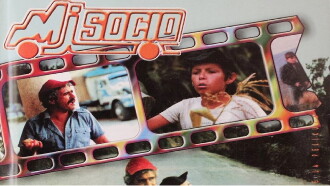
The story of the friendship between a truck driver and a shoeshine boy who occasionally becomes his assistant when they travel together from the agro-industrial area of Santa Cruz to the high Andean basin of La Paz in a truck named "Mi Socio".
01 January 1971
Through the testimony of the victims of the Brazilian dictatorship, and the re-creation of the practices to which they were subjected, the torture suffered by the Brazilian political detainees in their country is denounced.
28 April 1964
A boy goes to his friend's funeral procession. When he realizes that his grave does not have flowers like the others, and that he does not have money to buy them, he goes out looking for some in the streets of Santiago.
01 January 1976
Three centuries of Venezuela's history as a Spanish colony are considered from economic, political and social standpoints; evocations of the past are compared to the present.
11 May 1972
Overview of the forestry workers of Valdivia and Panguipulli. Their testimonies reveal the abuse to which they are subjected.
26 October 1971
In support of the victory of the Unidad Popular, artists create a mural on the Paseo Bulnes, located in front of the Palacio la Moneda.