Helmut Färber Trailers
One Who Set Forth: Wim Wenders' Early Years TrailerAnmerkungen zu OKTOBER TrailerThe Persistence of Vision Trailer


One Who Set Forth: Wim Wenders' Early Years TrailerAnmerkungen zu OKTOBER TrailerThe Persistence of Vision Trailer

Total trailers found: 15

01 January 1974
Helmut Färber makes connections between architecture and film

24 January 2008
The early films of Wim Wenders are now regarded as landmarks of European film. Alice in the Cities, Wrong Move and Kings of the Road became foundations of the German New Wave and cemented the reputation of their director.
01 January 1983
Film scholar Helmut Färber discusses Griffith' A CORNER IN WHEAT.
14 May 1981
An issue of the magazine Kino 81, designed for the film department of WDR by staff of FILMKRITIK
01 January 1989
Film critic and scholar analyzes Jean Renoir's two films "Le Testament du docteur Cordelier" and "Le Déjeuner sur l’herbe".
01 January 1987
Film critic and scholar Helmut Färber recounts the life and work of Robert Bresson
23 October 1988
TV documentary about the bicycle sequence in Ozu`s Banshun (Late Spring)
01 January 1985
Film critic and scholar Helmut Färber recounts the the life and work of Erich von Stroheim
01 January 1995
Film critic and scholar Helmut Färber analyzes the final scene of Eisensteins "October: Ten Days Th"
26 April 1985
Berlin Film Fest 1984. The best place for every cinema fan. Everyone wants to be in on the festival, but that may be really difficult, if one has no accreditation.
10 October 1968
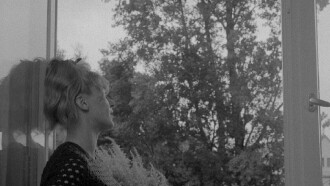
Three sequences are linked together in this short film by Straub; the first sequence is a long tracking shot from a car of prostitutes plying their trade on the night-time streets of Germany; the second is a staged play, cut down to 10 minutes by Straub and photographed in a single take; the final sequence covers the marriage of James and Lilith, and Lilith’s subsequent execution of her pimp, played by Rainer Werner Fassbinder.
07 December 1977
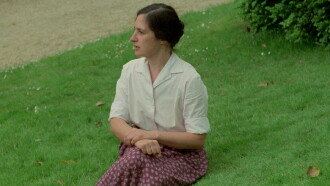
A tribute to Mallarmé that not only asserts the continuing relevance of his work but also confronts its literary ambiguities with political and cinematic ambiguities of its own.
02 June 1972
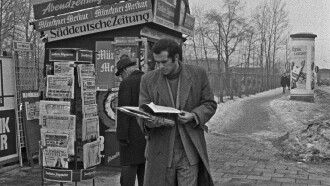
After a long prison term, a free man wanders into a new reality.
