HHK Schoenherr Trailers
Ich hasse, ich liebe Film TrailerPetty-Bourgeois Dracula Idyll at the Family Table TrailerDas nervöse Kino Trailer
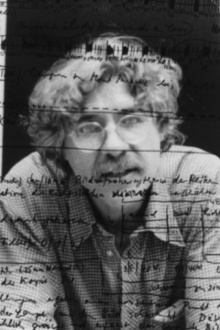
HHK Schoenherr (Hans Helmut Klaus Schoenherr, 1936 - 2014), Swiss artist. He was born in 1936 in Nordhausen (Harz, Germany), which would later be part of the GDR. He spent his childhood in Hamburg and the Schleswig-Holstein region. Between 1956 and 1961, he studied fine arts in Hamburg. In 1967, he participated in the experimental film festival of Knokke (Belgium). Initiator and co-founder of the first European meetings of independent filmmakers in Munich in 1968. One of the inventors of the diagrams of frames (scores that direct the rhythmic shooting of the films). Independent filmmaker and producer of experimental films since 1966.
Most Popular HHK Schoenherr Trailers
Total trailers found: 30
02 September 1979
The film was realized according to the formulaic concept "TAM 4/71."
28 June 1968
The film Autoportrait is made up of four parts: Part 1: Search, Part 2: Work, Part 3: Daydream, Part 4: Family.
19 September 1970
"This film is an attempt in focusing. I visited Kurt Kren in Vienna. (Kurt Kren is considered to be the father of the European underground film.
26 April 1968
"An attempt to make a portrait of my wife." (HHK)
12 November 1968
"This film shows my life with my family in the Triemli high-rise in Zurich." (HHK)
01 January 1967
A short film by HHK Schoenherr
29 December 1967
"I wanted to make a portrait of three artists that would show them by primarily using their surroundings.
12 November 1968
This film is a brief portrait of a young girl. (1968, 16mm, Color, 21 min., Magnetic sound, 16 frames/second.
12 August 1969
The first film made in black-and-white. Made using my own printing technique. Beforehand: This film, which is basically romantic or, even more, a fairy tale film, with carriages, horses, handmade glass lanterns, as solemn as a merry wedding, with an old Rolls Royce standing at a slant completely drunk and whose magnificent big headlights sit crooked on its fenders.
28 June 1968
The film Autoportrait is made up of four parts: Part 1: Search, Part 2: Work, Part 3: Daydream, Part 4: Family.
05 June 1969
"Location: a ballet company, Mrs. Cordua training alone, training together with another person, head exercises, body exercises, leg and arm exercises, supporting herself, working in the ballet room, taking off her makeup in the dressing room, undressing, washing herself carefully, treating all of the sweaty places of her body (armpits, anus, genitalia), getting dressed, opera house corridors, canteen, driving through the city, typical buildings, shops, factory complexes on the way; apartment—opera house and back, her husband reading the newspaper, sitting, lying down, working, smoking, cooking potatoes, eating potatoes, opening the mail, drinking coffee, filming, caring for feat, mouth, while saying something amusing, hand movement (beheading gesture meaning it is finished), a TV film, dancer relaxing in private, smoking, discussing, disparaging, a TV film, drinking tea, the end: that certain shine in Mrs.
28 December 1974
The film was realized according to the formulaic concept "TAM 4/71."
01 January 1968
As a word, play stands for playing, playful, giving full play to your imagination, play-acting style, play at passion, playground, manner of playing, playing for time, phase of play, playing a joke, play document, playing field, playroom, and everything that has to do with film, the film stock, with its color and black/white.
28 January 1972
Experimental film with a doll.
04 October 1971
"In Germany, I bought an old 35mm Debrie camera. I spent several weeks working with this camera and found that its mechanics were marvelously thought out and that the way the camera was made was proof of the skilled craftsmanship back then.
17 September 1970
"Actions of Indication is an intermission film, which means it is a film for the intermissions in movie theaters.
31 December 1969
The film was found in the estate of HHK Schoenherr and digitized as part of the "Swiss Film Experiments" research project.
01 January 1969
Dedicated to Dieter Meier. voice-over by Gregory Markopoulos, reading an excerpt in English translation of Paul Valéry’s L’Homme et la nuit (Man and the Night).
26 January 1978
An experimental biopic that explores the life of Swiss writer Robert Walser. The film deliberately avoids a linear narrative structure and approaches Walser more in the form of a poetic meditation on the life of a poet.
28 December 1967
"I did the takes for this film in the fall of 1966 and in the summer of 1967. I came to know and love the 'old woman' who gave her 'face' in one of the city-run dining halls in Zurich to the first part of the film.
09 April 1979
A short film by Raphaela Schoenherr with HHK Schoenherr.
08 April 1979
Emmental is lovely. To us, it looks like something out of a picture book. And this kind of landscape always has a history.
08 April 1979
"This idyll was made for a Dracula film project by Ernst Schmidt of Vienna, who wrote to various European filmmakers in order to produce a bigger film with their participation.