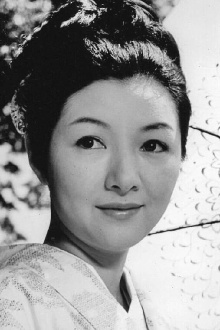
Hideko Takamine Trailers
Oh, My Son! TrailerTwo Iida TrailerLove and Separation in Sri Lanka Trailer
Hideko Takamine (高峰 秀子, Takamine Hideko, March 27, 1924 – December 28, 2010) was a Japanese actress who began as a child actress and maintained her fame in a career that spanned 50 years. She is particularly known for her collaborations with directors Mikio Naruse and Keisuke Kinoshita, with Twenty-Four Eyes (1954) and Floating Clouds (1955) being among her most noted films.
Takamine was born in Hakodate, Hokkaidō, in 1924. At the age of four, following the death of her mother, she was placed in the care of her aunt in Tokyo. Her first role was in the Shochiku studio's 1929 film Mother (Haha), which brought her tremendous popularity as a child actor. She toured as a singer to entertain Japanese troops and, after the war, sang for American occupation troops in Tokyo.
In 1950, she left Shintoho and became a freelance actress. She was especially favoured as leading actress by Naruse, appearing in 17 of his films between 1941 and 1966, which are considered "some of her finest performances."
She married writer-director Zenzo Matsuyama in 1955, but continued her acting career, stating that she wanted to "create a new style of wife who has a job". After retiring as an actress in 1979, she published her autobiography and several essay collections. She died of lung cancer on 28 December 2010 at the age of 86.

Most Popular Hideko Takamine Trailers
Total trailers found: 127
27 August 1941
A "slice-of life" film about a group of high school girls in 1940s Japan.
01 June 1937
Hide-chan (Hideko Takamine) and her family are on a trip to Tokyo. While visiting a fairground, a pickpocket (Kamatari Furukawa) steals the father's wallet.
16 December 1936
The eldest daughter of a noble family is in love with an aviator while being courted by a fellow aristocrat she thinks is a dullard.
28 September 1944
Based on a short story by Dazai Osamu, produced under the national film law. The film's hero falls in love with the youngest daughter of a family he is visiting to arrange an engagement for his friend who has been drafted to fight in the war.
21 February 1939
A rich bourgeoisie family has little care in the world and knows no other lifestyle. It is only the family's second daughter who has an insecure bone in her body and ponders a day when the good times might end.
07 January 1942
A 1942 Jidaigeki by the veteran jidaigeki filmmaker Kunio Watanabe about the legendary warrior Musashibo Benkei
with Hideko Takamine portraying Minamoto no Yoshitsune (who is, of course, a man).
24 April 1940
9th directorial work by Yamamoto Satsuo.
14 January 1943
The Opium War is a 1943 black-and-white Japanese film directed by Masahiro Makino. "Ahen senso" in Japan refers to the First Opium War.
11 March 1938
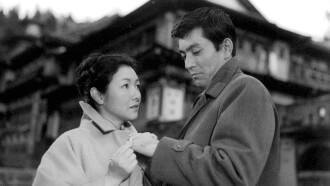
A half brother and sister work at a hotel in Hakone respectively as a porter and a souvenir shop clerk.
01 December 1929
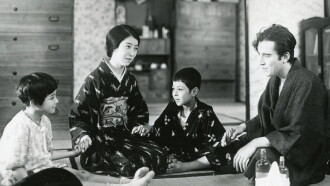
The 1929 Japanese film "Mother" which helped child actress Hideko Takamine become a star.
15 September 1954
From 1928 to 1946, the lives of 12 young people and their school teacher in a poor Japanese village are profoundly affected by historical events and personal circumstances.
28 January 1961
After the Japanese defeat to the Russians, Kaji leads the last remaining men through Manchuria. Intent on returning to his old life, he faces great odds in a variety of different harrowing circumstances as he and his men sneak behind enemy lines.
26 October 1951
Director Hiroshi Inagaki's early version of the life and death of famed swordsman Sasaki Kojiro. Otani Tomoemon gives a brilliant performance as Sasaki Kojiro, who rises from humble beginnings to national fame, and a young Toshiro Mifune appears as the legendary master swordsman Miyamoto Musashi for the first time and essentially sets the standard for future portrayals.
05 March 1953
Where Chimneys Are Seen focuses primarily on the interconnected lives of two couples in a lower-middle-class neighborhood in Senju, a poor industrial section of Tokyo.
11 February 1932
Part two of Shimizu's major silent Seven Seas, a family drama of the intertwining fates of the rich, decadent Yagibashis and the far less prosperous Sone family.
30 November 1936
The eldest daughter of a noble family is in love with an aviator while being courted by a fellow aristocrat she thinks is a dullard.
21 May 1960
Sanae is left a widow after her prestigious husband dies, but holds the proceeds of a million yen insurance policy.
12 August 1962
A demobilized soldier becomes a day laborer with a road construction gang, and his wife goes to work to bolster their income.
01 May 1952
Atsuko is an office secretary who is also her family's primary source of income and caretaker in postwar Japan.
03 January 1951
Tozai Electric president Minamoto (Yanagi) is about to be pursued by the public prosecutor's office and tries to bribe Manabe (Saburi), the man in charge, but fails.
21 June 1955
Yoshida Denkichi does loses sight of his wife Chiyoko and daughter Toyoko during the war, and is taken in by a familiar woman, Oshige, and becomes the owner of "Fujimura" in the town of Hato.
29 April 1962
In 1919, a group of Japanese immigrants arrives in Hawaii. Among them Yoshio Inoue and his wife Kishimo and Sumi, a young woman ready to get married soon.
15 January 1960
Keiko, whom everyone calls Mama, narrates her story: she's a hostess on the Ginza, 30, a widow. She describes life's vicious cycle: acting cheerful around drunks, dressing and living well to convey confidence, needing money for these expenses and for her demanding mother and brother, and knowing she's growing older.
21 March 1951
The Ueki family may not be wealthy, but smiles are never in short supply. The father is awarded prize money for 25 years of service to his workplace, but has it stolen on the way home from the ceremony.
20 October 1939
A forceful indictment of the devastating effects of war and nationalistic fanaticism on the average man, who, in the face of the absurdity of violence, is reduced to apathy or victimhood.
15 September 1979
A man whose son has been murdered pushes to create laws to financially protect victims' families.
01 December 1957
The plans of a trio of burglars are continually thwarted by the arrival of visitors to the house they plan to rob.
01 May 1938
A colourful study of theatrical life. Two acting troupes vie for the Kyoto market during the Genroku Era.
23 April 1942
A bizarre murder at a hot springs resort threatens to disrupt an Edo detective's (Hasegawa) vacation.
21 April 1958
A poor rickshaw driver finds himself helping a young woman and her son after the woman's husband dies suddenly.
25 February 1947
The debut film of Shin Toho Productions
11 June 1942
1942 adaptation of Izumi Kyoka's novel.
28 October 1967
The disturbing story of a physician who conducted the first operation with general anaesthetic, and s
17 August 1933
The seventh film in the popular series starring the Yotamono trio (Mitsui, Abe and Isono). Summer came and the three of them decided to open a store on the beach to get rich.
15 January 1964
War widow Reiko rebuilds and runs the grocery shop in the house of her husband's family. Many years later, their business is threatened by a newly built supermarket and Reiko's in-laws plan to convert their small shop into a supermarket, to her detriment.
11 March 1941
Ine Onoda, the eldest daughter of a poor family of farmers, raises a colt from birth and comes to love the horse dearly.
15 January 1958
Two detectives begin a stakeout based on the slim chance of catching a murderer whom they suspect will try to reunite with an old flame.
06 May 1947
Jidai-geki by Ryo Hagiwara
06 November 1976
Based on a children's book. Two children encounter a wooden chair that moves and speaks. The chair awaits their return, unaware the sister died in the atomic bombing of Hiroshima.
30 May 1961
The real mother of the two children of a respectable university professor is not his wife, but his mistress, the hostess of a Ginza bar the family frequents.
29 May 1976
A Japanese businessman is sent to Sri Lanka and meets a beautiful Japanese woman with a past. They befriend an old Japanese-Indian widow who has an estranged son in Japan.
25 February 1943
Hanakosan (1943, TOHO, MAKINO Masahiro), a thoroughly light and joyful musical comedy, influenced by Busby Berkeley films, against the national policy under the wartime, was made into a film from comic serials by SUGIURA Yukio published in a magazine.
23 November 1962
Story of a resourceful hobo (Kobayashi), a con woman (Takamine) who pretends to be a victim of the Nagasaki A-bomb, and two orphaned children who become a most atypical Japanese family.
01 April 1937
Kayo and Kuniko graduated from girls' school together and are as close as sisters. Kuniko's fiancé, Minakami, feels something that attracts him deeply towards Kayo.
25 January 1945
An Invention laboratory is working on the creation of a performance 'bomb' in the shape of a rocket that could be delivered to the front in order to entertain and amuse the national troops.
16 November 1963
A woman remembers her own marriage when dealing with the love life of her son.
15 January 1955
A married Japanese forester during WWII is sent to Indochina to manage forests. He meets a young Japanese typist and promises to leave his wife.
03 May 1956
A young woman tries to raise money to open her own coffee shop. She arranges a loan when her rigid family won't help and then her husband becomes jealous of the loan officer.
02 May 1946
In postwar Japan, two sisters—a film studio script girl and a revue dancer—become swept up in the growing labor movement when workers around them strike for better conditions.
19 October 1960
In a time of continuous civil wars ravaging the fields of feudal Japan, the eldest son of a very poor peasant family, living alongside the bridge over the Fuefuki river, decides to serve a warlord to escape his miserable condition, being soon followed by his younger brothers.
15 August 1931
During the Depression, a young man struggles to provide for his family after he is sacked for defending an older colleague.
16 September 1961
A young woman is forced by circumstance into a loveless marriage while still in love with another. This episodic tale follows their story through three decades of bitter conflict which engulfs their children and those around them.
28 May 1957
A woman marries, gives birth to a stillborn child, and divorces, falls in love with a hotel-keeper, only to find herself subordinated to his drive for success, takes up with a tailor who cannot console himself with her strong personality.
29 September 1962
Based on the life and career of novelist Fumiko Hayashi, she bitterly struggles for literary recognition in the first half of the 20th-century – her affairs with feckless men, the jobs she took to survive (peddler, waitress, bar maid), and her arduous, often humiliating attempts to get published in a male-dominated culture.
14 January 1962
Drama about the lives of the five daughters and daughter-in-law of a store owner.
15 January 1956
Shunji Mitamura's wife died very early and left him a young son. Shunji's sister Hideko decided to fulfill her sisterly duty and moved to the main character to take care of the boy and the house.