Hiroshi Teshigahara Trailers
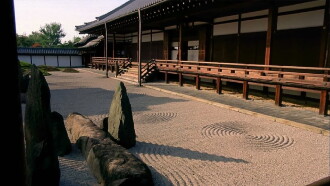
Dream Window: Reflections on the Japanese Garden TrailerYurakucho 0 Street Trailer
Hiroshi Teshigahara (January 28, 1927 – April 14, 2001) was an avant-garde Japanese filmmaker.
He was born in Tokyo, son of Sofu Teshigahara, founder and grand master of the Sogetsu School of ikebana. He graduated in 1950 from the Tokyo National University of Fine Arts and Music and began working in documentary film. He directed his first feature film, Pitfall (1962), in collaboration with author Kōbō Abe and musician Tōru Takemitsu. The film won the NHK New Director's award, and throughout the 1960s, he continued to collaborate on films with Abe and Takemitsu while simultaneously pursuing his interest in ikebana and sculpture on a professional level.
In 1965, the Teshigahara/Abe film Woman in the Dunes (1964) was nominated for an Academy Award and won the Special Jury Prize at the Cannes Film Festival. In 1972, he worked with Japanese researcher and translator John Nathan to make the movie Summer Soldiers, a film set during the Vietnam War about American deserters living on the fringe of Japanese society.
From the mid-1970s onwards, he worked less frequently on feature films as he concentrated more on documentaries, exhibitions and the Sogetsu School and became grand master of the school in 1980.
In 1978, Teshigahara Hiroshi directed the final two episodes of the long running and popular Japanese television series Shin Zatouichi, starring Shintarō Katsu as the blind wandering Yakuza. During Akira Kurosawa's 5 year hiatus from filmmaking, he watched a lot of television and was particularly taken by the final episode of Shin Zatouichi - Episode: Journey of Dreams (1978). The influence of this particular episode included the initial casting of Shintaro Katsu in the lead roles in Kagemusha and the extended artistic dream sequences contributed to those seen in Kagemusha (1980).
On the first anniversary of his death, April 14, 2002, a DVD box set containing his best known work was released in Japan in commemoration.

Most Popular Hiroshi Teshigahara Trailers
Total trailers found: 31
01 January 1958
The inhabitants of Cape Muroto in Kochi Prefecture depend on fishing for their living, but have no fishing port in their village and so use the port of Uraga in Kanagawa Prefecture as their main port.
15 February 1964
A vacationing entomologist suffers extreme physical and psychological trauma after being taken captive by the residents of a poor seaside village and made to live with a woman whose life task is shoveling sand for them.
15 September 1989
Late in the 1500s, an aging tea master teaches the way of tea to a headstrong Shogun. Through force of will and courageous fighting, Hideyoshi becomes Japan’s most powerful warlord, unifying the country.
15 July 1966
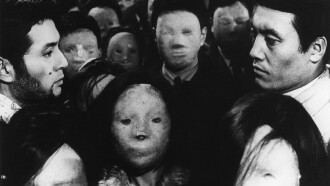
A businessman with a disfigured face obtains a lifelike mask from his new doctor, but the mask starts altering his personality and causing him to question his identity.
21 August 1958
Marine biological documentary
01 July 1962
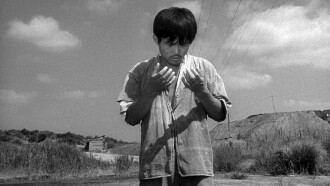
A man wanders into a seemingly deserted town with his young son in search of work. But after a bit of bad luck, he joins the town's population of lost souls.
15 May 1962
A short documentary by Hiroshi Teshigahara about his father, the sculptor Sofu Teshigahara, preparing an exhibition.
01 June 1968
A private detective is hired to find a missing man by his wife. While his search is unsuccessful, the detective's own life begins to resemble the man for whom he is searching.
14 May 1957
The history and art of ikebana, a centuries old Japanese art of flower arrangement and a look inside the Sogetsu School of Ikebana, where the director's father Sofu Teshigahara worked as the grand master of the school.
11 April 1992
Furuta Oribe is ordered to become tea master under Toyotomi Hideyoshi after his teacher Sen no Rikyū, the former tea master, was ordered to commit suicide.
31 August 1964
A day in the life of Ako, a 16-year-old Japanese girl, and her friends and co-workers. An alarm clock wakes her in a dorm; she gets ready for work and travels to a large bakery.
24 April 1958
A collaborative, newsreel-style portrait of Tokyo in 1957–58, blending photography, animation, and historical imagery to capture the city’s labor, rituals, and nightlife at the moment it became the world’s largest metropolis.
01 January 1959
Tokyo in the 1950s. A jazz-loving younger sister attends piano lessons, while her older brother is obsessed with drumming.
01 January 1981
Documentary about Jean Tinguely and his work.
30 January 1959
A documentary about the eponymous Puerto Rican boxer
04 February 1967
Auto-racing crews prepare for the Indy car race near Fuji in this Japanese documentary. Award-winning director Hiroshi Teshigahara compares the celebrated event with the enthusiasm of the youth of the time to the sport.
01 January 1953
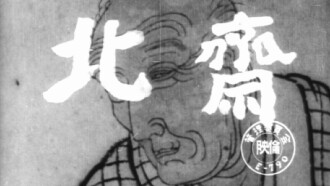
A documentary about the life and art of wood-block artist Katsushika Hokusai.
15 March 1970
Commissioned for the 1970 Osaka Expo and originally shown on a four projection system at the spherical Automobile Pavilion.
31 December 1955
Follow-up to 'The People of Sunagawa'
01 January 1959
In 1959 Hiroshi Teshigahara shot the following 16 mm footage of he and his father’s first trip to Barcelona and the outlying Catalonian countryside, including a visit to the home of Salvador Dali in Port Lligat.
25 March 1972
During the Vietnam War, an American G.I. deserts his base in Japan and escapes to Tokyo with the help of his Japanese bar hostess girlfriend.
01 January 1985
In April 1985 Kusama staged a performance in the cherry tree grove at Kuhonbutsu Jōshin-ji, a Buddhist temple in Tokyo.
04 March 1965
This is the sequel to Jose Torres (1959), the portrayal of Puerto Rican boxer Jose Torres, who won a silver medal in the 1956 Melbourne Olympics.
25 May 1984
Catalan architect Antonio Gaudí (1852-1926) designed some of the world's most astonishing buildings, interiors, and parks; Japanese director Hiroshi Teshigahara constructed some of the most aesthetically audacious films ever made.
13 April 1992
Exquisite exploration of landscape and Toru Takemitsu's music for a Japanese moss garden.
12 November 1957
At a time when the USSR and the USA fervently vied to develop nuclear arms, the mass media buzzed with terms inspired by nuclear testing on Bikini Atoll such as the “Daigo Fukuryu Maru Incident,” the “ash of death,” “radioactive tuna,” and “radioactive rain,” and nuclear testing continued, Japan, the only nation to have suffered an atom-bomb attack, felt massive anxiety.
07 October 1958
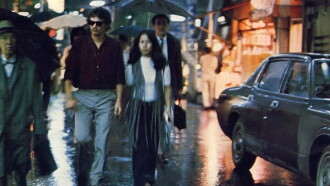
A satirical comedy set in Tokyo's new landmark food center in Yurakucho.
19 August 1964
A film in four episodes presenting teenage girls chosen as representative of their country and our time, in Italy, France, Japan and Canada.
06 July 1956
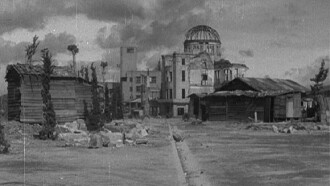
One of the first documentaries to focus on the aftermath of Hiroshima and Nagasaki, the film gives voice to survivors of the atomic bombings and documents the long-term effects of radiation on their lives.
18 May 1955
Documentary on photography with the participation of twelve globally famous Japanese photographers.
29 January 1957
On October 12, 1956, 53 surveyors and 1,300 armed police rushed the gathered union and Zen Gaku Ren (the All Japan Federation of Self-Governing Students Associations) members who then formed a scrum to protect themselves.