Humberto Mauro Trailers
Humberto Mauro TrailerCastelar e Nelson Dantas no País dos Generais TrailerHumberto Mauro: Eu Coração Dou Bom Trailer
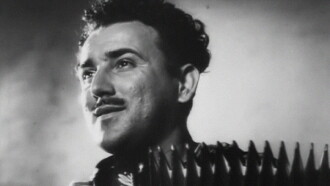
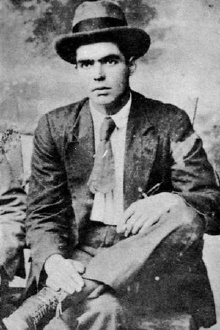
Humberto Duarte Mauro (30 April 1897 – 5 October 1983) was a Brazilian film director. He is often considered the greatest director of early Brazilian cinema.
Mauro's second feature film Thesouro Perdido (Lost Treasure) won the Brazilian "Film of the Year" award in 1927. Later that year, Phebo Sul America Film was reorganized into Phebo Brasil Film. The first film released under the new Phebo was Braza Dormida (Sleeping Ember). Braza Dormida was a boxoffice success and furthered Mauro's career as one of Brazil's leading directors.
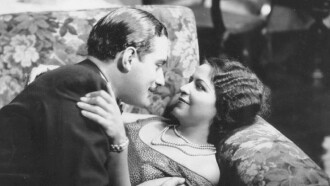
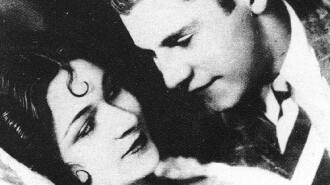
In July 1929, Mauro's final film for Phebo Brasil Film, Sangue Mineiro (Blood of Minas Gerais), was shown in Cataguases. In 1930, the film was given a nationwide release. The film was critically and popularly acclaimed. This was the first film in which Mauro worked with Carmen Santos who would star in many of Mauro's later films.
Phebo Brasil Film did not have the resources to continue to produce films. Adhemar Gonzaga offered Mauro a directing job for Cinédia, which was centered in Rio de Janeiro. Gonzaga had started to shoot Lábios sem Beijos (Lips Without Kisses) which starred Carmen Santos. However, Carmen became pregnant was unable to finish production. Gonzaga handed the project over to Mauro, who both directed and photograpghed the film, in March 1930. Mauro decided to make the film silent even though sound was available. He wanted to explore the possibilities of silent film. Upon release in 1930, the film won the Jornal do Brasil film of the year award. Mauro acted as cinematographer for Cinédia's second film Muhler (Woman).
Mauro began shooting Ganga Bruta in September 1931. The film was not completed until 1933 due to cast replacements. The film was silent with synchronized sound recorded on Vitaphone discs added later. The film received little acclaim until two decades after its release.
Mauro co-directed his first talking film with Adhemar Gonzaga. A Voz do Carnaval (The Voice of Carnival) was a musical. Afterwards, Mauro left Cinédia for Brasil Vita Filme in 1934. He directed two feature films and several documentaries for Brasil Vita Filme.
In 1936, Mauro joined the Instituto de Nacional do Cinema Educativo (INCE), which was then the government office for educational and propaganda films. Mauro shot hundreds of documentaries when he was working in INCE, and he also shot his last three movies: Descobrimento do Brasil (The Discovery of Brazil), Argila (Clay), and O Canto da Saudade (The Song of Yearning). His final film was Carro de Bois (Ox Cart), a documentary, in 1974.

Most Popular Humberto Mauro Trailers
Total trailers found: 121
01 January 1939
An adaptation of Machado de Assis' eponymous short story, preceded by a short telling of the author's life and works.
13 August 1927
A group of bandits look for a treasure map.
20 June 1936
A theater manager about to go bankrupt decides to accept help from his daughter and her boyfriend to save the family's finances, which she does with the sponsorship of a rich man.
12 October 1931
Carmen, a poor and beautiful woman, lives in a shantytown in Rio de Janeiro. All men desire her, including her stepfather, but she only has eyes for her boyfriend, Milton.
01 January 1970
A short documentary on the film works directed by Brazilian pioneer Humberto Mauro. With an extensive career that began in the silent era and then moved to the talkies, Mauro was recognized as one of the most important Brazilian filmmakers of all time.
22 July 1977
Life and death of the jesuit who fought for the peaceful relationship between colonists and the indigenous peoples of Brazil.
01 January 1949
Rio de Janeiro (1949) Historical data of the city of Rio de Janeiro illustrated by general plans of the Capital.
29 May 1933
A man kills his wife on their wedding night, after discovering she had been unfaithful. After being acquitted, he moves to the country, where he becomes part of a love triangle.
06 June 1978
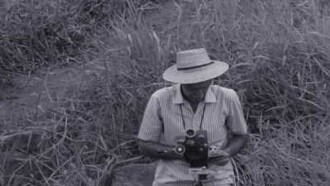
Documentary on famous Brazilian actresses, female directors and the role of women in Brazilian film history.
01 January 1942
After the great fight, Saint George, instead of killing the dragon, decides to take him home and teach him how to be nice.
01 January 1955
A look at the now abandoned production farms, substituted by power plants.
02 March 1935
Two young men from Paris bring "wonderful civilizing ideas" into the brain. But, as they returned without pity, they began to call for an auction of the furniture and objects of art that garrison their "garconiére", last vestige of the passage of opulence.
01 January 1956
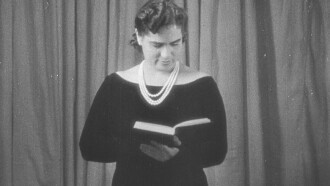
Professor Hélio Gomes Machado gives a speech in favor of the library as an element of spiritual progress for a people.
06 November 1967
The new Brazilian cinematic movement (Cinema Novo) through films starring actors Antonio Pitanga and Luiza Maranhão.
01 January 1956
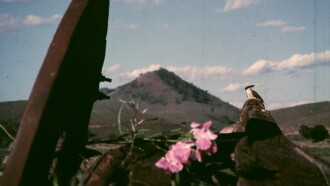
Chronicles the life of the João-de-Barro bird.
24 August 2018
A documentary-tribute to the filmmaker Humberto Mauro considered the pioneer of Brazilian and Latin American cinema, directed by his grandnephew, André Di Mauro.
01 January 1948
Biographical data about Castro Alves: the different cities where he lived, the love misadventures, the school institutions where he studied and his poetry.
30 April 1977
Celebrating his 80th birthday, pioneer Brazilian filmmaker Humberto Mauro talks about his life, work, and the project "A Noiva da Cidade".
18 August 1952
Coronel Januário's goddaughter, Maria Fausta, is having a secret affair with João do Carmo. While her godfather is engaged in his political campaign for mayor of the city, the couple disappears.
01 January 1948
A visual interpretation of Brazilian popular songs "Azulão" and "Pinhal".
01 June 1971
In 1594 Brazil, a frenchman becomes a prisoner of the Tupinambás. While waiting to be executed, the foreigner learns the habits of the indigenous people and joins a woman who tries to help him escape.
01 July 1929
In the beginning of the Twentieth Century, in Belo Horizonte, the industrial Sampaio lives in a manor house with his stepdaughter Carmen, who has a sort of engagement with Roberto.
02 January 1956
A cinematographic interpretation of a Casimiro de Abreu poem.
19 November 1969
Couple whose marriage is at stake delve into the past, with the help of a diary and some home movies.
28 May 1942
In Rio de Janeiro, Gilberto (Celso Guimarães) is a talented artisan engaged of Marina (Lídia Mattos), working in a pottery factory.
01 January 1936
The film presents the mechanics of levers in an educational manner, using examples drawn from both the human body (such as neck and elbow movements) and everyday objects—like scissors, tweezers, and sewing machines—as well as larger-scale equipment such as cranes, boats, and transport carts.
03 December 1964
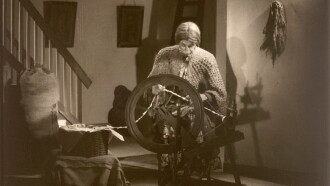
A Velha a Fiar illustrates a Brazilian folk song in which a being or entity is always predating another being, but is in its turn predated by some other animal, until the circle closes.
01 January 1939
Between captured images, animations and scientific descriptions, the puraquê electric fish is presented through the eyes of Humberto Mauro and Carlos Chagas Filho.
01 January 1925
A Brazilian style Western inspired by the young director's fondness for American films.
26 May 1978
When Daniela, a famous actress, decides to return to her hometown to reconnect with a simpler lifestyle, local politicians decide to exploit her influence in order to get ambiguous deeds done.
01 January 1958
A panel of the capital of Minas Gerais at the end of the 1950s. Aspects of its modern layout, the result of a pre-established urban plan, with its communication routes, squares and public buildings.
01 January 1944
Biographical data of Euclides da Cunha.
14 December 1945
The story of Vicente de Carvalho through the cities of Santos, Bertioga and São Paulo. The recitation of poems by Vicente de Carvalho illustrated by images of beaches and waves that burst.
13 January 1937
"Nomenclature: Demonstration of the two main earth movements and their consequences."
06 December 1937
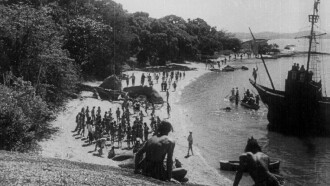
O Descobrimento do Brasil (The Discovery of Brazil) is an impressive historical epic recreating Álvares Cabral’s voyage to the New World in 1500, with a score especially written by the renowned composer, Heitor Villa-Lobos.
10 November 1930
Lelita, a rich young lady, is courted by Paulo, her cousin, but she starts to believe that he is also having an affair with her sister.
13 April 1962
A brief history of paper and the stages of its production. An animation about the history of writing, the emergence of paper in ancient civilizations and the invention of printing, taking paper manufacturing to an industrial scale.
13 December 1936
The arrival on Rio de Janeiro of the remains of the members of the Inconfidência Mineira movement, who fought from freedom in the late 1700's.
01 January 1940
A short documentary of macaws
01 January 1948
Reconstruction of the historical episode of the Inconfidência Mineira (Minas Conspiracy).
01 January 1974
Ox carts are still part of the landscapes of the Brazilian badlands, in a mixture of usefulness and poetry.