


Most Popular István Kardos Trailers
Total trailers found: 25

Peter and Paul Trailer (1978)
16 November 1978
The subject-matter of this comedy is age-old: that of the schizophrenic soul. Papa would have liked boy twins years ago, but her wife gave birth to a single child weighing six kilograms.
Tolerance Trailer (1986)
01 January 1986
The unskilled, jack-of-all-trades András and his wife, Éva are put in jail for serial work-place thefts, -committed in order to try to ensure a normal living standard for his family - and for aggravated assault committed for self-defence, respectively.

Petőfi '73 Trailer (1973)
16 June 1973
Using high-school students, Hungarian director Ferenc Kardos re-created the 1848 revolutionary period in that country's history which was dominated by the poet/soldier Sandor Petofi (1822-1849).
Identification Trailer (1975)
28 February 1975
While awaiting his release from the Soviet detention camp he is being held in, a half-starved refugee (Andras Ambrus) finds that an error has been made and his name is not on the to-be-released list.
Spider Football Trailer (1976)
05 June 1976
This satire on film depicts the micro-climate of a technical vocational school newly established at a housing estate.
Countdown Trailer (1986)
16 April 1986
Sanyi is the driver of a co-op bus and lives in tenancy with his wife and son. In order to get along he buys the auctioned truck of the co-op and becomes a transportation entrepreneur.
Charmers Trailer (1970)
19 February 1970
This light comedy with grotesque elements tells the story of M, the young and beautiful model mother, who seeks happiness and a father for her precocious, but inventive daughter, Tündike.
Spiders Trailer (1989)
23 August 1989
Péter begins to correspond with the unknown Ági living in Munich while he is spending his military service.
Truants Trailer (1989)
14 September 1989
In the country reformatory school both the teacher and the children are trapped by the circumstances.
We're Getting Along Trailer (1981)
12 February 1981
More than a storyline with a beginning, middle, and end, this tale of a foundry worker who engages a woman -- and fellow worker -- to do housekeeping for him is a tale that holds up the Hungarian social system against the morality of an exploitative male-female relationship.
Shadow on the Snow Trailer (1992)
31 March 1992
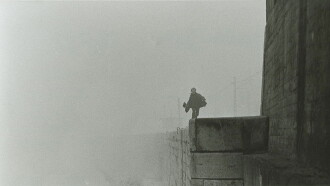
A man who leads a lonely existence with his young daughter accidentally gets involved with a robbery before a manhunt ensues.
Witches' Sabbath Trailer (1984)
29 March 1984
To celebrate Sleeping Beauty's awakening, the cruel stepmother organises a dress-ball in the Wonder Castle and invites the characters of all tales and their two fathers, the Grimm-brothers.
Dreaming Youth Trailer (1974)
26 September 1974
Herbert lives a happy childhood in a small town in early-century Hungary. His new friend Ödön brings colour and excitement into his life, and they find a hiding place together in a warehouse.
Brats Trailer (1991)
06 September 1991
1989 in Budapest. A gang of teenagers is roaming about in the city. They are hanging around, longing away from here, their parents do not care about them.

Father Trailer (1966)
08 December 1966
When young Tako's father dies in Hungary in 1945, Tako is left with scant memories of him. Nurtured by his mother, the boy fantasizes about the man his father was, imagining him a hero.
The Trumpeter Trailer (1979)
26 April 1979
In the late 17th century, Hungary moved from Turkish to Austrian domination, becoming a key part of the Austro-Hungarian Empire.
Sunday Daughters Trailer (1979)
18 April 1979
The characters of this fiction of sociogra-phic accuracy live in the reformatory school for girls in Rákospalota.
The Smallest Foundation in the World Trailer (1997)
30 November 1997
A widow, whose politician husband was killed in the Communist purge of Hungary, and her ill son are given money by the government to start a foundation for stray dogs.
Last Seen Wearing a Blue Skirt... Trailer (1996)
23 August 1996
The sixteen year old Bea is on her way home from her sports class when a foreign long- vehicle stops by her and she is asked the way.
Mascot Trailer (1982)
18 February 1982
The parents of Kabala (Lucky Charm) and Facsiga (Wooden Top) are divorced. Kabala, an adolescent girl was awarded to the father, while Facsiga, the younger brother was awarded to the mother, but they do not really belong to anyone.
Laços de Sangue Trailer (1992)
01 October 1992
Lina and Mariana run from an orphanage in Porto towards the south, in search of Lina's father. It is in a difficult and chauvinistic world that they end up finding Alberto who lives with Júlia on a hill somewhere in the Alentejo.
Flowers of Reverie Trailer (1985)
10 January 1985
The seeming hopelessness of combatting an all-powerful government that will not tolerate political dissension is the focus of this excellent historical drama set in the mid-19th century in Hungary.

Bald Dog Rock Trailer (1981)
10 September 1981
A Hungarian band plays American rock & roll and blues hits with great enthusiasm and passion, but success seems to avoid them.
Exercises Trailer (1973)
01 January 1973
The particular interest of György Szomjas’s short documentary is that it immortalizes the work of the Szeged University Stage headed by István Paál (although it is not named in the film), which after 15 March 1973 was officially recategorized from ‘tolerated’ to ‘banned’.
Die Serpentintänzerin Trailer (1992)
13 December 1992
Austria/Hungary in 1905: At the annual fairs, the old cabinets displaying "abnormalities" and "living phenomena" are being replaced by cinematograph booths.
