Jack Chambers Trailers
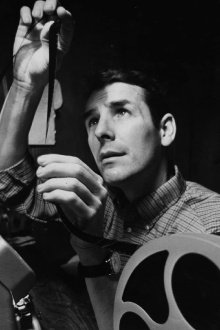
Chambers: Tracks and Gestures Trailer
Jack Chambers was born in 1931 in London, Ontario. He studied art there, worked construction, traveled to Mexico, and spent eight years in Europe He lived mostly in Spain, studying art in Madrid and converting to Roman Catholicism, returning to London in 1961 when he learned that his mother was dying of cancer. He became well-known as a painter (examples are in major Canadian museums) while also writing poetry, and in 1966 began making films.
Most Popular Jack Chambers Trailers
Total trailers found: 8
30 November 1970
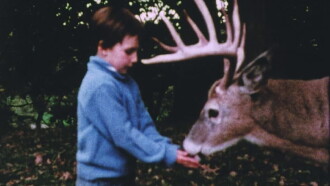
"The Hart of London" is an endlessly layered tour de force. It explores life and death, the sense of place and personal displacement, and the intricate aesthetics of representation.
29 May 2025
One of the most dangerous journeys on the planet, taken every day by tens of thousands, is also one of the least documented.
03 June 1965
An unusual version of the classic children's tale. Litte Red Riding Hood was performed at the Labatt Marionette Theatre in London, Ontario.
01 January 1982
An intimate portrait of Jack Chambers, a major figure in the Canadian cultural landscape. This lyrical film includes the full range of his work from the age of thirteen until his death.
03 October 1969
Circle is a 28-minute film, structured in three parts. Appropriately described by Gene Youngblood as an “extended haiku,” the film weaves elusive meaning out of simple form.
03 October 1967
Chambers in R-34 impressionistically documents the work of London, ON collage artist Greg Curnoe through rhythmic and softly focused close-ups.
30 June 1967
Hybrid is a denunciation of Vietnam-War atrocities, photographs of which are spliced with scenes of gardeners cross-pollinating roses, an act depicted as mutilating but, ultimately, gorgeous.
21 April 1966
Mosaic, a testament to Chambers’ astute interest in surrealism and Soviet constructivism, features his family prominently and predicts Hart’s epic handling of the birth/maturation/death cycle.