Jean Epstein Trailers
Jean Epstein, Young Oceans of Cinema TrailerJean Epstein or Cinema by Itself Trailer
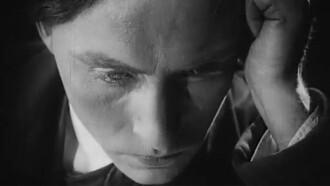
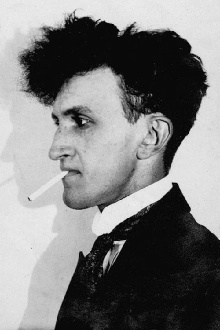
Jean Epstein (French: [ɛp.ʃtajn]; 25 March 1897 – 2 April 1953) was a French filmmaker, film theorist, literary critic, and novelist. Although he is remembered today primarily for his adaptation of Edgar Allan Poe's The Fall of the House of Usher, he directed three dozen films and was an influential critic of literature and film from the early 1920s through the late 1940s. He is often associated with French Impressionist Cinema and the concept of photogénie.
Epstein was born in Warsaw, Kingdom of Poland (then a part of Russian Empire) to a French-Jewish father and Polish mother. After his father died in 1908, the family relocated to Switzerland, where Epstein remained until beginning medical school at the University of Lyon in France. While in Lyon, Epstein served as a secretary and translator for Auguste Lumière, considered one of the founders of cinema.
Epstein started directing his own films in 1922 with Pasteur, followed by L'Auberge rouge and Coeur fidèle (both 1923). Film director Luis Buñuel worked as an assistant director to Epstein on Mauprat (1926) and La Chute de la maison Usher (1928). Epstein's criticism appeared in the early modernist journal L'Esprit Nouveau. During the making of Coeur fidèle Epstein chose to film a simple story of love and violence "to win the confidence of those, still so numerous, who believe that only the lowest melodrama can interest the public", and also in the hope of creating "a melodrama so stripped of all the conventions ordinarily attached to the genre, so sober, so simple, that it might approach the nobility and excellence of tragedy". He wrote the scenario in a single night.
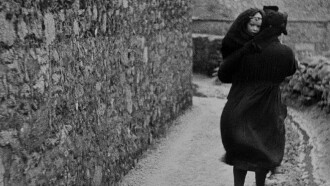
Epstein had been much impressed by Abel Gance's recently completed La Roue, and in Coeur fidèle he sought to apply its techniques of rapid and rhythmic editing as well as the innovative use of close-ups and superimpositions of images. These techniques are most apparent during the first half of the film: the opening sequence establishing Marie's situation in the harbour bar through a series of close-ups of her face, her hands, the table and glasses that she is cleaning; the use of images of the sea and the port, either intercut or superimposed, to convey the yearnings of Jean and Marie; and the film's most celebrated sequence at the fairground in which a highly complex series of rhythmically assembled images charts the tension of the relationship between Marie and Petit Paul. The later scenes of the film are relatively conventional in the techniques employed and depend more upon situation and action than upon photography and processing of the images. In the 1920s, Epstein's works would display influences from German Expressionism. Epstein also made several documentaries about Brittany. Chanson d'Armor is known as the first Breton-speaking film in history. His two novels also take place in Breton isles: L'Or des mers in Ouessant and Les Recteurs et la sirène in Sein.
Epstein died in 1953 from a cerebral hemorrhage.

Most Popular Jean Epstein Trailers
Total trailers found: 48
01 January 2011
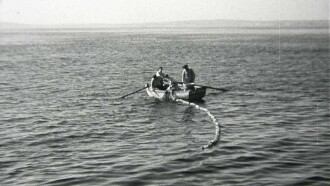
This portrait of the French film theorist and avant-garde director Jean Epstein (1897-1953) concentrates on the period when he filmed in Brittany, the spot where he became inspired by the sea.
01 October 1926
Visit to the Château de Nohan where George Sand had lived.
23 November 1923
The good guys win out in this sweet tale about a young orphan who is abused for much of her life but who eventually finds happiness when she marries an honest man who extricates her from her situation.
14 October 1936
Documentary film about the people of Brittany and their lives, including music and dance from the region.
01 January 1934
The French and the English spy on each other, in this adventure set in post World War I colonial Syria.
26 February 1925
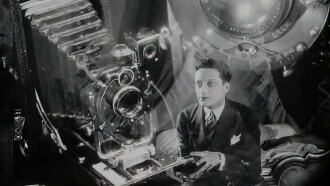
A mother sells a photo of her daughter to the press for publicity, and a daughter suddenly dies leaving the mother desperate surrounding by portraits of her daughter all around town.
04 October 1928
A man travels to the remote and decaying mansion of his old friend Roderick Usher, who lives in isolation with his mysterious and gravely ill wife, Madeleine.
01 January 1929
Jean Bonnard, clean-cut industrialist and the only son of a widow, goes to visit his mother in the small village where she lives.
27 September 1923
Two young doctors, surprised by the storm, take refuge in an inn. A diamond broker joins them and, for lack of space, shares their room.
01 January 1932
A woman rocks a cradle; a man comes to land from the sea, but leaves to view it from a distance.
18 October 1926
Romantic novelist George Sand's Mauprat as adapted by cinema visionary Jean Epstein. As a child, orphan Bernard de Mauprat was adopted by Tristan, a brigand who brought him up with his biological sons to hate, kill and pillage.
01 January 1935
A poetic drama, spoken in the Breton language and set in a Breton fishing community, telling of the impossible love between a waifish fisherman and a highborn lady-of-the-manor.
19 April 1929
On the islet Bannec, off the coast of Brittany, four fishermen have set up camp for three months to harvest seaweed.
12 November 1947
Following a premonition, a young woman tries to persuade her fiancé not to go out to sea in his fishing boat, but the boy ignores her and sets out.
01 January 1938
Produced for the National Federation of Building Workers Ciné-Liberté, a Popular Front organization intended to counteract capitalist interests in the film industry, Epstein’s union documentary examines building policy from the perspective of ordinary workers and notable architects.
10 December 1925
Following a 19th-century play penned by Benjamin Antier, the figure of Robert Macaire, bandit and rogue, enjoyed popularity in several contexts.
01 January 1922
Jean Benoît-Lévy & Jean Epstein's inventive documentary about the life of Louis Pasteur, a French chemist and one of the most important figures of medical microbiology, blends biographical drama with scientific recreations of his experiments, using Pasteur's actual instruments.
26 September 1924
The film, shot in Nice, was started by Jean Epstein, and the editing finished by Maurice Mariaud, whr
27 November 1925
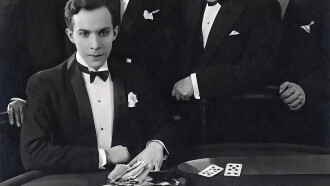
Jacques Prémont-Solène is a degenerate gambler and his losses at baccarat have bankrupted his lover, Laure Maresco.
01 September 1939
Documentary on communication routes for the French section of the New York International Exposition 9
01 January 1953
In a foundry, in 1951, a modernization program was implemented in order to revive competitiveness.
10 August 1936
An idyllic description of that french area, including quarries, vineyards and the most typical issues from Bourgogne's region.
01 October 1934
The visit of Ouest Eclair newspaper.
01 January 1925
Lost short film.
01 October 1922
Documentary about the Narbonne region and the wine harvest.
01 October 1937
A short subject, described by its director as a film poem, commissioned by the French Youth Hostel Association.
22 November 1927
A wealthy young businessman consecutively falls in love with a classy English woman (Pearl), a Russian sculptress (Athalia), and a naive working-class girl (Lucie).
14 March 1930
Jean Epstein’s short documentary filmed on the Breton island of Sein, which film preservationist and cinephile Henri Langlois called “one of the most beautiful documentaries in the history of French film, a true poem about Brittany and the sea.
02 April 1936
When an innocent young woman finds herself abandoned by the proper young man whose child she's had, she is taken in by a troupe of traveling performers.
01 January 1935
Parisian adventures of a fearless couple of friends and their return to their home in Marseille after a happy double marriage.
09 September 1978
From the French television series Encyclopédie audiovisuelle du cinéma, the episode uploaded here, Jean Epstein ou le Cinéma pour lui-même, was produced and (I'm pretty certain) directed by Claude-Jean Philippe.
12 December 1924
In the kingdom of the Moguls, Prince Roudghito-Sing, a young officer of the palace, falls in love with Zemgali, a captive princess held prisoner and coveted by the Grand Khan.
19 March 2016
Documentary film shot in Brittany about lighthouses and lighthouse keepers on the island of Ouessant and coast of Finistere.
19 January 1938
A sailor falls in love with an innkeeper on a lost island.
01 October 1938
The inhabitants of a poor village want to sell their houses and their land. One day, a woman breaks down in her car while crossing the village.
03 June 1927
A renowned doctor and his brother live and work together until the brother falls in love with Marie, a singer, and gives up medicine to be with her.
24 March 1933
The almost financially ruined French gentleman Gaston Dewalter spends several days in Biarritz before going off in the Hispano-Suiza, a luxe car which was a present from his friends.
25 January 1924
A young man falls in love with the daughter of the man who adopted him.
16 June 2021
In spite of bad omen about the upcoming storm, the fisherman sets out to the sea and doesn’t return.
22 October 1923
On June 22, 1923, and just five days after the start of a violent volcanic eruption on the north side of Etna, Epstein and cameraman Paul Guichard were crossing Italy to meet and film up close the monster that had provoked The filmmaker turned that meeting into this documentary in two parts and 24 minutes, commissioned and produced by Pathé-Consortium-Cinema.
05 May 1933
Because he found a box washed up by the sea holding unknown contents, a poor and despised fisherman and his daughter are suddenly courted by everyone in the village.