Jiří Trnka Trailers
The Puppet Films of Jiri Trnka TrailerJirí Trnka: Puppet Animation Master TrailerJiří Trnka Trailer
A graduate of Prague's School of Arts and Crafts, in 1936 he created a puppet theater, which was disbanded after the outbreak of WWII. During the war he designed stage sets and illustrated children's books. In 1945 he set up an animation unit with several collaborators at the Prague film studio; they called the unit "Trick Brothers." Trnka specialized in puppet animation, a traditional Czech art form, of which he became the undisputed master. He also created animated cartoons, but it was his puppet animation that made him an internationally recognized artist and the winner of film festival awards at Venice and elsewhere. He wrote the scripts for most of his own films.
Most Popular Jiří Trnka Trailers
Total trailers found: 54
01 January 1959
The cartoon film sets out to justify the existence of UNESCO as an instrument for world peace.
08 April 1976
Short film made by Bretislav Pojar
12 September 1947
Trnka reached new heights of modernist abstraction with this innovative, surrealist mini-masterwork, which critic Jean-Pierre Coursodon praised as the Citizen Kane of animation.
01 January 1949
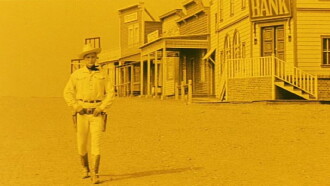
An animated singing western short in which a cowboy takes on the villain to save his beloved.
16 October 1964
A satire of the Great American Way, with Lemonade Joe a "clean living" gunfighter who drinks only Kola-Loca Lemonade and convinces everyone else in town (with his gun skills) that all "real men" drink ONLY lemonade!
05 February 1956
The second part of the revolutionary Hussite trilogy takes place in the years 1419-1420.
01 January 1966
This melancholy piece about the metamorphoses of love and the eternal dissatisfaction of human beings with what they have was inspired by the lyrics of the French song "Plaisir d'amour.
26 October 1965
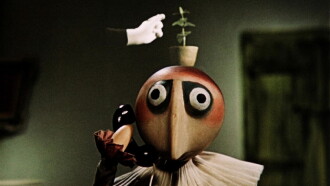
A happy little potter is approached by a huge hand which wants him to sculpt its statue. The potter refuses, wanting nothing more than to be left alone with his only friend, a potted plant.
28 December 1951
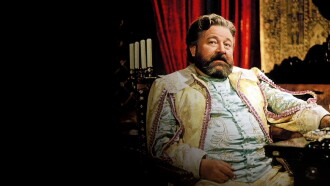
The Emperor's mismanagement of his country is provoking some in his court to plot to overthrow him. He feels successful, at least, when he discovers the legendary Golem, which he believes can protect him and even cure his imaginary illnesses but, when he disappears while on a bender, his kindly baker, who looks just like him, is mistaken for him, and begins to put things in order.
19 March 1965
Taken from Boccaccio's Decameron, this lovely puppet film tells the bawdy story of the beautiful young Venetian lady who confesses her sinful passion for the Archangel Gabriel to a lustful monk, who promptly impersonates him in her bedroom with predictable results.
07 April 1977
Short movie by Bretislav Pojar
01 January 1949
A barrel organ grinder meets the devil on a mysterious moonlit night in this haunted-house fable, which showcases Trnka’s atmospheric use of sound to conjure a macabre mood.
15 February 1963
Trnka’s sci-fi vision of the future in which machines and robots try to substitute themselves into the most beautiful human relationships.
01 January 1999
Short documentary on "the Walt Disney of Eastern Europe", Czech puppet animation director Jirí Trnka.
25 September 1959
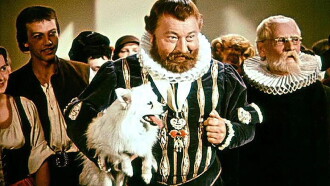
The first puppet film shot in CinemaScope. It is based on the famous poetic comedy by William Shakespeare.
01 January 1961
The passion for high speed can nowadays almost be seen in the new-born. The film shows that such passion, if not controlled, is self-destructing and even suicidal.
01 January 1977
Children play in a park.
01 January 1949
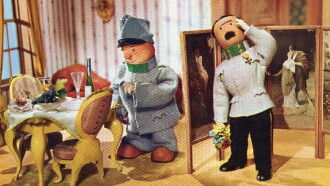
"Román s basou" is another short by master a stop-motion puppet-animator Jiri Trnka. The story is based on Anton Chekhovs story "Roman s Kontrabasom".
19 September 1947
Five crime stories connected by the narration of police superintendent Bartosek.
15 April 1949
Adaptation of a fairy tale by Hans Christian Andersen, about an emperor who prefers the tinkling of a bejeweled mechanical bird to the song of a real nightingale.
26 January 1951
Bayaya, a young peasant, protected by the spirit of his dead mother, arrives at the castle of the King, where he entertains his three daughters.
19 December 1947
The first full-length puppet film made by Jiri Trnka. Like the painter Ales who illustrated the national songs, Trnka depicts the traditional customs and tales of the Czech village in six separate sequences: Shrovetide, Spring, Legend About St.
26 January 1967
Documentary about Jirí Trnka and how he works.
11 September 1953
A monumental piece of art bringing the heroes of the ancient Czech myths back to life. The picture consists of seven parts: Cech the Forefather, Bivoj, Libuse, Premysl, Girls War, Horymir, Lucka War.
04 October 1956
Adapting Jaroslav Hasek's raucous satirical novel, and also bringing Josef Lada's equally famous illustrations to garrulous puppet life, posed Trnka one of his biggest creative challenges.
01 January 1977
Short film by Břetislav Pojar
29 April 1955
The first part of the "Hussite Revolutionary Trilogy", completed with Jan Žižka (1955) and Proti všem (Against All Odds, 1957).
02 September 1955
Hurvinek cannot go to a circus because he injured himself when sliding down the stair rail. He daydreams that he is an acrobat riding a scooter and an animal-trainer taming beasts.
31 December 1954
Folk art–like hand-drawn stills illustrate this sweetly simple pastoral fable, in which a peasant comes into possession of a small fortune—but realizes there are treasures greater than gold.
04 October 1957
After the battle of Sudoměř the Hussite teaching spreads through the whole country and people start leaving their homes to help build the fortification of Tábor.
11 February 1955
A selfish self-centered widowed ruler, barely tolerated by his subjects and called appropriately enough, 'King Myself, First' asks his three daughters to name the measure of their love for him.
01 January 1951
A poor fisherman catches the golden fish that promises him to fulfil three wishes if he sets her free again.
20 December 1946
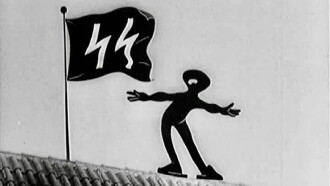
The first animated picture made by Jiří Trnka for adults. It is a comic story of a legendary chimney-cleaner who, with the help of a spring from an old lounge-chair, became the terror of the Prague-occupying SS troops in World War II.
01 January 1951
Trnka brings to life a surrealist circus of tightrope-walking fish, musical monkeys, balancing bears, and high-flying acrobatics in this whimsical feat of cutout animation made in collaboration with leading Czech painters of the era.
22 April 1955
Two mischievous frost spirits make things chilly for a pair of travelers in this wintry comic folktale.
31 December 1954
How do you wake up a sleeping puppet? Made by Trnka in collaboration with actor and puppeteer Josef Pehr, this winsome mix of live action and puppet play is enchanting entertainment for the youngest of viewers.
01 January 1954
A careful motorcyclist stops by a cozy pub on his way home to his sweetheart.
01 January 1959
Anti-war animation about man's passions for self-destruction by experimenting with dangerous chemicals.
12 September 1947
A fable about a fox who wanted to drown a pitcher to get revenge on him.
28 March 2000
The Czech stop-motion puppet animation master Jiri Trnka directed some of the most acclaimed animated films ever made.
12 September 1947
The second cartoon by Jiri Trnka that was a sensation at the festival in Cannes in 1946 when it defeated the world animation elite of the time.
25 January 1946
The first Czech cartoon based on a fairy-tale about grandpa, grandma, their granddaughter, dog and cat who all wanted to pull a big beet out from the ground.
01 January 1960
An old woodblock train meets its shiny new electric replacement one Christmas Eve in this glowingly nostalgic stop-motion toy story, directed by Bretislav Pojar and featuring gorgeous design by Trnka.