Most Popular Joaquim Pedro de Andrade Trailers
Total trailers found: 29
27 April 2018
Leaving Romania for a better life in US. True dream or illusion? A story of a young Eastern European woman.
01 March 1980
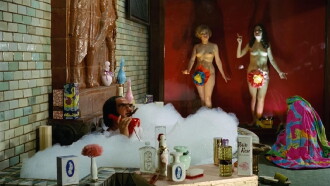
Comedy in 4 segments. In "Arroz e Feijão" (Rice and Beans), owner of a boarding-house seduces her young countryboy tenant.
13 July 1962
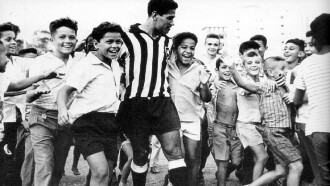
Documentary about the most famous dribbler in Brazilian Soccer (some say in Soccer's history!) at the zenith of his career, showing classic scenes of 1958 and 1962 World Cup.
03 September 1969
Born a fully grown black man in a village in the Brazilian jungle, Macunaíma later magically transforms into a white man before making an adventure-filled trip to the city of São Paulo.
30 December 1977
In the island of Paquetá, professor investigates the genital vocation of vegetables and fruits, maintaining sexual relations with a watermelon.
15 May 2019
Follows the story of Opinião, a theatre group created in 1964 during the early Brazilian dictatorship period to oppose the government through artistic performances.
01 January 1976
After staying the day at the gym, eating and drinking, Carlos, a fat man, go meet his parents, Helena and Jorge, at the party they are throwing.
28 March 1966
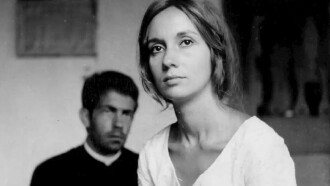
In a small town in Minas Gerais, the arrival of a young priest causes a commotion in the conservative atmosphere of the place, aggravated by the sudden attraction this priest feels for a beautiful girl.
01 January 2006
The documentary "Depois do Transe" covers the entire process of creating the masterpiece "Entranced Earth", which was released and awarded at the Cannes Film Festival in 1967.
22 February 1982
Fantasy comedy about Brazilian writer Oswald de Andrade, one of the most important icons of Modernism in Brazil.
01 January 1968
In 1967, de Andrade was invited by the Italian company Olivetti to produce a documentary on the new Brazilian capital city of Brasília.
16 April 1967
Originally produced for German TV, Improvised and Purposeful is a firsthand look at the "Cinema Novo" movement (otherwise known as the 'Brazilian New Wave').
08 June 1976
An hour-long conversation with Brazilian Cinema Novo director Joaquim Pedro de Andrade conducted by Sylvia Bahiense.
01 January 1960
The arrival of a chemical plant in a fishermen haven brings along social transformations, interfering with the local traditions.
01 January 1970
Short documentary about the ideology of publicity and mass medias.
06 July 1958
Institutional film made for Petrobras in 1958, through a public announcement, about the company's actions for the training of technicians specialized in petroleum engineering.
05 January 1972
The real story of the failed attempt of an independence coup by a group of intellectuals and rich men during Brazil's colonial days, from its beginning to the execution of Tiradentes.
20 November 1962
Five segments about the hardships faced by people living in slums on hills in Rio de Janeiro.
01 January 1978
O Aleijadinho, a study of the work of Antonio Francisco Lisboa, the architect whose cathedral de Andrade had assisted in the restoration of more than 20 years earlier.
07 May 1962
A few weeks before Carnival, slum boys organize huntings for stray cats, whose leather can be used in Samba percussion instruments, like the Tamborim, a small drum.
16 May 2016
A deep investigation, in the way of a poetic essay, on one of the main Latin American movements in cinema, analyzed via the thoughts of its main authors, who invented, in the early 1960s, a new way of making movies in Brazil, with a political attitude, always near to people's problems, that combined art and revolution.
01 May 1975
Many stories revolving around a poor couple who, in spite of hating each other, still live together under the same roof.
01 January 1959
A 10-minute portrait of modernist poet and de Andrade’s godfather, Manuel Bandeira, is clear in its affection for it subject, though like many New-Waveish films of the time, depicts the modern urban landscape as an ominous and alienating force.
01 January 1959
Documentary about influential Brazilian sociologist Gilberto Freyre, made in his country house in Apipucos, Pernambuco (Northeast Brazil).