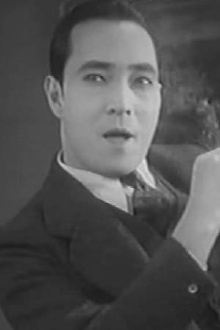
Joji Oka Trailers
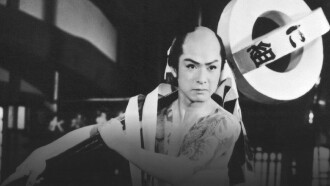
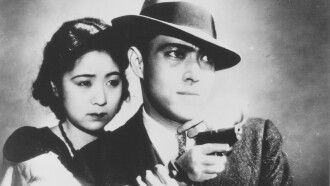
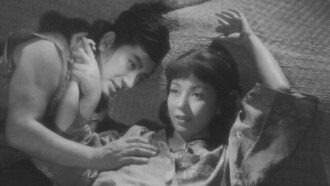
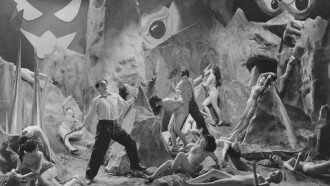
Secret Love TrailerKono michi akashingō TrailerA Devil of a Gentleman Trailer
Joji Oka, born in Tokyo, Japan, on May 25, 1902, was a renowned Japanese actor celebrated for his versatile roles in the film industry. His given name was Katsuzo Nakamizo, and he also used alternate names, including Susumu Minobe.
Oka embarked on his cinematic journey in the late 1920s, making his debut with the film "Ryuko no Maki Tora no Maki" in 1928. He rose to prominence as a leading actor in movies like "Akai Hi Aoi Hi" (Red Lights, Blue Lights) in 1929. His influence extended across silent and sound films, where he showcased his remarkable voice and talent.
In the early 1930s, Oka encountered personal and professional challenges, including a romantic involvement with actress Ran Koizumi and a subsequent disappearance incident. Later, he joined Toho Studios, further solidifying his position as a leading actor. Notable works, such as "Shiroi Kinjo" (White Robes) in 1936, featured his exceptional talents.
During World War II, Oka served in the Imperial Japanese Army while simultaneously pursuing his acting career. Following the war, he resumed his involvement in filmmaking and garnered recognition for his roles in movies like "Kanchi eizu Seiretsu" (The Ambitious Gang) in 1954.
Oka's career spanned from the late 1920s to the late 1960s, showcasing his versatility and skill in various genres, encompassing modern drama, period pieces, and action films. He passed away on December 17, 1970, at the age of 68, leaving behind a legacy of memorable performances within the realm of Japanese cinema.

Most Popular Joji Oka Trailers
Total trailers found: 92
29 May 1960
A kindhearted wandering gambler named Hajiro gets involved in a crisis of a village as he passes through and decides to lend a sword in hopes to rescue them.
07 January 1942
A 1942 Jidaigeki by the veteran jidaigeki filmmaker Kunio Watanabe about the legendary warrior Musashibo Benkei
with Hideko Takamine portraying Minamoto no Yoshitsune (who is, of course, a man).
27 June 1956
Kusuo Abe stars in this kaidan.
13 October 1954
A ghost man with his face hidden entirely by bandages is killing beautiful nude models. Detective Kindaichi investigates.
01 March 1956
The story of Japan’s greatest warrior, Miyamoto Musashi, after his historic duel with Sasaki Kojiro on Ganryu Island.
27 March 1960
The adventures of Aoi Shingo continue. Shingo is finally given permission to officially meet his father, the Shogun.
17 November 1957
Toyama Kinshiro, a commissioner from northern Edo, goes undercover to unravel the mystery behind a series of murders.
22 October 1957
Ronin Sasaki Kojiro pursues his ultimate goal of becoming a master swordsman. Along the way he encounters another great swordsman, Miyamoto Musashi.
01 December 1932
This 1932 adaptation is the earliest sound version of the ever-popular and much-filmed Chushingura story of the loyal 47 retainers who avenged their feudal lord after he was obliged to commit hara-kiri due to the machinations of a villainous courtier.
04 June 1936
Two brothers run a factory canning crabs. The elder brother Kotaro is righteous and insists on honesty.
05 December 1956
Japanese drama film.
05 November 1957
The conclusion of the story of famed swordsman, Sasaki Kojiro. After surviving a series of daring adventures, Kojiro seems to have finally discovered the ultimate happiness in life when he is reunited with Tone, the love of his life.
11 February 1932
Part two of Shimizu's major silent Seven Seas, a family drama of the intertwining fates of the rich, decadent Yagibashis and the far less prosperous Sone family.
22 January 1953
Bored Hatamoto movie #14
28 July 1959
Fifth Moonlight Mask theatrical film.
03 January 1959
In 1941, overpopulated Japan faces an economic boycott and its armed forces push further to the south.
28 December 1957
Hashizo Okawa in the form of a courageous firefighter who confronts unscrupulous traders who make a profit even at the cost of human lives.
22 February 1934
A melodrama by noted auteur and father of director Yoshitaro Nomura, Hotei Nomura. This is apparently the first adaptation of Izumi Kyoka's The Romance of Yushima.
12 April 1929
The Morning Sun Shines is a fiction-documentary film by Kenji Mizoguchi and Seiichi Ina. The film is a combination of a drama about a reporter, and documentary footage about newspaper production.
24 February 1951
During the war a man is bitten by a creature which looks like a cross between a bear and an ape in the jungle.
27 April 1933
A gangster tries to find redemption with the inadvertent help of an innocent shop girl and his jealous girlfriend will do anything to keep him.
26 July 1955
Japanese film.
23 October 1940
A narrative rakugo film depicting the struggles of people desperately living under wartime conditions.
04 May 1933
Japanese film from 1933, adapted from a story serialized in the entertainment magazine "Fuji."
13 November 1952
The film depicts how the work to build the Great Buddha overcame a number of obstacles as proponents and opponents clashed over the construction of the Buddha.
29 June 1958
A spider-like man kidnaps young women and tortures them in his cellar. Adaptation of Edogawa Ranpo's novel.
23 December 1931
The film is a lengthy work interweaving characters from different backgrounds and social strata in a narrative centered around the experiences of its heroine, Yumie Sone.
21 July 1954
Kurama Tengu appears in the Great Edo, where conspiracies swirl. The righteous sword flashes as the mystery of a beautiful woman’s disappearance unfolds.
12 March 1950
Based on the novel The Vampire (Kyūketsuki) by Edogawa Ranpo.
11 March 1958
Thanks to a secret message hidden on the two sacred swords Kaen and Suien, the samurai Genji Kurô (Nakamura Kinnosuke) found the hidden treasure of Lord Yoshitsune.
07 December 1933
It is considered to be a lost film.
19 May 1959
Attracted by the report of the development of a new type of rocket fuel, the vicious dictator of Krangkor, the dark planet, descends on Earth to steal the formula from its creator, the benevolent Dr.
29 September 1957
The sixth episode of Hashizo Okawa's "Wakasama Samurai" catch series.
16 December 1932
An actress returns to Tokyo after a successful stint in Hollywood to reclaim—with the help of her gangster brother—the daughter she abandoned years before.
05 June 1952
Moju Tsukai no Shojo is a 1952 black-and-white Japanese film
18 March 1943
A 1943 film.
16 November 1933
Japanese film from 1933, adapted from Masao Kume's serialized newspaper novel.
29 November 1953
First film of the The Black Hooded Man series.
28 December 1957
A swordsman must foil a minister's sinister plan to assassinate the shogun.
21 September 1954
Shigeki Kachi, Tosuke Satomura, and Nanako, who belong to the theater company Vuanbert around Dosa, withdrew at the indignation of the chairman Hayashi and seeked their own careers in the film industry.
21 June 1956
Okawa Hashizo as 'Young Lord', the unlikely sleuth sets out to untangle the riddle of what went on at the Inner Palace, where a young woman who had served the Shogun came home in fear for her life.
24 January 1949
The sincere, selfless love of a foolish mother for her daughter set against the backdrop of the circus.
15 November 1935
1930s Japanese film.
01 February 1952
A mystery story set on a haunted island: a student is murdered, followed by the suicide of his lover.
08 June 1955
By day, he is a young master whose beauty melts women’s hearts. By night, he is the elusive “White Hood.
10 July 1952
A handsome man and a beautiful woman who seek to restore the Toyotomi clan by taking in the orphaned Princess Tsuru.
14 September 1951
The sword of the chivalrous warrior is drawn amid the struggle for a legendary sword and a plot to assassinate a young princess.
14 April 1936
The sequel to the 1935 film Great Bodhisattva Pass