


Most Popular Joo Byung-do Trailers
Total trailers found: 10

Green Fish Trailer (1997)
07 February 1997
Returning home and finding his town drastically changed, a former soldier falls in with gangsters.

A Single Spark Trailer (1995)
18 November 1995
Activist and law school graduate Kim is being persecuted by the mid-’70s Park regime for trying to write a book about Jeon Tae-il, a union activist who immolated himself at age 22 to protest government hypocrisy.
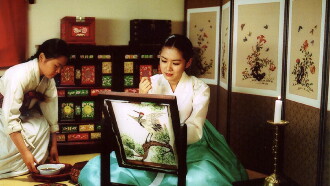
Chihwaseon Trailer (2002)
10 May 2002
Jang Seung-eop, also known as "Chihwaseon," drinks and paints all day. Through Mae-hyang, he learns the meaning of fate, sees art beyond even the smallest things, and sets out for the path he seeks.
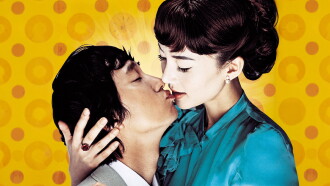
A Boy Who Went to Heaven Trailer (2005)
11 November 2005
After a miraculous second chance at life, a 13-year-old boy reincarnated into a 33-year-old man has 60 days to win a single mother's heart.

Low Life Trailer (2004)
21 May 2004
A sprawling story of one man's tumultuous life within the context of the South Korean political situation during the second half of the 20th century.

Beyond the Years Trailer (2007)
12 April 2007
A drama centered on brother-and-sister musicians trained to perform the epic Korean poems known as pansori.
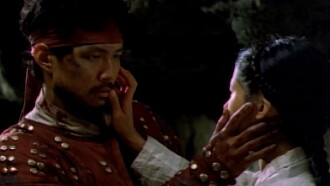
The Uprising Trailer (1999)
26 June 1999
In the late 19th century Catholicism was gaining a foothold on Jeju island, much to the horror of the Confucian community, who were seeing their influence diminishing as well as getting increased taxes from Catholic-friendly government officers.

Hanji Trailer (2011)
17 March 2011
Low-ranking civil servant Pil Yong (Park Joong Hoon) has things hard looking after his disabled wife(Ye Ji Won).
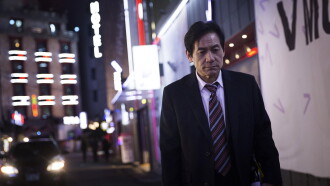
Revivre Trailer (2014)
26 September 2014
A middle-aged man who has recently lost his wife to cancer indulges in fantasies about a young woman at his work, in the new film from Korean master Im Kwon-taek.

The Eternal Empire Trailer (1995)
28 January 1995
This film depicts the struggles of the Royal Party and the Old Party to obtain political power. In 1800, The Royal Party insisted that the political power should be centralized to the King, but the other party (The Old Party) insisted that the political power should be centralized to the majority of the ministers.
