José Bohr Trailers
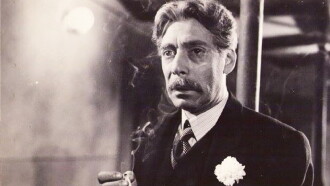
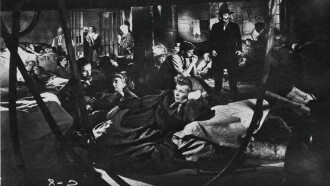
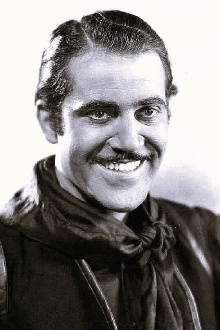
Los buenos samaritanos TrailerIf My Fields Could Talk TrailerEl último guapo Trailer
Born in Germany on November 3, 1901 under the name of Joseph Bohr Elzer, the young José Bohr arrived with his family to colonize southern Chile in 1904. It was in the city of Punta Arenas where he began his precocious cinematographic and musical career, composing songs including the hymn "Punta Arenas", playing the piano for silent films and making his first film works before he was in his twenties.
After emigrating to Santiago in 1921, he went to Brazil, Uruguay and Argentina, hired by the Chilean Ministry of Foreign Affairs to make a documentary. Later he settled in Buenos Aires, where he composed a good part of the 200 songs that swelled the popular songbook of the time, such as "Y tenía un lunar", "Cascabelito" and "Pero hay una melena", as well as advertising tangos for music houses. He performed for the first time in the United States in 1925, starring in the musical show Gaucho at the Paramount Theater in Broadway. In this country he rubbed shoulders with the stars of the big screen, enjoying bohemian life and success. Shortly thereafter, he starred in the first Spanish-language film produced in Hollywood, Sombras de gloria, for which he received a symbolic Oscar, since the category of best foreign film did not yet exist.
In Mexico, where he moved in 1932 and became friends with renowned artists such as Luis Buñuel, Cantinflas and Jorge Negrete, he became one of the pioneers of cinema, shooting more than thirty films. It was there when, in 1936, Claudio Arrau starred in and interpreted the music for his film, which was about the life of Liszt.
Upon his return to Chile in 1940, he served as general director of Chile Films and shot 16 films. He composed the music for all of them, as was usual in the sixty films he made during his lifetime. Some of his most famous films are Uno que ha sido marino, Si mis campos hablaran and El gran circo Chamorro.
In addition to being named Illustrious Son of the city of Punta Arenas in 1976, the Government decorated him with the Bernardo O'Higgins Order of Merit.
In the 1980s he settled in Denmark with his sons Daniel and Eduardo, also dedicated to film and music.
He died on May 29, 1994 in Oslo, Norway.

Most Popular José Bohr Trailers
Total trailers found: 43
05 November 1919
It tells the adventures of a tailor, played by the comedian Morvello, who believes he has won the lottery.
12 July 1948
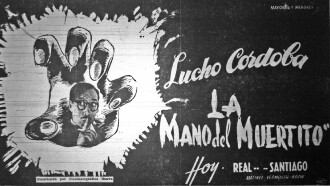
A film that mixes comedy with mystery. A hairdresser (Lucho Córdoba) is a fan of detective novels, to the point of fantasizing while he works, which causes him several problems with his boss.
03 May 1930
A British ex-Grenadier Guards officer moves to America, but struggles to find work. After he is employed as a chauffeur to a wealthy family, he falls in love with his employer's daughter.
01 January 1929
Juan is summoned by Goldenberg to offer him a job in the cheap business. To get away from him, Pardo evades his proposals justifying himself by saying that he must consult with his partner; who, in reality, does not exist.
22 December 1928
Venezuelan adaptation of The Four Featehr by A.E.W. Mason. A story of courage and redemption set in the British Empire's colonial era.
28 March 1919
Newscast made by the production company Magallanes Film, made up of José Bohr and Antonio Radonich. Film premiered at the Teatro Royal in Punta Arenas on March 28, 1919.
15 April 1947
Hercules, a poor individual earns his living as a walking street ad, carrying a gigantic advertising sign on his shoulders.
02 August 1940
A 1940 film directed by José Bohr.
07 December 1930
El Malo, notorious Mexican bandit, forces the Mayor of Sierra Blanca, Seth Landport, to open the safe and turn over to him 2,000 pesos, which the bandit gives a promissory note for to the Mayor.
31 December 1931
José arrives in Hollywood seeking fame and fortune. The studio boss, Helen, falls in love with him, offers him a chance, and he becomes a movie star.
29 November 1939
A plastic surgeon goes mad when he discovers that his wife have an affair. He fakes her death and disfigure her and locks her in the cellar.
19 November 1930
A woman's uncontrollable jealousy over her husband's former girlfriend results in her losing not only her house but her young son is taken away from her.
14 January 1947
Desideria de los Ríos is an amateur actress who works in a theater of bad death and looks for the way to become a luminary of the screen.
24 October 1949
The characters are refugees from the war who have arrived in America. Ricardo Moller is a scientist who the war has left sexually mutilated, while Arturo Gonzálvez is a professor who believes that another passenger is insane, unaware that she is his wife accompanied by their children.
14 November 1955
The hard-working owner of a circus, Euríspides Chamorro (Eugenio Retes), goes to Santiago in search of his son, a medical student, but finds to his surprise that he has dropped out of school and no one knows his whereabouts.
11 November 1938
Theatrical producers discover a new musical-theatre star in a small farming town.
09 March 1948
El Chepo (Lucho Córdoba) must take care of his six brothers, all laborers on a quiet farm. The arrival of the landlady, with her two daughters and their suitor, upsets the place.
04 June 1936
An agent of the anti-drug brigade is captured and ends up addicted to marijuana, which causes him to enter the mafia.
01 January 1919
Informative about progress and industry in Magallanes. Film restored by the National Cinematheque of Chile.
08 June 1970
After arriving on a ship in Valparaíso, Bohr meets Euríspides Chamorro, with whom he begins a trip through Chile, full of sketches, most of them led by the comedy duo Los Capo- rales.
01 August 1919
It premiered at the Teatro Royal in Punta Arenas on August 1, 1919 with the following paintings: – Mass and walkers leave Plaza Muñoz Gamero.
29 January 1920
The film tells the adventures of a bohemian who, after a joyful bender, dreams delusions of grandeur that reality brings back down to earth.
25 May 1948
The owner of a ranch pretends to a woman who is in love with a young blacksmith and spur craftsman. Because of his jealousy, the owner threatens the young man to pay a high mortgage to continue living on his ranch.
27 March 1944
Flor del Carmen, daughter of the foreman of a farm, is in love with a peon: her father is opposed to this marriage, but instead yields to the threats of a rich and cynical peasant who lent him money while in trouble, in exchange he offers his daughter to him.
02 January 1935
Luponini, a bank employee, becomes a robber due to a broken heart. His criminal career, successful at first, is soon threatened by the betrayal of one of his accomplices and the contempt of Luisa, his ex-wife.
04 April 1935
Historical drama portraying the life of the celebrated composer Franz Liszt.
17 September 1951
Two shoeshine girls and a newspaper vendor survive in the Mapocho neighborhood of Santiago. While looking for better luck, Maruja becomes involved with a businessman who helps her become a famous singer.
02 October 1939
In a small city, talented María was trained as a singer by blind composer Joaquín. They both dream of making it big in the capital but, when they finally make the move, they find that success is not achieved without struggles.
26 November 1946
An Argentine writer agrees to travel with a detective, a married individual and a woman in a car, to cross the mountain range.
01 January 1928
José Bohr performs an interpretation of a Spanish-language adaptation of the song Miss Annabel Lee, which is in foxtrot rhythm and was originally performed by Annette Hanshaw in 1927.
04 September 1958
Elderly suburban man is imprisoned over a misunderstanding about some garden utensils.
01 July 1947
The action begins in 1847 with the arrival of the first German settlers in southern Chile. Don Vicente Perez Rosales is in charge of welcoming the immigrants who arrive by boat to the remote areas of Villarica.
28 August 1934
A murder mystery.
15 December 1942
Desideria, a servant girl, dreams of traveling to Buenos Aires. Incredibly, Blas Pastrana, a relative of her employers, is dying in Argentina and expressly asks them to travel with her.
30 June 1950
Newsreel covering a concert tour by Claudio Arrau, featuring performances at Carnegie Hall in New York and later at the Municipal Theatre in Santiago.