Joseph Moncure March Trailers
American Cowboy Trailer
Joseph Moncure March (July 27, 1899 New York City - February 14, 1977 Los Angeles, California) was an American poet and essayist, best known for his long narrative poems The Wild Party and The Set-Up.
After serving in World War I and graduating from Amherst College (where he was a protégé of Robert Frost), March was managing editor of The New Yorker in 1925, and helped create the magazine's "Talk of the Town" front section. He left the magazine, and wrote the first of his two important long Jazz Age narrative poems, The Wild Party. Due to its risqué content, this violent story of a vaudeville dancer who throws a booze and sex-filled party could not find a publisher until 1928. Once published, however, the poem was a great success despite being banned in Boston. March followed with The Set-Up, a poem about a black boxer who had just been released from prison.
In 1929, March moved to Hollywood to provide additional dialogue for the film Journey's End and, more famously, to turn the silent version of Howard Hughes' classic Hell's Angels into a talkie — a rewrite that brought the phrase "Excuse me while I put on something more comfortable" into the American lexicon. March stayed with Hughes' Caddo Pictures studio for several years, temporarily running the office, overseeing the release of Hell's Angels, and getting into legal trouble after an attempt to steal the script for rival Warner Bros.' flying picture The Dawn Patrol.
March worked as a screenwriter in Hollywood until 1940, under contract to MGM and Paramount and later as a freelancer for Republic Pictures and other studios; he wrote at least 19 produced scripts in his Hollywood career. His most prominent late script is probably the left-leaning John Wayne curio Three Faces West, a knockoff of The Grapes of Wrath that ends with a faceoff between Okies and Nazis.
With his third wife, Peggy Prior (a Pathé screenwriter) and her two children, March returned to the East Coast in 1940. During World War II, he worked at a shipbuilding plant in Groton, Connecticut, and wrote features (mostly acid assessments of the movie business) for the New York Times Magazine. In later years, he wrote documentaries for the State Department and industrial films for Ford Motor Company, General Motors, Monsanto Company, American Airlines, and others. Several films starring industrial films icon Thelma "Tad" Tadlock, including Design for Dreaming (1956) and A Touch of Magic (1961) were made from Mar his rhyming scripts. March died in 1977.

Most Popular Joseph Moncure March Trailers
Total trailers found: 23
26 January 1934
Mazie, a poor orphan girl, is mistreated by cruel farmer Slag and his wife for whom she works. Mazie, who is growing into a woman, does not like they way Slag has been looking at her lately.
08 June 1933
This turn-of-the-century tragedy chronicles the sorrowful travails of a woman who endures a series of devastating losses.
19 June 1940
David Cook and twin brother Tom are poles apart in disposition and traits. When their father dies, Tom goes to New Mexico to live with his Uncle Hardtack while David remains behind to care for their mother.
15 November 1930
As the Great War breaks out in Europe, English brothers Roy and Monte enlist in the Royal Flying Corps to fight for king and country, while their Oxford College friend Karl is ordered back to Germany.
28 October 1932
A pretty but virtuous small-town bank clerk is the victim of a vicious rumor from an unsuccessful suitor that she spent the night with a notorious womanizer.
29 March 1949
Expecting the usual loss, a boxing manager takes bribes from a betting gangster without telling his fighter.
16 June 1936
An heiress with a penchant for speeding runs afoul of a traffic cop. Romance develops between the two, but it's soon complicated when he believes she is responsible for killing someone due to reckless driving.
15 May 1935
Let 'Em Have It is a 1935 gangster film. It was also known as The Legion of Valour and False Faces. An FBI agent tracks down a gang leader.
15 March 1940
A disillusioned factory worker is charged with the attempted murder of her mother's lover.
06 February 1939
A woman doctor is divided between the dedication to her profession and the much needed attention to her husband and daughter.
15 April 1938
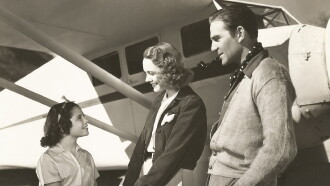
While searching the South Pacific for a missing aviator, Bob Mitchell and Jimmy Wallace are caught in a typhoon and crack up on an island, escaping unharmed with the aid of Tura, a beautiful jungle girl who is the only inhabitant of the island and is believed a goddess by the natives of the adjoining islands.
01 March 1975
An aging silent movie comic star throws a lavish party to try and save his failing career.
12 July 1930
A story about a man from Wyoming who enlists in the Army and is sent to the front during World War I.
23 December 1940
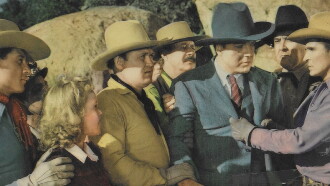
Yet another fast-paced western featuring the "Three Mesqueteers," pulp writer William Colt McDonald's trio of sagebrush heroes, Lone Star Raiders finds Stony Brooke (Robert Livingston), Tucson Smith (Bob Steele) and Lullaby Joslin (Rufe Davis) defending elderly rancher "Granny" Phelps (Sarah Padden) from greedy neighbor Henry Martin (George Douglas).
30 November 1933
A sideshow bally girl sets out to seduce the naive son of the show's manager to get even with him for a friend that he jilted.
09 April 1930
In 1917 France, an alcoholic captain is afraid that his new replacement, his sweetheart's brother, will betray his downfall.
30 December 1932
Pinkerton marries Cho-Cho San in Japan, whilst on shore leave. When he leaves, she keeps his Japanese home as he left it.
03 July 1940
Viennese surgeon Dr. Braun and his daughter Leni come to a small town in North Dakota as refugees from Hitler.
02 December 1938
A troupe of traveling entertainers become stranded in Paraguay.
10 May 1950
A big city reporter visits a Colorado ranch to write an article for his paper and is surprised to learn that real cowboys are not as glamorous as Hollywood portrays.
20 November 1936
An unfortunate marriage and a bogus Count are the ingredients for this musical.
23 November 1934
Larry O'Roark is a boxer who's insanely posssesive and jealous of his fiancee, Jo. the sight of her and her employer, Mr.
16 December 1953
The history of American transportation from the horse and buggys of yesteryear to the progression of the motor car.