


Most Popular Katia Kameli Trailers
Total trailers found: 13
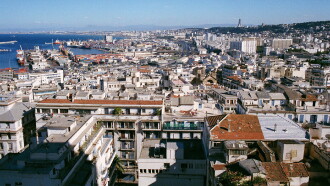
Les Baies d'Alger Trailer (2006)
11 March 2006
In an extended panoramic view—an "audioscopy" of Algiers—the camera’s eye scrutinizes various buildings and city-center neighborhoods with an intimate approach.

The Algerian Novel, chapter 3 Trailer (2019)
01 January 2019
The Hirak protests appear as a counterpoint to the investigations conducted throughout the film, and seem to provide the gateway to the exploration of hidden memories.
The Algerian Novel, chapter 2 Trailer (2017)
01 January 2017
In Algerian Novel - chapter 2, French philosopher Marie-José Mondzain reinterprets Algerian Novel - chapter 1.
The Algerian Novel, chapter 1 Trailer (2016)
01 January 2016
In Larbi Ben M’Hidi street, in Algiers, Farouk Azzoug and his son own a nomad kiosk where they sell old postcards and reproduction of archival photographs.
The Algerian Novel Trailer (2019)
02 January 2019
Starting from a small kiosk of old postcards as a derisory memorial of Algerian history, the visual artist questions the role of images - or the absence of images - in the representation of the colonial heritage of Algeria, of decolonization and the dark years… in short, in the construction of his national novel.
Dissolution Trailer (2009)
01 January 2009
This video takes a particular viewpoint, with the camera placed behind a zone of blur. Slowly, we experience the perception of an expanded time.
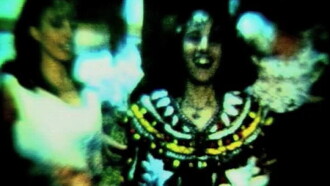
Nouba Trailer (2000)
01 January 2000
Nouba plays on the aesthetics of video clips and evokes a remote and exotic reality, further displaced by an unterritorialized music.
Bledi a possible scenario Trailer (2004)
01 January 2004
Throughout the video, image, sound and language (spoken, sung or written – on street signs or in the subtitles) are combined, and re-combined, to reveal ‘Algeria’ as a site of competing discourses, a culture in the constant process of ‘becoming’ (Stuart Hall 1990).
