Kinuko Wakamizu Trailers
Amakara chindōchū TrailerGreat X TrailerThe Woman Who Holds the Key Trailer

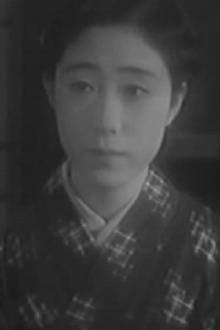
Amakara chindōchū TrailerGreat X TrailerThe Woman Who Holds the Key Trailer

Total trailers found: 32

28 June 1945
Kotobuki-za is a story of the Naniwa-bushi singer Baichuken Tsurumaru.
26 December 1928
The doomed love story between a young courtesan and a samurai, in Kyoto.
14 January 1932
Kan’ichi Hazama and Omiya Shigisawa are engaged to be married, but Omiya breaks the engagement to marry a wealthy banker’s son.

15 June 1935
A period piece about the love of a wealthy blind woman, a teacher of koto and shamisen, and her devoted manservant.
05 January 1929
Shinzaemon has been Sukeroku’s enemy ever since Sukeroku fought and defeated gangs from Shinzaemon’s group at a Kabuki theatre over Agemaki from Miuraya.
12 November 1942
A nurse's tale of self-sacrifice during wartime. The title is borrowed from a patriotic song made popular by singer Hamako Watanabe during the Second Sino-Japanese War.
11 February 1932
Part two of Shimizu's major silent Seven Seas, a family drama of the intertwining fates of the rich, decadent Yagibashis and the far less prosperous Sone family.
12 August 1943
The story of a boy who befriends a lonely middle-aged man.
22 February 1934
A melodrama by noted auteur and father of director Yoshitaro Nomura, Hotei Nomura. This is apparently the first adaptation of Izumi Kyoka's The Romance of Yushima.
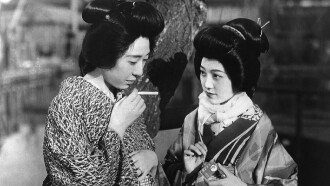
01 April 1933
An aging geisha, whose angry teenage son is ashamed of her profession, works alongside a young geisha, resentful of her family for forcing her into a life of shame.
01 July 1943
Based on the true story of a 17-year old Atayal girl called Sayun Hayun from Nan'oku village, Giran district, Taihoku Prefecture (in current Taiwan) who went missing and was thought to have drowned whilst helping carry the luggage of her teacher Masaki Takita during a storm in 1938.
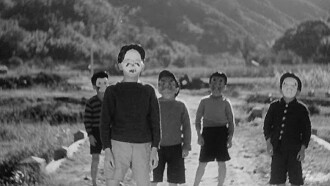
28 January 1939
The brothers of Children In The Wind deal with declining family fortunes: they must work when the father becomes sick, and eventually live with their grandfather, which means making new friends and struggling with a different environment.

01 March 1941
After the death of her husband, an elderly woman and her youngest, unmarried daughter are forced to sell their house to cover his debts and decide to move in with one of the former's children, each of whom is scarcely happy to accommodate.
29 May 1941
A city boy moves to the countryside and the kids there pick on him.
23 December 1931
The film is a lengthy work interweaving characters from different backgrounds and social strata in a narrative centered around the experiences of its heroine, Yumie Sone.
31 October 1933
The story deals with Fuji, nicknamed Waka-danna (Young Master), the star athlete on his university's rugby team.
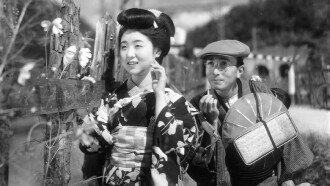
02 February 1933
"The Dancing Girl of Izu" tells of the story between a young male student who is touring the Izu Peninsula and a family of traveling dancers he meets there, including their youngest girl.
04 February 1932
Film by Hiroshi Shimizu, featuring an early role for frequent Ozu and Naruse collaborator Hideko Takamine.

15 August 1946
Shochiku melodrama about the lives of the humble people living in the poor tenement called the Ryuheiso.

30 January 1941
A reformatory in the remote countryside houses 200 delinquents and problem children. The teachers and caretakers face much trouble.

18 April 1946
Representing a destitute mother in an infanticide trial, a female lawyer attempts to convince a conservative prosecutor of the benefits of Japan's democratized post-war legal system.
20 May 1937
A Japanese screwball comedy about the battle between the sexes: two timid men, egged on by their wives, end up in a bitter duel over an expensive lace handkerchief.
01 March 1933
Tsukamoto and Omitsu are close friends, but one day, Tsukamoto becomes fascinated by Ayako, whom he meets at the home of Miyajima.
11 November 1950
Kotaro Shimoyama, once a government official, loses his job and separates from his wife, Sachie. He now resides with his daughter, Haruko.
