Koshiro Otsu Trailers
The Silence TrailerThe Wages of Resistance: Narita Stories TrailerNuchigafu - Life is a Treasure Trailer
Koshiro Otsu (大津 幸四郎 Otsu Koshiro, 1934 - 28 November 2014) was a Japanese cinematographer and film director. Otsu is one of the most famous cinematographers in Japanese film history. He joined Iwanami Productions in 1958. After going freelance, he worked with legendary director Ogawa Shinsuke on The Oppressed Students (1967) and Summer in Narita (1968), with Tsuchimoto Noriaki on Prehistory of the Partisans (1969), Minamata: The Victims and Their World (1971), and many other films.
Most Popular Koshiro Otsu Trailers
Total trailers found: 39
01 January 1976
An update to the story of Minamata disease, going up to 1976
08 October 1969
This film documents student preparations for the final phases of the 1969 protests against the renewal of the security treaty.
17 June 1983
Japanese drama film.
16 February 1980
1980 Japanese film distributed by Shochiku.
19 February 1973
In a bustling shopping district, a humble tailor accompanies his daughter for an afternoon out — until a trio of thugs begin harassing her in broad daylight.
12 October 1991
This film is a record of the first Yamagata International Documentary Film Festival. It reflects the various ways the festival was given shape by nascent global changes embodied by Perestroika, the Tiananmen Square massacre, and many other contemporaneous events.
01 January 1968
Documentary filmed by young directors in Japan that was shaken by the US-Japan security pact struggles and student disputes.
28 October 1978
Film distributed by ATG.
14 October 1994
This odd three-parter purports to map the metaphysics of the interpersonal universe, dividing its trio of tales into three, different-toned “planets.
01 January 2008
Before World War II, Ikego village was an idyllic agriculture community. The Imperial Navy took over the village and the hills to build the largest ammunition preserve in Asia.
06 January 1967
A film made with a group of student and worker activists during the Haneda 1967 protests against Japan’s cooperation with the US and the Vietnam war.
12 July 1975
Fujishita Kumi is an ordinary office lady. Longing to escape her poor fishing village for a life in the city, she came to Tokyo.
20 October 2001
An unusual family portrait questioning the definitions of art, family, and what it means to be disabled.
02 December 2017
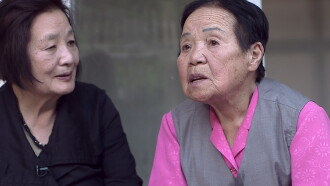
The Silence narrates the struggle of fifteen "comfort women"—former sex slaves by the Imperial Japanese Army during WWII—for recognition and reparation.
16 January 1999
This is a film about seven artists. It's also a film about seven people who are mentally handicapped.
07 June 1978
My Town, My Youth is an inspiring film shot twenty years after the official recognition of the disease and focuses on a group of young people (many born with the disease) as they mobilise to keep their cause visible by organising a concert by the popular enka singer Ishikawa Sayuri.
25 September 1987
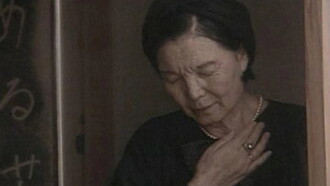
38 years after the Pacific War, 84 victims of a mass suicide ordered by the Japanese military were uncovered in a cave in Yomitan village.
01 January 1991
Starring Kazuo Ohno, an inspirational figure in Butoh dance.
01 November 2014
The Wages of Resistance is a feature-length documentary film that portrays an "extended span of time" of the protests against building Narita International Airport which have continued from the 1960's to today through documenting monologues of those whose lives were twisted by the movement.
12 March 1971
The first in a series of independent documentaries that Tsuchimoto made of the mercury poisoning incident in Minamata, Japan.
06 August 2011
With the passing of Nakazawa Keiji in December 2012, Barefoot Gen’s Hiroshima now stands as the manga artist’s last message of peace to the world.
12 October 1968
In 1968, Ogawa decided to form Ogawa Productions and locate it at the newly announced construction site of Narita International Airport in a district called Sanrizuka.
11 October 2006
Documentary filmmaker Makoto Sato offers this reflection on the life and career of Edward Said, the deeply influential literary and cultural critic, Columbia University academic, and outspoken advocate for displaced Palestinians, of whom he was one.
22 November 2002
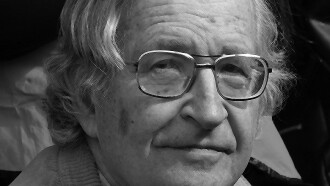
This documentary compiles a series of Noam Chomsky's interviews and lectures that address the events of 9/11.
02 July 2000
A documentary portrait of Miho Shimao, widow of renowned Japanese writer Toshio Shimao.
29 June 1973
Second film in Tsuchimoto's series on Minamata disease - the victims of Minamata disease negotiate directly with Chisso Corporation (responsible for dumping toxic water into Minamata Bay) for life-long medical care and compensation.
07 October 2005
Living in a slum damaged by the atomic bomb and watching elderly first-generation zainichi hibakusha (atomic bomb survivors) pass away one after another, Pak felt compelled to break their silence with this documentary, her first.
23 January 1975
The sea around Minamata was heavily polluted with mercury during the 1950s and 1960s from the Chisso Corporation's chemical factory.
11 April 1975
A medical perspective of Minamata disease in three parts - 1) Progress of Research; 2) Pathology ands
10 March 2007
This documentary follows one of the creators of the japanese dance Butoh, Kazuo Ohno, 95, and his son, Yoshito Ohno.
01 January 1967
A galvanising documentary about the organised resistance of a group of students barricaded at the Takasaki City University of Economics.
01 January 1966
A documentary film on traffic accidents and emergency responders in Japan amid increasing motorization.
28 July 2012
A feature-length documentary that witnesses twenty-seven survivors of the Battle of Okinawa break their silence to testify the truth about the tragedy of “gyokusai,” forced group suicide, of Korean “military laborers” and “comfort women” brought from Korea.
02 July 2005
In 2005, sixty years after the end of World War II, the conservative Japanese government is pressing ahead with plans to revise the nation's constitution and jettison its no-war clause, Article 9.
01 January 1991
In the final hours of the Pacific War, Okinawa was the destination for Korean men conscripted as “military laborers” and Korean women taken as “comfort women.