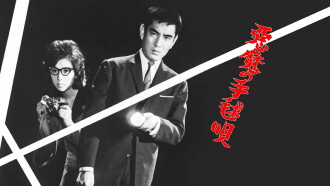
Kunio Watanabe Trailers
Kunio Watanabe was born on June 3, 1899 in Mishima, Shizuoka, Japan. He was a director and writer, known for Ikoku no oka (1949), Rajo no urei (1950) and Onna Sanshiro (1950). He died on November 5, 1981.

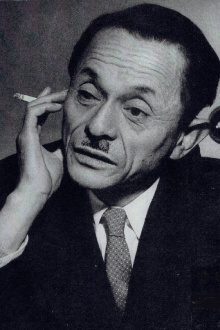
Kunio Watanabe was born on June 3, 1899 in Mishima, Shizuoka, Japan. He was a director and writer, known for Ikoku no oka (1949), Rajo no urei (1950) and Onna Sanshiro (1950). He died on November 5, 1981.

Total trailers found: 90

17 June 1953
The final film in the 1953 trilogy based on the long novel series The Great Bodhisattva Pass.
03 June 1953
The second film in the 1953 trilogy based on the long novel series The Great Bodhisattva Pass.
01 May 1962
Yumemi, the president of Shirayuri Tours, visits Kagoshima in an attempt to save the contract with Satsuma Inn.

28 December 1956
An exciting historical drama in which a beautiful woman secretly solves the family problems of the Owari clan.

07 January 1942
A 1942 Jidaigeki by the veteran jidaigeki filmmaker Kunio Watanabe about the legendary warrior Musashibo Benkei with Hideko Takamine portraying Minamoto no Yoshitsune (who is, of course, a man).
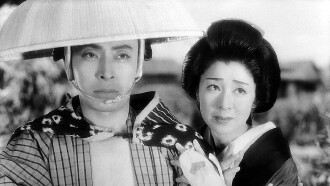
12 August 1950
In Nihonbashi, a fire broke out in the Kodenma-cho prison, and the prisoners were released. With the proviso that if the prisoner does not return within three days, or if he leaves Edo Prefecture, he will be sentenced to death.
09 September 1962
A touching drama about a love triangle between a young architect, Koroku, and two women, Ranko and Teruko.
15 April 1928
The earliest existing version (incomplete) of Mito Komon history. It was one of the most famous (and most filmed) Jidaigeki stories.
06 July 1958
A fox in disguise, Okon, returns the favor to a man who rescued her from a fatal trap.
22 June 1954
Movie version of NHK renzoku drama "Tokyo Romance"
23 April 1953
The first film in the 1953 trilogy based on the long novel series The Great Bodhisattva Pass.
04 October 1934
Director Watanabe Kunio The first talkie film by Tamagawa Studio Starring Sugi Kyoji as Hosoi Icf
31 December 1948
A modern take on history with songs and comedy presented by Enoken (as Gonza), Fujiyama (as Sukeju), and Kasagi (Gonza’s wife Osaki).
09 June 1963
A cosmetics saleswoman falls for a rival executive.
07 February 1962
A geisha helps a runaway who looks just like her.

23 August 1949
Tanuma Kandayuu is a high class samurai of the house of Nabeshima. He finds a lavish board of Go (a Chinese Board game) at Kinbei's store.
01 October 1958
During the 1200's, legendary Buddhist monk Nichiren returns from his studies to lead Japan out of moral crisis and prepare to fight Mongol invaders by creating a new form of Buddhism.
06 October 1962
Hibari Misora plays a singing guide, who is secretly in love, her fortunes turn for the worse when a gangster’s henchman hears her singing and takes a liking to her beautiful voice.
01 July 1939
The Old Man of the Propeller can be seen as a comedic amalgam of “King Lear” and “Christmas Carol”.
25 December 1940
A Japanese army engineer (Hasegawa) on the mainland must put his personal feelings for a beautiful Chinese woman (Ri) aside if he is to succeed at building a highway through the "bandit"- (aka anti-Japanese militia-) infested hinterlands.
07 September 1948
Postwar! Baseball! Comedy! Enoken plays a superfan of the Yomiuri Giants – the real Tokyo team, with many of its star players "acting" as themselves – who, despite his utter lack of athletic abilities, becomes embroiled in their successes, and their personal lives.
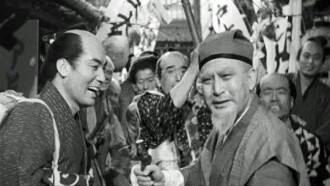
22 January 1938
This is the only surviving "Mito Komon Manyu-ki" film. This release also known as Adrift Tour Memoir is an 80-minute compilation of the first and second parts (147 minutes), which were re-edited and screened at a time when presentable films were dried up immediately after the defeat of the war.
28 June 1939
It's been a long time since the war. Since we haven't been at war with America yet, there is a line in the movie that asks, "How do you say "dried fish" in English?" Brothers who work at a factory that handles iron in Tokyo.
08 March 1945
Follows the Japanese lieutenant of the invading 228th Infantry Regiment Toichi Wakabayashi, who died in the Battle of Hong Kong.
25 July 1970
The story of Sanshiro Sugata, a young man who wants to learn the new art of judo. A wise teacher reveals to Sanshiro that judo is not merely a means of combat nor a demonstration of physical skill, but an art which reveals the artist to himself.
06 September 1955
Scammer Horikawa Shinbei hopes to make a quick buck using Namie, a stripper under his control.
03 January 1960
During the reign of Shogun Hidetada, both Hirate Musashi and Okamoto Musashi strive to become the finest swordsman in the land by defeating the Yagyu clan's top instructors and then taking on Sasaki Kojiro!
28 December 1958
An entertainment movie featuring familiar faces of Toyama no Kin-san, Nezumi Kozo, Yaji Kita, and others who traveled around the Tokaido.

01 April 1958
Japan, 1701. A group of samurai become rônin after their lord is forced to commit seppuku for assaulting a court official, who will become the target of a merciless revenge.
14 August 1956
1956 Japanese film, released in two parts. This is Part One.
08 June 1944
Government-sponsored film set during the Pacific War, depicting the lives of people working as stevedores.
30 November 1939
Song of the White Orchid was a co-production of Toho and Mantetsu, the railway that served the colonial region of Manchuria, and the first film in the Kazuo Hasegawa/Shirley Yamaguchi (Ri Koran) “Continental Trilogy.

12 July 1961
Daiei Film Company's three biggest stars shine in this exciting story about Vice-Shogun Mito Komon's journey to the land of the Ainu.

29 June 1958
The beautiful daughter of a merchant with a penchant for danger proves to be too much to handle for her worried father.
14 February 1952
The deputy shogun of the realm, accompanied by his loyal and capable aides, makes a stop at Jigokudani, a place along his journey through various provinces.
01 May 1943
Young men endure challenging flight training in the Yokaren, a program feeding new pilots into the Army and Navy.
21 February 1940
Dr Sogawa is considering making his son, Taro, take over the family business, but Taro is completely absorbed in music.