Leila Mourad Trailers
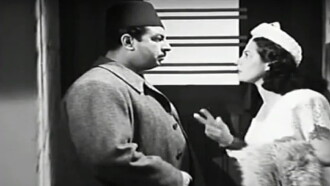
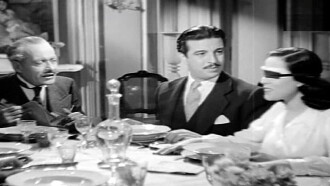
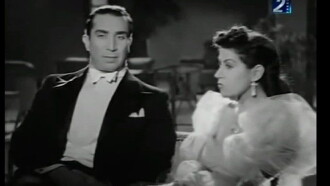
The Unknown Beloved TrailerLife is Love TrailerBent Al-Akaber Trailer
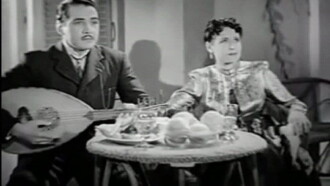
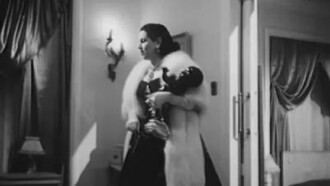
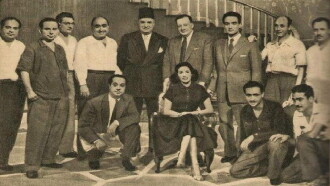
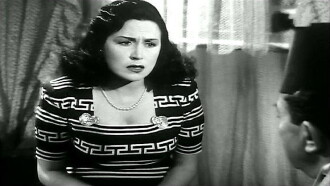
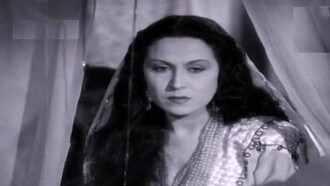
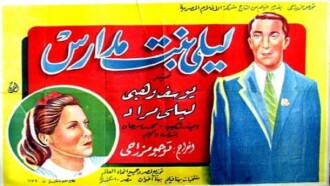
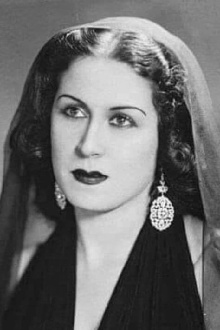
Leila Mourad or Layla Morad (Arabic: ليلى مراد; February 17, 1918 – November 21, 1995) was an Egyptian singer and actress, and one of the most prominent superstars in Egypt and the entire Arab world in her era. Born Lilian Zaki Ibrahim Mourad to an Egyptian Jewish family, known for their patriotism in 1918 in the El Daher District in Cairo, she later changed her name to Leila Mourad as a stage-name. She made her first stage appearance, aged nine, at the Saalat Badi'a, one of Cairo's most successful Music Halls. The theatre had been founded in 1926 by the actress and dancer Badia Masabni, who became Mourad's patron. Her first film appearance, aged fifteen, was in the 1932 " Al-Dahaaya " (The Victims) which had originally been made as a silent film. Her song, The Day of Departure, was added as part of the transformation of the production into a "talkie".
She was trained by her father and Dawood Hosni, who was also Jewish. Hosni had composed the first operetta in the Arabic language, and he composed two songs for Leila: Hairana Leh Bein El-Eloub (Why can't you choose from among lovers), and Howa el dala'a ya'ani khessam (Does daliance mean avoiding me?). Further success came when the prominent Egyptian composer Mohammed Abdel Wahab heard her singing and gave her a role in his film Yahia el Hob (Viva Love!) in 1938. In the six years following the success of Yahia el Hob she made five best selling films with director Togo Mizrahi, becoming Egypt's top actress. In 1945 she made Layla Bint al-Fuqara ("Layla, daughter of the poor") directed by Anwar Wagdi whom she married shortly after. She went on to make a further 20 films of which the most outstanding is Ghazel el-Banat ("The Flirtation of Girls"), also directed and co-starring Wagdi. It also featured Nagib al-Rihani and Abdel Wahab in their last appearances on film.
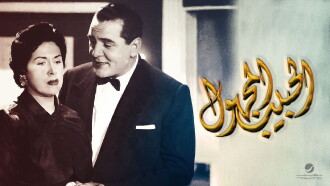
In 1953, she was selected as the official singer of the Egyptian revolution. Shortly thereafter, a rumor that Mourad had visited Israel and donated money to its military raised suspicions of spying and caused some Arab radio stations to boycott her. She denied these allegations, no proof was found; and the charges against the singer were eventually dropped. Her decision to retire, aged 38, came with the failure of her last film, Al Habib al Majhoul (The Unknown Lover), the banning of her song, With Unity, Order, and Work, praising the Free Officers 1952 revolution and the outbreak of the 1956 war. Despite the immense popularity of her films, her singing career was over-shadowed by Um Kulthum who dominated Egypt's musical landscape. Leila Mourad made a few brief reappearances during Ramadan in 1970, when she was scheduled to read Salah Jaheen's "Fawazeer Ramadan" (Ramadan' puzzles), a daily traditional radio program held during the Holy month of Ramadan.
Leila Mourad died in a Cairo hospital in 1995.

Most Popular Leila Mourad Trailers
Total trailers found: 27
26 February 1952
Latfa works in cabarets and earns money by hunting and deceiving customers. Sherif Bey, a friend of her late father, helps her in this.
24 February 1944
Hussein and Laila are children who pledge to love. Circumstances separate them and they meet after they grow up and their feelings are renewed, but Laila is exposed to an accident that loses her sight, so she decides to sacrifice her love so that Hussein can avoid life with a co-wife.
07 April 1947
After the artist Wahid Fakhry travels around the world, he returns to Egypt to search for new talent for his impending project.
05 April 1954
Layla is a volunteer nurse at the red crescent helping the injured in Palestinian war. She falls in love with officer Adel , and during a raid he gets seriously injured and decides to disappear from her life.
02 January 1935
Galal is a policeman who devotes his time to his job. He loves his cousin Bahiga, but she cannot wed before her older sister Nazik, who loves Galal and tries to draw his attention.
05 January 1948
Sameer is an unemployed young man. His father forces him to work in a shop. He meets Misbah, a colleague of his at work, and decides to marry her.
08 October 1951
The famous artist Youssef Fahmy discovers Laila's talent for singing. He encourages her to sing professionally against the wishes of her husband, Wahid, with whom she was living happily, which complicates their relationship.
01 January 1947
Musical from the Egyptian Golden Age of cinema.
01 February 1941
Laila is a rich rural girl raised by her aunt who succeeds in marrying her off to her son, a doctor who just returned from England.
02 April 1942
A night film adapted from the story of Ghada al-Kamiliya produced in 1942 and directed by Togo Mizrai
20 February 1950
Leila Mourad one of the Orient's Divas stars in this classic musical romance as a poor girl who marries a wealthy young man while others try to break them apart.
01 November 1948
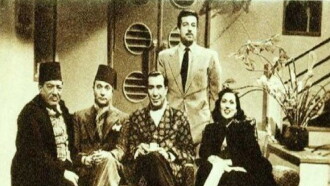
Vim Anbar is a lyrical comedy film starring Laila Murad and Anwar Wagdy with a group of stars who participated with Laila Murad in singing the song that is dear to my heart.
28 October 1946
Laila is a wealthy girl, with a father who has no will and a domineering wife. Her stepmother tries to marry her to his son so that the wealth does not go outside them.
28 August 1952
Fikria is a singer who's married to Farid ,the gambling addict. When she's traveling by train, she gets in an accident and a peasant treats her.
09 February 1953
Laila is a beautiful and delicate woman. She lives with her grandfather in the Grand Palace, and he forbids her from going out or meeting strangers.
10 December 1951
Latif, Abdul-Ghani’s son, asks to marry Elham, Tayseer’s daughter. Elham refuses this marriage. Latif spreads rumors about Elham’s behavior, and Tayseer has no choice but to file a case against Abdul-Ghani, demanding large compensation.
19 October 1944
Two teenagers fall in love, but their feuding families and fate itself cause the relationship to end in tragedy.
23 May 1955
Laila falls for Dr. Hussein who decides to marry her so that he could take on the responsibility for her heart surgery.
22 September 1949
Hamam is a poor Arabic language teacher who gets sacked from a girls' elementary school for not being able to control mischievous students.
24 January 1938
Mohamed Fathy rents a new apartment facing the palace of Taher Pasha, Nadia's father. A misunderstanding occurs between Fathy and Nadia, and he discovers that she is the niece of his boss at the Bank of Egypt.
07 May 1951
Two friends, Sami, a journalist, and Mukhtar, a businessman, marry two sisters, Fatima and Azza, in one night.
11 May 1945
Laila lives in the Sayeda Zeinab district. A woman invites her to her palace and introduces her to her fiancé, the young officer Wahid, as the daughter of Pasha Darwish Pasha.
16 October 1941
The strict lawyer Yusuf receives his orphan cousin Laila at his place after she finishes her studies.