Leni Riefenstahl Trailers
FASCISM(s): A Film in Six Parts TrailerRiefenstahl TrailerCity of Toys Trailer
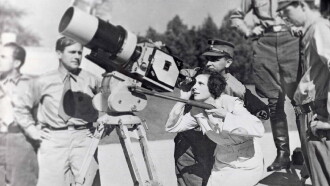
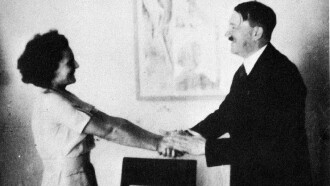
Helene Bertha Amalie "Leni" Riefenstahl (22 August 1902 – 8 September 2003) was a German film director, actress and dancer widely noted for her aesthetics and innovations as a filmmaker. Her most famous film was Triumph des Willens (Triumph of the Will), made at the 1934 Nuremberg congress of the Nazi Party. Riefenstahl's prominence in the Third Reich along with her personal friendship with Adolf Hitler thwarted her film career following Germany's defeat in World War II, after which she was arrested but released without any charges.
Triumph of the Will gave Riefenstahl instant and lasting international fame, as well as infamy. Although she directed only eight films, just two of which received significant coverage outside of Germany, Riefenstahl was widely known all her life. The propaganda value of her films made during the 1930s repels most modern commentators but many film histories cite the aesthetics as outstanding. The Economist wrote that Triumph of the Will "sealed her reputation as the greatest female filmmaker of the 20th century".
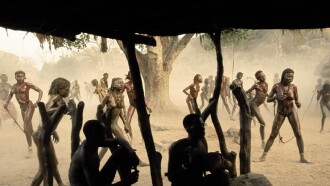
In the 1970s Riefenstahl published her still photography of the Nuba tribes in Sudan in several books such as The Last of the Nuba. She was active up until her death and also published marine life stills and released the marine-based film Impressionen unter Wasser in 2002.
After her death, the Associated Press described Riefenstahl as an "acclaimed pioneer of film and photographic techniques". Der Tagesspiegel newspaper in Berlin noted, "Leni Riefenstahl conquered new ground in the cinema". The BBC said her documentaries "were hailed as groundbreaking film-making, pioneering techniques involving cranes, tracking rails, and many cameras working at the same time".

Most Popular Leni Riefenstahl Trailers
Total trailers found: 43
28 March 1935
A showcase of German chancellor and Nazi Party leader Adolf Hitler at the 1934 Nuremberg Rally.
21 April 1938
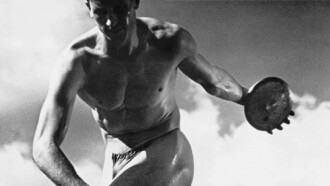
Starting with a long and lyrical overture, evoking the origins of the Olympic Games in ancient Greece, Riefenstahl covers twenty-one athletic events in the first half of this two-part love letter to the human body and spirit, culminating with the marathon, where Jesse Owens became the first track and field athlete to win four gold medals in a single Olympics.
29 August 2024
Explores Leni Riefenstahl's artistic legacy and her complex ties to the Nazi regime, juxtaposing her self-portrayal with evidence suggesting awareness of the regime's atrocities.
21 April 1977
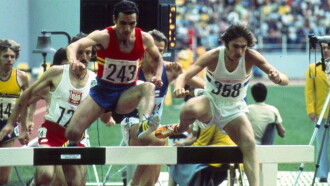
Edited from almost 100 km of film footage shot during the Games, this feature documentary is a breathtaking portrait of the 1976 Montreal Olympics.
06 August 1997
Jonas Mekas assembles 160 portraits, appearances, and fleeting sketches of underground and independent filmmakers captured between 1955 and 1996.
24 January 2019
Winston Churchill understood the power of films, but the true extent of his use of cinema as a propaganda tool is rarely explored.
24 March 1932
Junta is hated by the people in the village where she lives, especially by the women, who suspect her of being a witch.
02 August 2016
The forgotten story of Son Kee Chung, the Korean athlete who won a gold medal under Japanese flag in marathon at the 1936 Olympic Games in Berlin.
02 June 1938
Part two of Leni Riefenstahl's monumental examination of the 1938 Olympic Games, the cameras leave the main stadium and venture into the many halls and fields deployed for such sports as fencing, polo, cycling, and the modern pentathlon, which was won by American Glenn Morris.
13 April 2005
The Nazi propaganda mastermind behind Hitler speaks in first person as actor Kenneth Branagh reads pages of the diary kept by the chief of propaganda, Joseph Goebbels, revealing the man's most inner thoughts.
16 March 1925
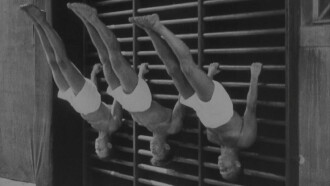
The perfect body as an object of cult worship. Based on the mass sports and body worship movement of the 1920s, the film propagates physical training and shows in stylized documentary scenes aspects of physical hygiene, gymnastics, sports and dancing as well as scenes in which supposed sportsmen of antiquity pose naked.
07 October 1976
The film tells the cultural story of Berlin during the Weimar Republic through interviews with a number of persons who were involved in literature, film, art, and music during the period.
22 September 1933
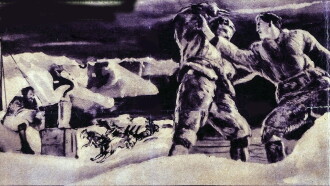
An expedition goes in search of a party lost in the Arctic a year earlier. (The English-language version of S.
25 December 1941
A 1941 Ministry of Information propaganda film set to the tune of The Lambeth Walk, a popular song from the musical Me and My Girl.
12 February 1995
A meditation on the first 100 years of German cinema, featuring an assembly of German filmmakers.
01 November 1926
In the mountains, Diotima meets Karl and fall in love and have an affair. Karl's friend Vigo mistakenly believes she's in love with him, causing rifts in all relationships.
02 March 2025
Six sequences about Fascism and its segments throughout history.
02 May 2016
In the three years leading up to the Olympics, the Nazi regime saw sport as an invaluable mobilisation and propaganda tool to motivate the "master race".
25 December 1930
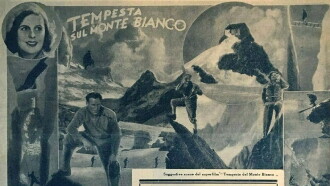
Hannes is employed at the Mont Blanc Observatory; the only outside connection is a pilot and Hella over the radio.
10 October 1929
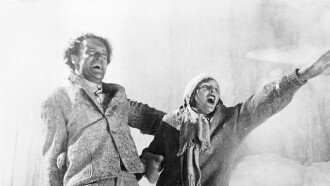
Dr. Johannes Krafft climbs a 12,000-foot mountain over and over again to search for his wife, who was lost on their honeymoon.
20 December 1927
A young Italian girl living in the Dolomites falls in love with a member of a tourist party skiing on the nearby mountains.
26 August 2024
City of Toys (2024, 39mins) combines Alan Marcus’ 2001 interview with legendary filmmaker Leni Riefenstahl with an exploration of centuries of antisemitism.
01 May 2009
This film is about the responsibility of artists and art that can lead to genocide.
12 May 2005
Documentary continuing Breloer's exploration of Speer's life, focusing on the post-Spandau years.
03 September 1982
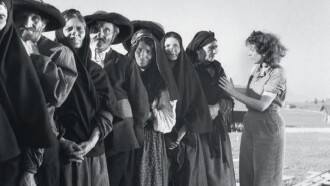
An investigation of Leni Riefenstahl’s infamous film production of “Tiefland” during the Holocaust, one which used Sinti extras under forced labor conditions.
24 January 2002
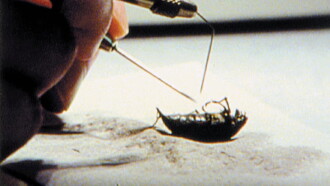
From Stag Beetle to Swastika narrates in a richly detailed, associative montage the boundless possibilities of manipulating images and using images to seduce.
01 July 2023
Between 1963 and 1976, filmmaker Leni Riefenstahl spent months living among in the Nuba people in the Kordofan Province of Sudan, documenting their cultural traditions as well as the everyday activities crucial to their very survival.
11 February 1954
In early 20th Century Europe, a dancer becomes the romantic bone of contention between two men, a humble shepherd and an imperious marquis.
30 December 1935
The armed forces of the Third Reich, particularly the German army, are presented as an efficient system of bodies and machines at the seventh Nazi Party Rally that occurred in Nuremberg in 1935.
23 February 2017
Film journalist and critic Rüdiger Suchsland examines German cinema from 1933, when the Nazis came into power, until 1945, when the Third Reich collapsed.
22 October 2020
Countless people around the world know the pictures from Leni Riefenstahl's films, even if they have not seen them in their entirety.
11 September 1993
This documentary recounts the life and work of one of most famous, and yet reviled, German film directors in history, Leni Riefenstahl.
01 December 1933
Follows the Fifth Nazi Party Rally (Nuremberg, 30 August–3 September 1933) and shows the then close relationship between Adolf Hitler and Ernest Rõhm.
15 August 2002
An interview with infamous German filmmaker Leni Riefenstahl carried out by Sandra Maischberger in preparation for the subject's 100th birthday, and the release of not only her final film, but her first film in 48 years.
10 December 1931
The exploits of village girl Hannes and her attempts to master skiing and ski-jumping aided by the local expert.
28 September 2003
At the age of 97 Riefenstahl returns to Sudan for one final farewell to the Nuba that she lived with for 8 months and photographed and filmed extensively.
30 August 1933
An expedition goes in search of a party lost in the Arctic a year earlier.
22 August 1972
A semi-documentary account of the author Thomas Wolfe's trip to Berlin in the summer of 1936.
01 January 2015
The play is an atypical story about Leni Riefenstahl, Adolf Hitler's court director, one of the best filmmakers in the world, who rose to fame thanks to films commissioned by the Third Reich.
04 December 2008
A fascinating chronology of 100 years of mountain film history in the Alps. This documentary focuses primarily on films shot on the Matterhorn, the Eiger, and the Grandes Jorasses, considered until the 1930s as the "last problems of the Alps," and shows the evolution of mountain filmmaking through numerous excerpts from documentaries and feature films – notably on the Matterhorn in 1901.
21 August 2002
Deep-sea diver/former propagandist Leni Riefenstahl explores the undersea world of coral reefs in various oceans around the world.