Louis Daquin Trailers
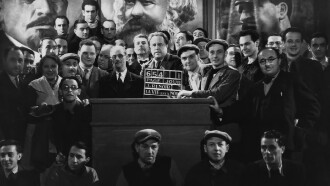
Le Parti du cinéma TrailerL'Agression TrailerLéa in Winter Trailer
Louis Daquin is a French director and screenwriter, born May 30, 19081 in Calais and died October 2, 1980 in Paris, in a family of small traders. Law graduate and graduate of HEC, after having been a journalist, advertising editor at the Renault factories, and having tried his hand at theatrical writing, Louis Daquin, Louis Léon Auguste Daquin of his full name, became assistant director in 1932, he worked notably with Fedor Ozep, Pierre Chenal, Julien Duvivier, Abel Gance and especially Jean Grémillon.
He produced his first film in 1938 with the French version of Gerhard Lamprecht's film Le Joueur. He made several feature films during the Occupation, while he was engaged in the Resistance with the French Communist Party, on whose behalf he shot a short film after the Liberation. He also wrote in 1941 a detective novel, The Enigma of Pelham, under the pseudonym of Lewis MacDakin. He held several positions during his career: secretary general of the Committee for the Liberation of Cinema in 1944, co-founder of the General Cooperative of French Cinema, secretary general of the CGT Film Production Technicians Syndicate from 1945 to 1962, and president of the Société des Réalisateurs de Films (SRF) from 1977 to 1978. The General Confederation of Labor (CGT) commissioned a documentary from him on the great miners' strike of 1948, in full strike, with commentary by Roger Vailland. Louis Daquin also offers his first major film role to Michel Piccoli, in "Le Point Du Jour", a chronicle again devoted to the life of miners in the North. Despite some noticed films, he encountered difficulties from the 1950s to finance his projects. His political commitments are indeed worth to him to be progressively marginalized. An adaptation of "Bel-Ami" was thus cut to pieces by censorship in the second half of the 1950s. He left to shoot in Romania "Les Chardons Du Baragan" in 1957, based on the novel by Panaït Istrati, East Berlin, an adaptation of "La Rabouilleuse", by Balzac. In 1962, he was content to be production manager on "Paris Brûle-T-Il?" by Rene Clement. He made his last film in 1963, "La Foire Aux Dunces". He began another career, in 1970, as director of studies at the Institut des Hautes Études Cographiques, until his retirement in 1977.
Louis Daquin was married to actress Clara Gansard with whom he had two children, Jean-Michel and Marc Daquin. He was the natural father of the militant Trotskyist Michel Recanati. He disappeared on October 2, 1980 in Paris. The municipal cinema of Blanc-Mesnil (Seine-Saint-Denis) will bear his name. The municipal theater of La Ricamarie (Loire) is called Salle Louis-Daquin. In Oissel (Seine-Maritime), a street bears the name of Louis-Daquin.

Most Popular Louis Daquin Trailers
Total trailers found: 28
18 February 1937
Mathias Pascal, saddled with a stupid wife and a nagging mother-in-law, leaves home and is extremely lucky at several gambling resorts.
27 November 1941
A married tugboat captain falls for a woman he rescues from a sinking ship.
05 October 1949
Mathilde Stangerson just married her fiance, when she heard that Larsan, her cruel former husband, whom she believed to be dead, is actually very much alive.
15 September 1937
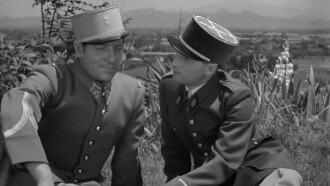
Lucien Bourrache, a good looking non-commissioned officer at the Spahis, is used to charm many women.
15 January 1937
Lyrical biography of the classical composer, depicted as a romantic hero, an accursed artist.
01 January 1944
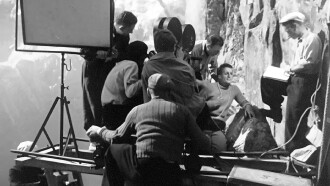
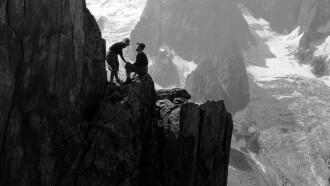
Making of the cinematographic shooting of "Premier de Cordée" directed by Louis Daquin in the Mont-Blanc massif.
08 April 1943
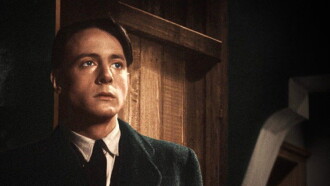
A young man comes back to his hometown to be confronted with a bourgeois obnoxious family who has always despised his - now dead - parents because they were music hall artists, "entertainers".
20 March 1955
In the 1880s, Georges Duroy, back from the Colonies, arrives in Paris with the firm intention of conquering the capital through his power of seduction, his selfishness and cynicism.
02 December 1941
A student from an elementary school accidentally breaks the glass roof of his school. His comrades decide to support it by working during the summer holidays in order to pay for reconstruction.
01 September 1943
A bungling thief is threatened by one target with blackmail, unless the thief will kill his own cousin, a wealthy eccentric who is considered the village idiot.
02 March 1951
Captain Joris Kniper believes so strongly that he is "skipper next to God" that he is used to playing God on his ship.
23 February 1944
A screen adaptation of the well-known novel by Roger Frison-Roche about the harsh lives of mountain guides and their families in the French Alps, near Chamonix and the French/Swiss/Italian borders.
20 March 1971
It starts with the discovery of a woman's corpse, then gradually reveals the past of this woman as well as the police investigation which follows the discovery.
06 April 1949
In a settlement in the northern mining country. The Marles, Bréhard and Gohelle families wake up and prepare for a new day at work.
08 April 1960
The machinations of an ex-officer and a servant who want to get their hands on a fortune.
17 April 1959
The title translates as Fools of Bărăgan, in reference to a band of beleaguered feudal Rumanian peasants.
06 September 1938
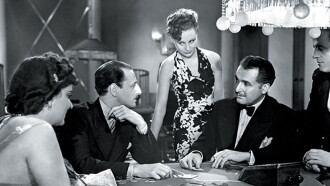
Drama in a small German water town where various characters clash against a backdrop of money, gambling and love.
11 January 1948
A provincial, Julie Moret, is hired as a servant in a Parisian bourgeois residence. She is courted by one of the Bouquinquant brothers, Léon, who does not take long to ask her to marry him.
02 June 1939
The young Suzy is a nightclub hostess in a cabaret in which Frehel is the star. Because one night she gets propositions from a rich widower who would like to have her as his girlfriend, Suzy wishes to leave this place, where she has no future, for a better one.
30 October 1963
On prize-giving day, a few dunces recall various incidents that marked their school year.
22 October 1946
Brussels in the year 1568, as the Flemish people are fighting against the tyranny of the Spanish occupiers.
21 April 1943
A person who had usurped the identity of a famous writer of detective stories was killed in the train.
19 February 1958
This short documents the important role played by bread in the daily life of the city of Paris.