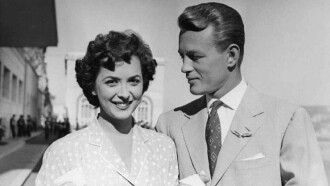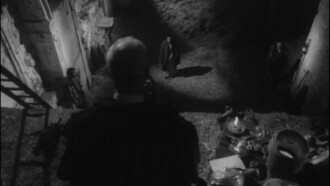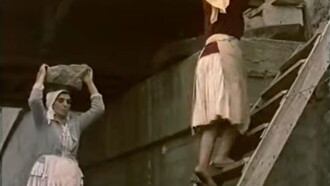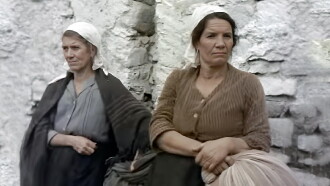
Luigi Di Gianni Trailers
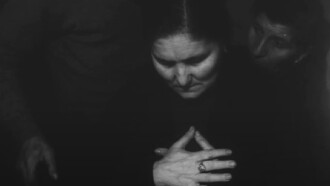
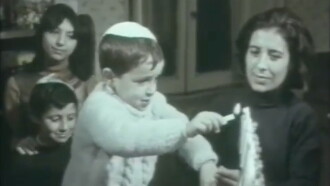
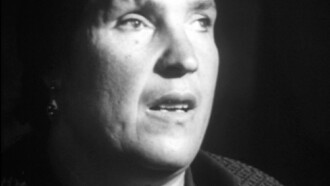
Lucania Persa - Ritorno a San Cataldo TrailerAppunti per un film su Kafka - Nella colonia penale TrailerUn medico di campagna Trailer
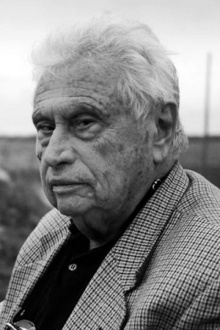
Luigi Di Gianni (born in Naples on October 20, 1926 and died in Rome on May 10, 2019) is an Italian screenwriter and director.
Luigi Di Gianni believes in the power of cinema. It is this spirit, tragic and rogue, that has always possessed him. And that makes his films an experience difficult to forget in any hurry. It is an insinuating spirit, which ends up delighting and even tormenting the spectator, at first alien to her. It has multiform and unpredictable tentacles, which evade the safety of easy classification. Every time one tries to venture a definition, one has the suspicion of falling into reductionism, as if something is always missing.
Starting with an inevitable question, however tedious it may seem: can we be content to speak, in his case, about documentary cinema? If asked, Di Gianni would certainly answer with a peremptory no, and for good reason. His is a decidedly authorial cinema. It is crossed by cultural and intellectual tensions that embrace literature, music, philosophy and great cinema. It is sustained by a sometimes unsatisfied desire to control rhythms, atmospheres, sounds, lights, movements… Above all, it is driven by the conviction that cinema is an expressive instrument that offers us a vision (turned black) of man and the world. And yet it is clear that few filmmakers have been able to document in such depth some of the most surprising, heartbreaking and disturbing aspects of our society, especially those rooted in the atavistic miseries of the South, as if tracing the deep folds of an Italian “anti-miracle.” Let’s take a guess. Di Gianni brings to light what elsewhere we tend to sweep under the carpet of rationality and respectability, but which, inexorably, is there underneath, applying pressure: his cinema is the documentation of social repression.
Let’s follow with the thread of apparent contradictions. Di Gianni is an apolitical director, he does not believe in progress (he prefers the infinite labyrinth), he tends to be on the side of history. But, at the same time, one senses in his films a cry of rebellion, a love for the last; in short, an ethical and civil tension that is often lacking in those directors whose primary aim is to change the world. Once again: the characters in his films seem inexorably shrouded in cloaks of tragedy, and yet we are surprised, at certain moments, by the mockery of an unexpectedly grotesque twist. Armed with civic presumption, we are tempted to be indignant at manifestations that seem to plunge into the abysses of ignorance and backwardness, but at the same time, it is difficult to find filmmakers who place themselves before the world they choose to represent with more respect, avoiding the temptation to judge. And do we want to call his cinema “ethnographic”? Of course, he is one of its undisputed masters. It’s a pity that he is the first to strongly deny it, claiming instead that his films are about something else.
It is not surprising that Di Gianni’s cinema is a magnificently isolated object, not only in Italy (this is unmistakably demonstrated by his only feature film, Il tempo dell’inizio, a kind of slow-motion nightmare, alien and elusive). Perhaps this is also one of the reasons for its charm, unalterable with the passage of time. The revival of his films seems to us, quite simply, necessary.

Most Popular Luigi Di Gianni Trailers
Total trailers found: 66
01 February 1963
The Peace Newsreel is the prototype of those independent and collective film initiatives on topics of social and political interest that Cesare Zavattini later promoted further through the “Free Newsreels.
01 October 1958
The alien Achtab lands in the garden of a couple in the middle of a party. The extraterrestrial, who has fled his planet, is greeted with curiosity and fear by his hosts, despite being unable to remove the heavy space suit that conceals his appearance.
01 February 1958
Three shady-looking men arrive at a small mountain inn in an attempt to recover the treasure hidden in the hotel by the old owner and her grandson, who was killed by the three crooks.
01 January 1958
Short documentary about pagan rites in the countryside.
01 July 1959
In a southern town, San Cataldo, a woman gives birth to a child, but the latter is destined to live a life of hardship like the other members of her family.
01 January 1965
Di Gianni records an archaic festivity that takes place on August 15th on the mountains near Potenza.
05 September 1963
A day in Rome viewed by sixteen different directors under the supervision of the great screenwriter Cesare Zavattini.
01 September 1987
A journey through old Milan with reference to the prints of Achille Bertarelli.
01 January 2006
An anthropological research on the survival of the supernatural in traditional culture. Shot in different locations in southern Italy, the documentary focuses on the link between the cult of the Madonna and ancient rites related to female fertility.
01 January 1967
In Raiano, Italy, the feast of S. Venanzio is celebrated every year. Beside the official celebrations, the most secret and oldest ceremony is the "Cult of Stones": the devotees enter the caves where the saint used to live according to tradition, and rub their bodies on the stones to heal from evil.
01 January 2005
The religious traditions of a town in the province of Caserta, Italy.
01 October 1968
Impressions of backwardness in southern Italy. In particular, the film focuses on Calabria.
16 August 2014
Director Luigi Di Gianni returns to film in San Cataldo, the town where he made “Nascita e morte nel Meridione” (Birth and Death in the South) in 1959.
01 January 1968
Through the character of a model, there is an almost science fiction-like reference to a certain fashion trend projected into the future that is quite inhuman.
12 March 1971
The Madonna del Pollino is one of the most archaic festivals in Basilicata. The faithful walk to the church after a strenuous journey.
09 February 1956
In the military academy of the Nisida Air Force a new course begins which sees among the new recruits called "chicks": Giorgio, forced by his father after he squandered millions at the gaming table; De Montel son of a general, Mario who wants to follow in the footsteps of his father who died in combat; Antonio who declares himself Neapolitan while coming from the province and Ugo who comes from the north.
04 February 2009
The story of the prince musician Carlo Gesualdo, known as Gesualdo da Venosa, who lived between the 16th and 17th century, told by the testimonies of musicians and musicologists such as Francesco D'Avalos, descendant of Maria, the unfaithful wife killed by Gesualdo.
15 October 1974
A "symbolic" character traces the path of man in search of salvation in this world within his own ghosts and deformations.
01 January 1958
From the Roman Forum to Villa Medici, an itinerary that could have provided Stendhal with one of his famous “Roman walks.
01 January 1962
A document of the Bulgarian Orthodox Monastery of St. John/Ivan of Rila
15 May 1964
Christmas 1963, cemetery of Fortogna, fraction of Longarone, where the victims of the Vajont disaster are buried (9 October 1963).
04 February 2012
A doctor's journey to a seriously ill patient in a village ten miles away.
01 September 1959
In Valsinni, misfortune looms over the peaceful life of a family and brutally disrupts its ordinary routine.
01 January 1975
Violinists Coen and Buffa, cellist Lanzillotta, and harpsichordist Perrotti Bernardi filmed during their performance.
07 July 1966
These are ceremonies and events linked to the traditional festival of the Madonna dell'Arco, which culminates on Easter Monday in the church of St.
03 March 1972
When he is granted a day off to celebrate his daughter's wedding, office worker Krehler begins to realize how alienated he is.
04 February 1964
Succiso, province of Reggio Emilia: the valley is slowly collapsing and people are forced to abandon their homes, which are now unsafe.
01 March 1963
Portrait of the painter Ennio Calabria: the title refers to one of the dominant themes in his paintings.
01 October 1962
Short documentary focusing on the mountainous region of Belogradčick (north-west Bulgaria).
09 January 1965
Traditions and social criticism in Basilicata, during a period of great imbalance between rich and poor and large-scale emigration.
01 May 1978
Produced for the Tourism Department of the Province of Matera, with the executive collaboration of Istituto Luce-Italnoleggio.
01 November 1961
Naples between religion and superstition: pagan and Christian rituals intertwine in the Neapolitan city, with a particular cult for lottery numbers.
01 January 1971
This documentary takes its cue from the death of Padre Pio and from the atmosphere of intense populas
08 March 1959
The daily life of the women of Bagnara, amid the comings and goings of boats and the transport of stones to build protective walls.
01 October 1961
A visit inside the walls of the Annunziata, an ancient Neapolitan orphanage for girls, where numerous young women reside while waiting to get engaged, find work, and redeem themselves socially, but also elderly women who have resigned themselves to a life spent there.
04 February 2013
A soldier is sentenced to death for failing to “honor his superior.”
01 November 1968
Between makeup, embassy receptions, and musical evenings, the lives of some fallen noblewomen.
01 September 1962
Documentary produced by Corona Cinematografica. A brief overview of Bulgaria.
01 January 1960
The life of the Lucan peasant faces not only atavistic poverty, but also the ferocity of nature. When bad weather rages, the hard-won shelters are at risk of being destroyed by landslides.
31 August 1968
In the province of Salerno in Campania, a village is attracting more and more pilgrims, sometimes several hundred a day.
01 January 1966
A horse carriage transports a coffin through a village.
31 December 1969
Glauco Mauri was the first Italian performer of Acte sans paroles. A unique piece that renounces speech and deconstructs language, expressing itself through the suggestion of mime and grotesque gags reminiscent of early silent films.
12 January 1966
The Lagno is the canal that crosses Naples, collecting its debris to stop even before reaching the sea.
06 March 1971
It is set in Naples and faces the so-called cult of the "holy face", examined in the light of the complex Neapolitan religious and religious framework and above all in reference to the cult of the deceased.
03 May 1967
A man lives holed up in an old house, inherited from his ancestors, seeking refuge from the threats of the outside world.
01 September 1968
An important Jewish holiday: the feast of the dedication of the temple, also known as the ‘feast of lights’, celebrated by the Jewish community in Rome.
01 September 1956
Elena receives anonymous phone calls and fears they concern her son. Young Sandro's attitude has changed recently and she is certain he is hiding something from her.
01 January 1971
In a working-class neighborhood of Naples, a woman works as a sorceress and healer. Gianni spends a day with her, observing her work with poor clients, the sick, those suffering from love, and, of course, the superstitious.
20 June 1968
In a small town in Lazio every year a procession is held in honor of San Giovanni, to ask forgiveness for the sins committed, recalling an ancient legend.
15 April 1965
Documentary produced by Nexus and filmed in various locations in the Gargano area, focusing on the Jewish community founded by Donato Manduzio in San Nicandro Garganico.
09 January 1971
Documentary on a case of heretical worship that occurred within popular Catholicism in Serra d'Arce, in the province of Salerno, where Giuseppina Gonnella, a sort of mystical sorceress-exorcist, freed people from evil and spells and was sometimes possessed by the spirit of her nephew, who died in a car accident in the 1950s.
01 January 1966
Starting in 1954 (the year broadcasting began), RAI began broadcasting educational programs, operas, and symphonic and chamber music concerts, spreading knowledge of classical music as an artistic and cultural heritage.
01 September 1954
Film based on the first chapter of Kafka's “The Trial.”
04 February 1966
Between ancient traditions and new cultural and social changes, olive harvesting in Calabria.
09 January 1968
Set in upper Irpinia, the documentary examines the practice of exorcism in what was the poorest region of Italy.
01 November 1963
Chilling documents from recent history and “visions” of great figurative art, from Goya to Munch to Ensor.
01 September 1966
Symbology of power of the expressions dominating the man of today. The technologic and scientific progress in an anti-human sense.
08 July 1971
Pilgrimage to the sanctuary of Montevergine, in Irpinia, between ancient and new customs.
01 January 1963
Short documentary in which director Luigi Di Gianni illustrates the Carnival of Ronciglione (an Italian municipality in the province of Viterbo).
05 October 1961
The low-grade variety show in Rome, in the old Altieri cinema-theater.