Marcel Ophüls Trailers
The Sorrow and the Pity: The Film That Shocked France TrailerA Deal Made in a Turkish Bath TrailerClaude Lanzmann: Spectres of the Shoah Trailer
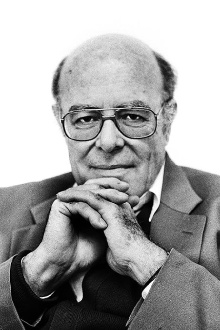
Marcel Ophuls (German: [ˈɔfʏls]; born 1 November 1927) was a German-French documentary film maker and former actor, best known for his films The Sorrow and the Pity and Hôtel Terminus: The Life and Times of Klaus Barbie.
Ophuls was born in Frankfurt, Germany, the son of Hildegard Wall and the director Max Ophüls. His family left Germany in 1933 following the coming to power of the Nazi Party and settled in Paris, France. Following the invasion of France by Germany in May 1940 they were forced to flee to the Vichy zone, remaining in hiding for over a year before crossing the Pyrenees into Spain in order to travel to the United States, arriving there in December 1941. Marcel attended Hollywood High School, then Occidental College, Los Angeles. He spent a brief period serving in a U.S. Army theatrical unit in Japan in 1946, then studied at the University of California, Berkeley. Ophuls became a naturalized citizen of France in 1938, and of the United States in 1950.
When the family returned to Paris in 1950 Marcel became an assistant to Julien Duvivier and Anatole Litvak, and worked on John Huston's Moulin Rouge (1952) and his father's Lola Montès (1955). Through François Truffaut, Ophuls got to direct an episode of the portmanteau film Love at Twenty (1962). There followed the commercial hit Banana Peel (1964), a detective film starring Jeanne Moreau and Jean-Paul Belmondo.
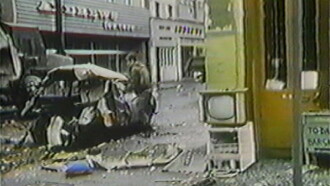
With a slump in box-office fortunes, Ophuls turned to television news reporting and a documentary on the Munich crisis of 1938: Munich (1967). He then embarked on his examination of France under Nazi occupation, The Sorrow and the Pity. Although he enjoyed making entertaining films, Ophuls became identified as a documentarian, using a characteristically sober interview style to resolve disparate experiences into a persuasive argument. A Sense of Loss (1972) looked at Northern Ireland, and The Memory of Justice (1973) was an ambitious comparison of US policy in Vietnam and the atrocities of the Nazis. Disagreements with his French backers over interpretation led Ophuls to smuggle a print to New York where it was shown privately. Legal wrangles left him disappointed and financially broke, and Ophuls turned to university lecturing.
In the mid-1970s, he began producing documentaries for CBS and ABC. His feature documentary Hotel Terminus: The Life and Times of Klaus Barbie (1988) won an Academy Award; since then he has made an interview film with two senior East German Communists, November Days (1992) and a ruminative look at how journalists cover war, The Trouble We've Seen (1994).
Every year the IDFA (International Documentary Festival) in Amsterdam screens an acclaimed filmmaker's ten favorite films. In 2007, Iranian filmmaker Maziar Bahari selected The Sorrow and the Pity for his top ten classics from the history of documentary. At the 65th Berlin International Film Festival in February 2015 Ophuls received the Berlinale Camera award for his life work.

Most Popular Marcel Ophüls Trailers
Total trailers found: 35
19 April 1977
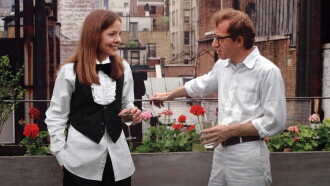
New York comedian Alvy Singer falls in love with the ditsy Annie Hall.
24 July 1958
German adaptation of The Dock Brief
10 July 2004
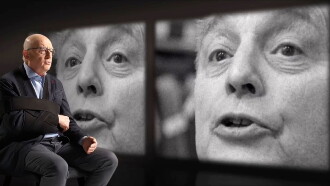
Storyville's Nick Fraser meets German-French documentary film maker and former actor, Marcel Ophüls.
01 January 1971
In 1970, the return of Ophuls to the United States from his adolescence, then mired in Vietnam: direct testimonies on the evolution of mentalities, between racism and generosity, reactionaries and hippies.
14 May 1993
Twenty-six people - including two daughters, an ex-wife, his last lover, actors, fellow directors and writers, a neighbor, and boyhood friends - talk about François Truffaut.
01 January 1960
From his childhood in the lowlands of northern France to his death in Nice, a look at the life of painter Matisse: his early education, his apprenticeship at the Beaux-Arts and his decades-long career as a painter, sculptor, and draftsman.
01 January 2002
Philippe Roger found the secretary of director Max Ophüls, Ulla de Colstoun, and Valere his first assistant, mobilized them on his project and, together during the documentary, they will both find in Normandy, the filming locations of Maison Tellier, sketch of the film Le Plaisir and the spirit of the film with the still intact impressions of these exceptional witnesses.
16 May 2013
18 years after his last film, (The Troubles We've Seen), Marcel Ophuls emerges from retirement as one of our last masters, the most corrosive, the funniest as well.
23 December 1955
Lola Montes, previously a great adventuress, is reduced to being the attraction of a circus after having been the lover of various important men.
04 October 1976
This exceptional, disturbing, and thought-provoking two-part documentary compares the atrocities committed by the Nazis as revealed during the Nuremberg trials to those committed by the French in Algeria and those done by the Americans in Vietnam.
20 March 2024
The story of the documentary The Sorrow and the Pity (1971), directed by Marcel Ophüls, which caused a scandal in a France still traumatized by the German occupation during World War II, because it shattered the myth, cultivated by the followers of President Charles de Gaulle (1890-1970), of a united France that had supposedly stood firm in the face of the ruthless invaders.
22 June 1962
Love at Twenty unites five directors from five different countries to present their different perspectives on what love really is at the age of 20.
01 January 1982
Television film
26 October 1965
A 1965 episode of the French television program Cinéastes de notre temps, featuring interviews withs
18 January 1963
Two scoundrels cheat a millionaire out of a huge bankroll on the French Riviera.
01 November 1988
Marcel Ophuls' riveting film details the heinous legacy of the Gestapo head dubbed "The Butcher of Lyon.
28 October 1980
In 1912, in Austria, the painter Egon Schiele is sent to jail accused of pornography with the nymphet Tatjana in his erotic paints.
05 April 1965
A famous American secret service agent tries to rescue a German 17-year-old prodigy scientist who has been captured by the Russians.
27 October 2009
In a series of four documentaries, Marcel Ophuls pays tribute to his father Max, and in this last one discusses his role as an assistant director on "Lola Montès".
01 January 2017
An interview with French documentarian Marcel Ophüls about his father Max Ophüls, regarding Max's arrival in Hollywood, how he received approval for Letter from an Unknown Woman (1948) from the head of the studio, his return to France, and what Marcel has learned from his father.
13 August 1980
Documentary about director Fritz Korner
22 June 1962
A segment of “Love at Twenty” is a story of an unwed mother who contrives to trap the father of her baby.
16 February 1991
Marcel Ophüls interviews various important Eastern European figures for their thoughts on the reunification of Germany and the fall of Communism.
01 January 1973
Shot over six weeks in December 1971, and January 1972, the film consisted of interviews with Protestants, Catholics, politicians, and some soldiers, combined with TV news clips of bombings and violence.
03 September 1967
A television documentary directed by Marcel Ophüls examining the Munich Conference of September 28, 1938, when European leaders met to avert the outbreak of war.
25 September 1952
The daughter of a notorious smuggler is raised as a boy by her foster mother.
23 November 1994
We follow Marcel Ophuls' two journeys to Sarajevo in 1993. He is starting a documentary about war correspondants.
25 April 2015
Claude Lanzmann discusses the long and difficult process of researching, shooting, editing, and presenting his groundbreaking and influential documentary, "Shoah" (1985).
01 January 1982
Commissioned by French TV, Yorktown covers the bicentennial commemoration of the Siege of Yorktown, near the end of the American Revolutionary War, where the Americans and their French allies defeated the English.
14 September 1983
The story of a group of students' involvement with a group who oppose the French-Algerian war.
07 April 2011
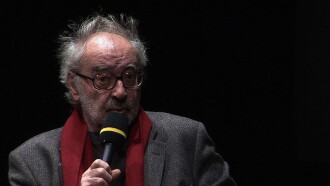
In 2009, in a small theater in Geneva, Switzerland, the film directors Marcel Ophuls and Jean-Luc Godard met for an unusual, surprisngly intimate and sometimes contentious dialogue with each other in front of a live audience.
07 August 1970
Filmmaker Marcel Ophuls investigates the massacre of My Lai by U.S. soldiers.