Mario Handler Trailers
Ver a Hilda Vera Trailer
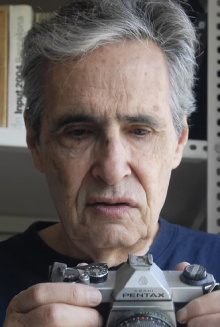
Mario Handler was born on November 10, 1935 in Montevideo, Uruguay. He is a renowned filmmaker and photographer, considered by many to be the pioneer of Uruguayan militant cinema. He made his debut film "Vanguardista" in 1958. Afterwards he traveled to Germany where he did an internship in scientific cinema at the IWF (Institut für den Wissenschaftlichen Film). Later, in Czechoslovakia he made a documentary called In Prague.
He focused primarily on class struggles. Some of his first works are "Carlos" (1964), a film-portrait of a homeless man, "Me Gustan Los Estudiantes" (1968) and "Liber Arce, Liberation" (1969) about the student protests. In 1972 he goes into exile to Venezuela due to the imminent rise to power of the military forces and the subsequent coup.
Handler's later work in Venezuela involves themes of colonial domination and cultural roots, and examinations on forms of syncretism and popular religiosity. After several years of exile, he returned to Uruguay in 1999, where he directed several feature-lenght documentaries like Aside (2002) and Broken columns (2015). In 2000 he became a professor in Audiovisual Cinema at the University of the Republic.

Most Popular Mario Handler Trailers
Total trailers found: 24
22 October 1998
A living room, two video cameras, an armchair, two televisions and a mirror: domestic daily life in a
09 October 1991
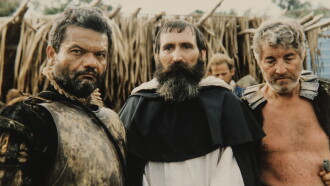
In 16th-century Spanish America, a Dominican friar named Santiago survives a brutal expedition and is absorbed into a Carib tribe.
02 January 1967
Documentary on the electoral system in Uruguay. It focused on the upcoming federal elections, criticizing both of the country's political parties.
19 July 1969
Liber Arce, a student, was killed by the police in a protest march. His funeral became the largest demonstration held in Montevideo.
17 December 1995
TV Movie based on the life of Antonio José de Sucre, the Gran Mariscal de Ayacucho
12 April 1964
Documentary short film by Mario Handler about the city of Prague as part of an internship to study film in Europe.
18 June 2015
The documentary delves into the intimate, labor, and political life of diverse characters to testify to the problems of inequality, exploitation, and instability in the work relations of some labor sectors.
01 January 1971
Raoul Ruiz shot this film on March 28th, 1971, during the big peasant march in Temuco, Chile, when the bill that gave the full citizenship and civil rights to the Mapuche Indio people was approved.
01 January 1965
During the second half of the 1960s, the Unión de Trabajadores Azucareros de Artigas (UTAA) carried out a series of marches from the north of the country to Montevideo, demanding better living conditions for its workers.
01 January 1968
Students protest during the Chiefs of State conference at Punta del Este. Counterpoint between presidents, students and repressive policemen.
01 January 1969
After the meat industry workers stop receiving 2 kilograms of meat a day as a part of their salary, they organize the biggest strike in Uruguayan history.
01 January 1985
Existential confrontations are unleashed while people try to survival within a concret jungle. Such conflict gets worst when the person is near his fifties and finds himself empty-handed, without a real company, full of frustrations that hound him.
06 September 2002
Rare images of real life stories in the so-called "asentamientos" in the poor underbelly of Uruguay's capital, Montevideo, and in its youth jails.
01 November 2007
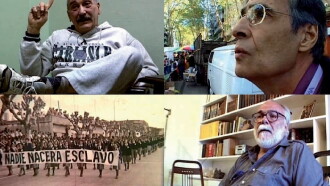
After a long exile in Venezuela, filmmaker Mario Handler returns to his country, Uruguay. There, the dictatorship is still present in the media, public opinion, and in the memory of people.
01 January 1986
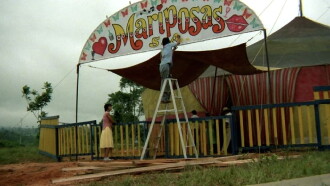
The story of seven prostitutes traveling in a truck, town to town, selling their show in local festivities inside an old circus tent.
01 January 1983
A documentary about the building of a damn near Caño Mánamo and the effects it has on the environment.
14 April 1992
Ricardo Azolar is looking for the right words, the exact phrases that will give him literary glory. The days are sterile and lacking in those brilliant ideas that should allow him to express through narrative, the fertile flow arising from the imagination.
27 August 1986
The confrontation between two families over possession of the land gradually becomes a great slaughter where almost all the members of one the sides dies.
01 January 1976
Three centuries of Venezuela's history as a Spanish colony are considered from economic, political and social standpoints; evocations of the past are compared to the present.
02 January 1965
The "caminante" refers to a hobo who roams the countryside, a nomenclature preferred by Carlos, who once traveled all over Uruguay before becoming a homeless vagabond, or "bichiome", in the city of Montevideo.
01 January 1975
After several close calls with death squads, Mario Handler fled Uruguay in 1973 and eventually settled in Venezuela where he lived and continued to make films before returning to Uruguay in recent years.
01 January 1966
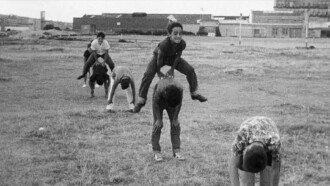
Documentary made from the record of five manifestations of Uruguayan children's folklore: «El rango», «La rayuela», «Andelito de oro», «La farolera» and «San Severín del monte» / «Los oficios».
01 October 1988
A village on the Venezuelan coast, a place of fishermen and big haciendas, Aquiles Vargas, a white aristocrat in somewhat reduced circumstances, fights with Cruz Guaregua, a humble black fisherwoman, and mother of his only son, a half-caste 'mestizo'.