Mark Donskoy Trailers
Prostitute Trailer
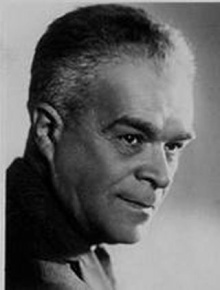
Mark Semyonovich Donskoy[a] (6 March [O.S. 21 February] 1901 – 21 March 1981) was a Soviet film director, screenwriter, and studio administrative head. Donskoy was born in Odessa in a Jewish family. During the Civil War, he served in the Red Army (1921-1923), and was held captive by the White Russians for ten months. After he was freed, he was discharged from military service.
He studied psychology and psychiatry at the Crimean Medical School. In 1925 he graduated from the legal department of the Faculty of Social Sciences of the Crimean M.V. Frunze University in Simferopol. He worked in investigative bodies, in the Supreme Court of the Ukrainian SSR, and in the bar association. He published a collection of short stories drawn from his life called "Prisoners" (1925).
Donskoy began his career in film in 1926. He worked in the script department, but soon advanced as an assistant director in Moscow. Later he worked in Leningrad as an editing assistant. In 1935 he became the first Soviet dubbing director; he dubbed the American film The Invisible Man.
Following this, he directed numerous films. He also worked from time to time as a studio administrator: in 1938–1941, and in 1945-1955 he was the administrative director of Soyuzdetfilm's film studio in Moscow; in 1942-1945 and in 1955-1957 he was director of the Kiev film studio; after 1957, he was director and art director of the Maxim Gorky film studio where he mentored Ousmane Sembène.
His wife was the screenwriter Irina Borisovna Donskaya [ru] (1918–1983).

Most Popular Mark Donskoy Trailers
Total trailers found: 25
26 December 1941
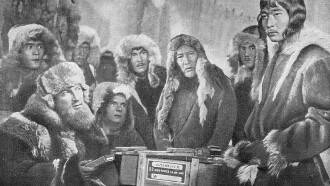
Set in the high North, this tale of a Russian teacher who begins to educate the children of the Chukchi tribe reinforces the director's firm belief in the power of education to overcome distrust and establish a shared civilizational foundation for all human beings.
01 April 1927
Two country boys move to Moscow. One becomes a construction worker who dreams of being an inventor, the other becomes a decadent poet.
20 March 1928
This 1928 film features stylized cinematography and actors from the Moscow Art Theater in a fiction story based on the life of Jewish Labor Bund member Hirsch Lekert who attempted to assassinate the Vilna governor in 1902 to avenge the flogging of workers who participated in a May Day rally.
23 March 1966
Family drama centering on the childhood of Vladimir Lenin, then Vladimir Ilich Ulyanov, in the city of Simbirsk, and his relationship with his mother.
06 June 1947
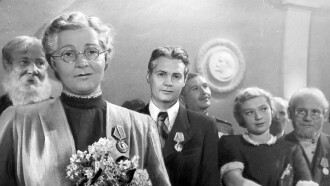
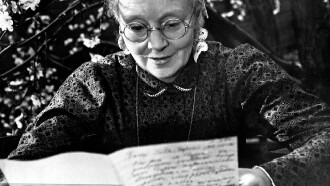
A life-long story of a romantic school teacher who left imperial St. Petersburg for teaching country children.
01 April 1957
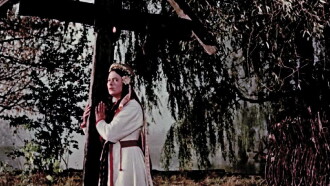
An adaptation of a story by a Ukrainian writer Mykhailo Kotsiubynsky that anticipates the Ukrainian "poetic cinema" of the '60s in its focus on star-crossed lovers and its celebration of nature.
16 January 1967
The film covers the period from 1900 to 1917. Historical events—the Russo-Japanese War, January 9, and others—are shown through the eyes of a mother who begins to realize that her children have many like-minded followers, and thanks to this, she comes to believe in the feasibility of the ideals for which her eldest son sacrificed himself.
01 September 1972
A story about the friendship between the children from Soviet Union and East Germany.
14 February 1956
Timid old woman Pelageya Nilovna observes the revolutionary activities of her son Pavel Vlasov and gradually comes to realize that his cause is a great and noble one.
14 November 1959
Foma Gordeyev, the son of a wealthy Volga merchant, doesn't want to continue his father's work. The mind is sickened by the dirt and injustice of life around him.
24 January 1944
The German conquerors are above nothing, not even the slaughter of small children, to break the spirit of their Soviet captives.
27 March 1940
My Universities is the last installment of Russian director Mark Donskoy's "Maxim Gorki" trilogy. Having endured a painful youth in My Childhood and a torturous sojourn as a serf in My Apprenticeship, future writer Gorki reaches maturity with an insatiable desire for personal and artistic freedom.
12 September 1939
Picking up where 1938's My Childhood left off, the story covers the years in Gorki's life when the future writer was on his own, looking for a purpose and place in life.
01 April 1934
A coming-of-age story about a flute-playing boy (Yyvan Kyrla) from the Mari people, a national minority who lived near the Volga, and how he is educated by the Soviet state.
05 November 1973
The film tells about the childhood and youth of the wife, friend and military ally of the founder of the country of the Soviets Nadezhda Konstantinovna Krupskaya.
27 September 1938
Young Maxim grows up under the czarist regime with his grandparents as guardians. Continually demeaned by his martinet grandfather, Maxim is drawn to his warm-hearted grandmother, who instills in him the willingness to pursue his writing muse.
04 May 1942
Fighting Film Collection No. 9 (Boyevoy kinosbornik No. 9) is the ninth issue of Boyevoy kinosbornik series, released in May 1942.
28 September 1942
This literary adaptation was one of only two films made during World War II on the subject of the Civil War following the Bolshevik Revolution, as attention by filmmakers and viewers shifted away from past history and toward the current conflict.
01 January 1949
The inhabitants of Chukotka are shown to be cruelly exploited before the revolution. Once Chukotka is visited by the representative of the Kamchatka Revolutionary Committee, Los, and the ethnographer Zhukov.
27 May 1962
A sad story about a little Japanese girl fighting heavy decease in a Russian summer camp on the Black Sea coast.
15 March 1927
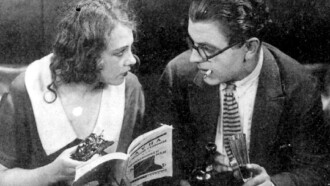
A bold study on the dangers of prostitution in the Soviet Union in the 1920s. It's sort of dramatic fiction that tells the story of Lyuba, which after irremediable events, loses his honor, being obliged to exercise the oldest profession in the world to survive.
15 October 1945
A semi-sequel to Donskoi's Raduga (1944), the story is set in Nazi-occupied Kyiv. The drama focusses on the travails of a typical Soviet family and on the efforts by the Germans to force the reopening of a local munitions factory.
06 November 1978
The drunkard and his wife become orderlies in a cholera barracks during the outbreak.
23 April 1929
Lost movie.