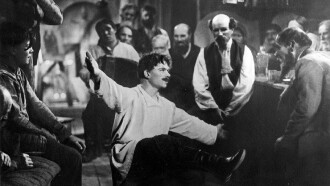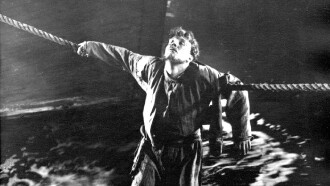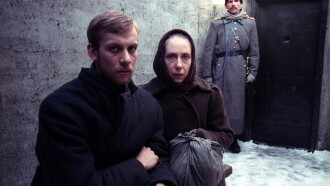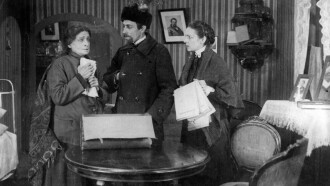
Maxim Gorky Trailers
The Magic Beam TrailerMaxim Gorky TrailerSoviets on Parade Trailer
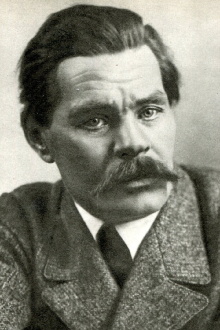
Alexei Maximovich Peshkov (1868–1936), popularly known as Maxim Gorky (Russian: Максим Горький), was a Russian writer and political activist. He was nominated five times for the Nobel Prize in Literature. Before his success as an author, he travelled widely across the Russian Empire changing jobs frequently, experiences which would later influence his writing.
Gorky's most famous works are a short story collection 'Sketches and Stories' (1899), plays 'The Philistines' (1901), 'The Lower Depths' (1902) and 'Children of the Sun' (1905), poem 'The Song of the Stormy Petrel' (1901), autobiographical trilogy 'My Childhood', 'In the World', 'My Universities' (1913–1923), and novel 'Mother' (1906). Though Gorky himself judged some of these works as failures, most are now seen as masterpieces.
Some of his less-known post-revolutionary works such as the cycles 'Fragments from My Diary' (1924) and 'Stories of 1922–1924' (1925), and novels 'The Artamonov Business' (1925) and 'The Life of Klim Samgin' (1925–1936), Gorky himself was more proud of; the latter is considered Gorky's masterpiece and sometimes being viewed by critics as a modernist work. Unlike his pre-revolutionary writings (known for their "anti-psychologism"), these differ with an ambivalent portrayal of the Russian Revolution and "unmodern interest to human psychology" (as noted by D. S. Mirsky).

Most Popular Maxim Gorky Trailers
Total trailers found: 101
28 April 1973
A TV drama about the decline and fall of the Russian middle-class family. Based on the work by Maxim Gorky, a four-act drama first published in 1908.
01 September 1984
Based on the story of the same name by Maxim Gorky.
19 July 2022
A newcomer to a mental health unit wants to help his fellow patients. But instead of seeking healing through self-recognition, he builds castles in the air and thus becomes a great threat to his fellow sufferers and ultimately to himself.
29 January 1976
A group of people from the wealthy middle class in engage in quasi intellectual quarrels and discussions trying to find some meaning in their comfortable and indolent life.
11 October 1926
A Soviet woman is caught between her husband and son, who find themselves on opposing sides of the Russian Revolution.
31 August 1985
A story from the life in the beginning of XX century based on the theater play by Maxim Gorky.
13 June 1956
Based on the novel "Mother" by Maxim Gorky, about the hardships of a peasant laborer.
18 March 1968
Based on Maxim Gorky's early autobiographical short stories "One Day in Autumn", "Konovalov", "Twenty Six and One", "My Companion", "The Conclusion", "On the Salt", "Woman".
01 February 1968
A young girl lives with an elderly couple in a settlement in a distant Siberian village. They liked her.
01 October 1957
Residents of a rundown boardinghouse in 19th-century Japan, including a mysterious old man and an aging actor, get drawn into a love triangle that turns violent.
01 January 1971
Television performance, tragicomedy based on the play of the same name by M. Gorky by the Leningrad BDT named after M.
01 January 1947
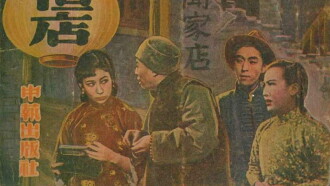
Night Inn (Chinese: 夜店; pinyin: Yè Diǎn) is a Chinese black-and-white film released in 1947, directed by Huang Zuolin and starring the popular Shanghai singer Zhou Xuan.
01 November 1963
“The Magic Beam” is a film essay woven together from newsreels and documentary material from different decades, fragments of hundreds of non-fiction and fiction Soviet films of the 1910s-1960s.
05 April 1976
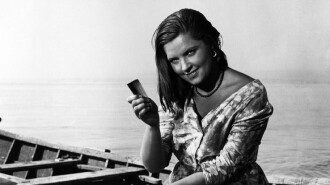
This colourful, music-filled and sensual melodrama based on early stories by Maxim Gorky tells the fatal love story between the beautiful and rebellious girl Rada and the handsome horse thief Zobar.
08 April 1921
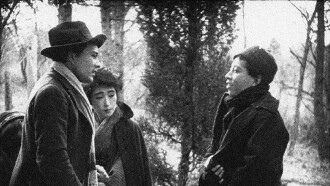
A small town boy dreams of being a famous fiddler; Meanwhile, two convicts escape from prison and hide in the woods.
11 December 1936
Inhabitants of a flophouse struggle to survive under the harsh treatment imposed by the landlord, Kostyleva.
01 January 1967
A paint-on-glass animated film (one of the first of its kind) about a dying falcon and a stupid snake.
01 January 2007
Production by Kirill Serebrennikov based on the play by Maxim Gorky.
01 January 1967
The love triangle: wife, husband and his mistress, amusingly crumbles because the loving writer is fleetingly infatuated with a third woman, young and inexperienced, rightly believing that an artist needs a muse every day, not a wife and mistress.
07 July 2026
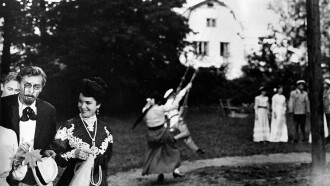
It's a hot, beautiful summer in 1905, and Russia's elite retreat to the countryside to swim, sip champagne and start affairs.
18 September 1941
June 22, 1941. In a Ukrainian village, a mother sees off her two eldest sons as they head to the front.
14 January 1967
Finnish telefilm adaptation of Gorky’s famous play, The Lower Depths, by director Mikko Niskanen.
14 February 1956
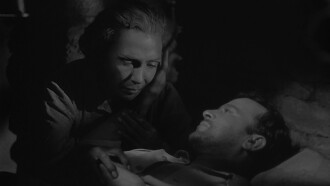
Timid old woman Pelageya Nilovna observes the revolutionary activities of her son Pavel Vlasov and gradually comes to realize that his cause is a great and noble one.
14 November 1959
Foma Gordeyev, the son of a wealthy Volga merchant, doesn't want to continue his father's work. The mind is sickened by the dirt and injustice of life around him.
19 September 1938
The eve of the 1905 Russian revolution was unquiet at the Skrobotova and Bardin factory. In response to the fair demand of the workers to dismiss the cruel and rude master, the masters close the factory and call in the troops.
01 July 1969
The film takes place between two revolutions - 1905 and 1917. There is no agreement in the family of the Kolomiytsev brothers, bankrupt nobles.
18 December 1978
Drama based on the play of the same name by Maxim Gorky.
12 September 1983
For many years, Vassa Zheleznova has been leading the family business and, despite the inconspicuous children, her dissolute husband, alcoholic brother, and revolutionary daughter-in-law, is trying to maintain at least the appearance of a normal family.
27 March 1940
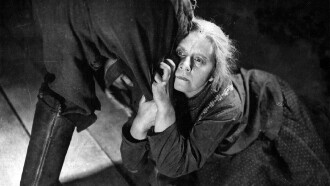
My Universities is the last installment of Russian director Mark Donskoy's "Maxim Gorki" trilogy. Having endured a painful youth in My Childhood and a torturous sojourn as a serf in My Apprenticeship, future writer Gorki reaches maturity with an insatiable desire for personal and artistic freedom.
12 September 1939
Picking up where 1938's My Childhood left off, the story covers the years in Gorki's life when the future writer was on his own, looking for a purpose and place in life.
06 June 1930
The 1890s. One of the cities on the Volga River. The young wife of a merchant falls in love with Artem, a “Volga bogatyr,” a man of enormous strength and violent temper.
01 December 1990
The social ferment in late 19th century Russia which led to the 1917 Russian Revolution is movingly portrayed in this lengthy historical drama, which is very faithful to the 1907 novel The Mother by the celebrated Marxist writer Maxim Gorky (1868-1936).
08 September 2021
Summertime. While a pandemic spreads overall, Paul, his wife Hélène and his little sister Lisa, isolate themselves in their countryside house.
14 January 2011
Karky works in a shipyard owned by Rajanayagam, a feudalistic industrialist who imprisons his workers in the factory compound and refuses to allow them to have any link with the outside world.
01 May 1920
Only fragments exist of this early version of Mat [Mother] by Aleksandr Razumnyj.
04 May 1955
Pablo, a wandering laborer, has imprisoned himself in a hell of alcoholism. Cruz, a widow, reaches out to the troubled man, but even her compassion may not be enough to save him.
01 January 1966
In a fishing village, animosity grows between father and son, when the latter starts to desire his lover.
01 January 1956
Unwilling to dedicate herself to her husband, the restless wife of a provincial village fisherman seeks out love from every man she meets.
01 June 2004
A comedic parody of school themes familiar to all of us with the participation of students, teachers, great classics of native literature, penguins, loons, petrels, etc.
18 June 1963
TV movie based on the essay by M. Gorky "VI Lenin". In the winter evening of 1920 VI Lenin (Boris Smirnov) met at the apartment of E.
01 December 1965
Based on the play of the same name by M. Gorky.
27 September 1938
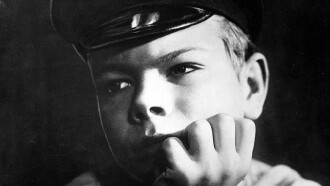
Young Maxim grows up under the czarist regime with his grandparents as guardians. Continually demeaned by his martinet grandfather, Maxim is drawn to his warm-hearted grandmother, who instills in him the willingness to pursue his writing muse.
25 September 1967
In the focus of the film is the fate of Varvara Basova, whose painfully soulless, philistine-gray existence, devoid of ideals and moral content.
30 May 1989
Gorky's play raises themes of the Russian intelligentsia's struggles and search for the meaning of life.