Most Popular Nam June Paik Trailers
Total trailers found: 79
28 December 1974
Suite 212 is Paik's "personal New York sketchbook," an electronic collage that presents multiple perspectives of New York's media landscape as a fragmented tour of the city.
14 February 1964
Hi-Red Centre were comprised of Genpei Akasegawa, Natsuyuki Nakanishi and Jiro Takamatsu, who enacted ‘happening’-style performance art in unusual spaces during the early 1960s in Japan.
03 November 1976
A Tribute to John Cage is Paik's homage to avant-garde composer John Cage. A major figure in contemporary art and music, Cage was one of the primary influences on Paik's work, as well as his friend and frequent collaborator.
01 January 1985
Home movies shot on Super 8mm by W+B Hein over 10 years.
24 March 2023
The quixotic journey of Nam June Paik, one of the most famous Asian artists of the 20th century, who revolutionized the use of technology as an artistic canvas and prophesied both the fascist tendencies and intercultural understanding that would arise from the interconnected metaverse of today's world.
19 July 2010
Feature-length compilation program presenting 37 out of 41 original fluxfilms produced and directed in the 1960s by Fluxus artists, including George Maciunas, Nam June Paik, Yoko Ono, Robert Watts, Paul Sharits, et al.
01 January 1984
In his book "1984", George Orwell saw the television of the future as a control instrument in the hands of Big Brother.
05 November 2000
A compilation of over 30 years of private home movie footage shot by Lithuanian-American avant-garde director Jonas Mekas, assembled by Mekas "purely by chance", without concern for chronological order.
01 January 1964
This fascinating film documents the U.S. premiere production of Originale, a Happening by German composer Karlheinz Stockhausen.
24 July 2011
Experimental filmmaker Pip Chodorov traces the course of experimental film in America, taking the very personal point of view of someone who grew up as part of the experimental film community.
24 November 2019
Jim Moir (aka Vic Reeves) explores Video Art, revealing how different generations ‘hacked’ the tools of television to pioneer new ways of creating art that can be beautiful, bewildering and wildly experimental.
15 July 1969
Part of a collection of restored early works by Nam June Paik and Jud Yalkut, this piece is historically significant as well as remarkably prescient.
15 July 1971
Part of a restored collection of rare early works by Nam June Paik, Electronic Fables is an example of Paik's early improvisations and experiments with electronic image manipulation, prior to his invention of the Paik/Abe Video Synthesizer.
22 February 1986
A film collage tracing the story of the lives, loves, and deaths within the artistic community surrounding Jonas Mekas.
01 January 1999
Scenes from the life and work at Anthology Film Archives. Much of the footage in this video was shot by Auguste Varkalis.
14 September 2020
The tapes in the program consist of some of Mekas’ earliest cassettes from the 1990s not long after he first began working with video as well as more recent mini-DV tapes from 2010s.
01 January 1993
The film portrays a group of artists who since the early 1960s have completely disrupted our ideas of what art can be.
03 March 1995
Nam June Paik's first single-channel videotape since 1989 is a heartfelt tribute to his long-time collaborator Charlotte Moorman.
21 January 1985
A compilation of avant-garde artwork and talent of the mid to late 20th century hosted by Ryuichi Sakamoto.
14 February 1966
Early documentary about the pop art scene and happenings in Germany.
01 January 1977
One of Paik’s most overtly political and poignant statements, Guadalcanal Requiem is a performance/documentary collage that confronts history, time, cultural memory and mythology on the site of one of World War II’s most devastating battles.
15 July 1972
Part of the "Video-Film Concert" collection on EAI. From 1966 - 1972. Music by K. S. Narayanaswami.
23 October 1968
Part of a collection of restored early works by Nam June Paik, the haunting Beatles Electronique reveals Paik's engagement with manipulation of pop icons and electronic images.
01 January 1989
One of Paik's most compelling and poignant tapes, Living with the Living Theatre pays tribute to Judith Malina and the late Julien Beck, founder of the Living Theatre.
01 January 1965
Button Happening is Nam June Paik's earliest extant tape, and possibly his first tape ever. Recorded in 1965 on the day he acquired his first Sony Portapak camera, this previously unknown work has recently been rediscovered and restored.
01 January 1988
This spectacular satellite link-up, coordinated by Paik, connected the United States, Brazil, France, Germany, Ireland, Israel, Japan and numerous other countries.
15 November 1987
About a group of graduates from Cambridge University who go back to their college to visit a friend who has stayed on there.
05 November 1974
Various unrelated vignettes, often juxtaposing sound and image.
31 December 2006
This was filmed on November 1, 1997 at Anthology Film Archives during a tribute to Joseph Beuys. Nam June Paik destroys a piano.
15 July 1972
Waiting for Commercials is a hilarious compendium of Japanese TV commercials. "Beckett wrote 'Waiting for Godot' twenty years ago, but instead of Godot, TV commercial after TV commercial arrived".
15 July 1972
Part of the "Video-Film Concert" collection released by EAI. From 1966 - 1972.
01 January 1986
The exuberant irreverence and wit of Butterfly characterizes Paik's stream-of-consciousness visual and conceptual techniques.
21 February 2018
In 1961 Lithuanian American artist and impresario George Maciunas established the avant-garde art movement Fluxus.
01 January 1967
Using Bell Lab's pioneering research facilities, Paik creates a starkly minimal experiment in computer imaging, in which a shifting dot appears on a black ground.
01 January 1978
Merce by Merce by Paik is a two-part tribute to choreographer Merce Cunningham and artist Marcel Duchamp.
01 January 1990
Beuys Projection, 1990
01 January 1973
This tape is Jud Yalkut's video realization of Charlotte Moorman and Nam June Paik's concert performance of John Cage's composition 26'1.
01 January 1968
Marked by a playful, irreverent sense of improvisation and experimentation, these experiments with image manipulation and synthesis form a link between Paik's performance and sculptural works of the 1950s and early 1960s and the celebrated video works and installations of his later years.
01 January 1988
One Candle, One Projection
01 January 1974
TV Garden is Paik’s imagined future landscape where technology is an integral part of the natural world.
01 January 1966
1966, 16mm film on video, black-and-white and color; 10 minutes
01 January 2011
“Drawing on his personal archives, Mekas has assembled a Fluxus vaudeville starring Yoko Ono, Joseph Beuys, and the late Nam June Paik.
01 January 1969
This early masterwork of electronic experimentation was created by Paik while he was Artist-in-Residence at WGBH in Boston.
01 January 2000
Drawing from Paik's earliest experiments with video synthesizers, Analogue Assemblage employs current technology to create a multilayered montage that references both the old and the new.
16 February 1978
Collaboration with Nam June Paik and Dimitri Devyatkin, combining footage from the US and Russia: Brezhnev on TV, a May Day parade, veterans in the park.
24 December 1975
The New Wave is the seminal compendium of independent video work in the early 1970s. Written and narrated by Brian O'Doherty, this overview of the emerging video field includes examples of guerrilla television and "street" documentaries, early explorations with image-processing and synthesis, and performance video.
23 March 1969
Nam June Paik’s Electronic Opera no. 1 first aired in 1969 as part of The Medium is the Medium, a special “artist transmission” commissioned by WGBH-Boston featuring experimental segments by Paik and artists Allan Kaprow, Otto Piene, James Seawright, Thomas Tadlock, and Aldo Tambellini.
01 January 1971
TV Cello Premiere is a silent film documentation of Charlotte Moorman in her first performance on Paik's eponymous TV Cello at the Bonino Gallery in New York in 1971.
01 December 1984
Single channel video (color; sound; 1984)
01 January 1980
Paik produced this exuberant, high-speed collage as a commission for the National Fine Arts Committee of the 1980 Olympic Winter Games.
01 January 1967
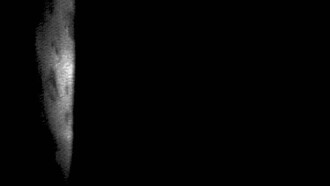
In Missa of Zen, a TV screen, filmed from an extremely oblique angle, appears as a ghostly, flickering sliver at the side of a darkened frame.
04 November 1994
A portrait of Nam June Paik produced as a 'video catalog' for the exhibition 'The Electronic Super Highway', which premiered at The Museum of Art in Fort Lauderdale, Florida, with recent installations, historical background and interviews.
01 January 1984
A short documentary profile of the Anthology Film Archives, shot on the eve of the move to the historic 2nd Avenue Courthouse.
01 January 1982
The influence of Jewish fathers on their sons and the complexity of familial relationships are explored in a witty, poignant portrait of two artists.
04 October 1986
This ambitious live satellite link-up of Japan, Korea and the United States features interviews with Keith Haring and architect Arata Isozaki, and performances and works by Philip Glass and the Kodo Drummers, Charlotte Moorman, Nam June Paik, and Lou Reed.
23 March 1969
Produced by WGBH-TV in Boston, the Medium Is the Medium is one of the earliest and most prescient examples of the collaboration between public television and the emerging field of video art in the U.
31 December 2007
This exhibition focuses on Jonas Mekas’ 365 Day Project, a succession of films and videos in calendar form.
20 April 1986
Originally commissioned by the Sony Corporation of Japan and performed live on the JumboTRON, a fourteen-story TV set at the Expo in Tsukuba, Japan, Adelic Penguins is a collaboration between Fitzgerald, artist Paul Garrin, and composer Ryuichi Sakamoto (who also appears as a performer).
01 January 1973
Global Groove was a collaborative piece by Nam June Paik and John Godfrey. Paik, amongst other artists who shared the same vision in the 1960s, saw the potential in the television beyond it being a one-sided medium to present programs and commercials.