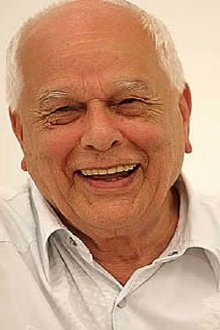
Nelson Pereira dos Santos Trailers
Amuleto TrailerNelson Pereira dos Santos – A Life of Cinema TrailerJá que Ninguém me Tira Para Dançar Trailer
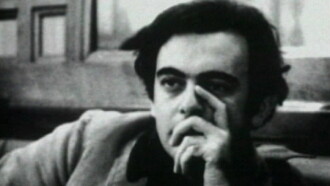
Nelson Pereira dos Santos was a Brazilian film director. He directed films such as Vidas Secas (Barren Lives), based on the book with the same name by Brazilian writer Graciliano Ramos. He also directed Rio 40° (his first feature film) which was released in 1955. The film is a chronicle of life in the favelas of Rio de Janeiro, and it influenced several other directors, spurring the Cinema Novo moment. His most well-known film outside of Brazil is Como Era Gostoso o Meu Francês (How Tasty Was My Little Frenchman, 1971). It was entered into the 21st Berlin International Film Festival. The film takes place in the sixteenth century and details the alleged cannibalistic practices of the (now extinct) indigenous Tupinamba warrior tribe against the French and Portuguese colonizers of the Brazilian littoral. The film is something of a black comedy about European colonialism, one that makes satirical use of the Brazilian modernist trope of antropofagia (cultural cannibalism), then recently revived by the Tropicalismo movement of the 1960s, as well as a bitter commentary on the historical genocide of the indigenous tribes in Latin America and the gradual destruction of their civilization. Santos was a member of the Brazilian Academy of Letters from 2006 up to his death, result of multiple organ failure, on 12 April 2018.

Most Popular Nelson Pereira dos Santos Trailers
Total trailers found: 82
01 January 1964
Documentary about the history of Jornal do Brasil, founded on April 14, 1891. In 1965, the Jornal do Brasil marked its innovative and active position, as recorded in the documentary "A Seventv-Four- Year-Old Fellow" by the filmmaker Nelson Pereira dos Santos, and the story itself was in charge of confirming.
20 August 2001
Short musical film paying a tribute to samba composer Zé Ketti, one of the greatest popular artists of Brazilian music.
18 August 1988
Milionário and José Rico are robbed of their money and their fans' enthusiasm. But a female truck driver is out to help them.
17 September 1987
Jubiabá is a French-Brazilian film based on the homonymous novel by Jorge Amado. The film tells the story of the interracial love between the daughter of a rich Commander and Antonio Balduíno, a rascal, fighter and famous lover from Salvador.
01 January 2006
During a showing of rare Afro-Brazilian Cinema films at the Cinematheque of the Museum of Modern Art of Rio de Janeiro, actor/filmmaker Zózimo Bulbul gathered some of the most notorious Brazilian black directors to talk about their works, their lives and their perspectives on the future.
13 April 1967
A shockingly irreverent follow-up to the rural austerity of Barren Lives, dos Santos’ Godardian social satire owes more than a nod to the self-conscious antics of the French New Wave.
04 September 2007
The adventures of Pedro, a musician who is trying his luck in Rio de Janeiro, in the 1950's. He leaves his hometown Belo Horizonte to share a lodging with his brother Carlos in Rio.
14 January 2007
A documentary made to coincide with Niemeyer's 100th birthday. The renowned architect talks about his long life, his inspirations, and his aspirations towards a just Brazil, and the ways he tried to help that along in his spectacular and beautiful buildings.
02 January 2007
16 members from the Brazilian Academy of Letters share their views on the current situation of the portuguese language.
19 March 2004
Documentary in two parts about Brazilian writer, journalist and sociologist Sérgio Buarque de Holanda.
02 November 1980
The rise of real life country singers Milionário e José Rico from their humble beginnings until musical success.
01 January 1967
Documentary about middle-class people in Rio de Janeiro, in the 1960s, when Brazil was going through a hard period in its history, with the military coup and the following dictatorship.
01 January 2008
This film shines a light at the story of Jards Macalé, polemic artist and controversial character of Brazilian culture over the last four decades.
01 January 1982
It's Christmas Eve and an aunt and her nephew have to deal with their platonic relationship.
07 July 2002
On 17 May 1931, the young director Mário Peixoto released his masterpiece "Limite" in a premiere in Capitólio Theater in Rio de Janeiro to astonished audiences bewildered by the impressive and poetic images.
01 January 1971
The work of Nelson Pereira dos Santos guides the documentary, which traces the path taken by Cinema Novo and addresses the issues raised by the filmmaker during the filming of Brazilian Cinema classics.
01 January 1982
A three-episode anthology film based on short stories by Brazilian writer Graciliano Ramos.
30 June 2015
A documentary on Cosme Alves Netto (1937-1996), former head of the Cinematheque of the Museum of Modern Arts at Rio de Janeiro.
15 October 1968
An extended research tour of US university film programs introduced dos Santos to the American avant-garde filmmakers, among them Jonas Mekas and Stan Brakhage, who would directly inspire his formally radical adaptation of an allegorical short story about adultery and colonialism by Guilherme de Figueiredo.
08 February 2013
Documentary about the life of Tom Jobim, from the perspective of three women of his life: his sister, Helena Jobim, his first wife, Thereza, and his second wife, Ana.
21 September 1970
Father Simão Bacamarte arrives in the small town of Serafim to investigate a certain phenomenon of madness.
22 August 1963
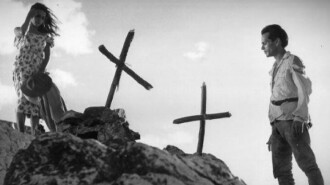
A destitute family tries to escape the drought in the backlands of northeastern Brazil. Fabiano (Átila Iório), Sinhá Vitória (Maria Ribeiro), their two children and their dog Baleia wander aimlessly and almost hopelessly through the remote interior, surviving the forces of nature and the cruelty of men.
15 May 2019
Follows the story of Opinião, a theatre group created in 1964 during the early Brazilian dictatorship period to oppose the government through artistic performances.
17 May 2023
For six decades, the cinema of Nelson Pereira dos Santos has projected Brazil into the eyes of the world.
17 September 2003
Documentary about Brazilian filmmaker Glauber Rocha, one of the most important names in the Cinema Novo, with interviews with some of his friends and colleagues.
24 December 1971
The importance of the Cannes Film Festival in world terms and what it represented for Brazil in 1971s
24 August 1955
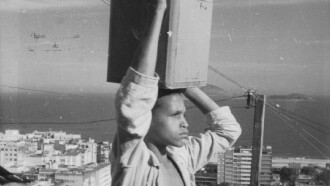
On a scorching summer day in Rio de Janeiro, five impoverished black boys venture out of their favela to peddle peanuts throughout the bustling city.
22 January 2008
Seventy critics and filmmakers discuss cinema around the conflict between the artist and the observer, the creator and the critic.
21 May 1974
An ubiquitous folk singer narrates the tale of a young boy, who apparently becomes immune to gunfire after his mother arranges for him to have an amulet bearing Ogum's blessings.
28 October 2021
Conducted from interviews with personalities who lived with Leila Diniz (1945-1972), the documentary is a record of an era and, above all, it rescues the participation in Brazilian culture of the actress who opened the way for the sexual revolution during the dark years of the dictatorship.
02 April 2014
Documentary on the view, testimonies and times of Darcy Ribeiro, since military dictatorship.
01 January 1966
An amalgamation of accents and life experiences from different parts of Brazil reunited on the city of Brasília.
18 March 2021
An authentically marginal cinema created in Catholic university in Brazil. One of the most intriguing and imaginative moments in modern cinema in the voice of some of its select conspirators—with Carlos Reichenbach at the lead—, and through the most razing flow of images that can possibly be conceived.
11 April 1972
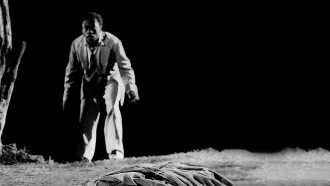
The critical success in France of How Tasty Was My Little Frenchman made possible dos Santos’ delirious science-fiction vision of free love in a post-apocalyptic wilderness besieged by flesh hungry zombies contaminated by an unnamed nuclear attack.
09 January 1964
The documentary depicts the everyday of illiterate rural workers in Northeast Brazil, living under extreme misery.
10 September 1951
Two kids and a living, talkative doll attempt to catch a mulatto boy-like, supernatural one legged figure known as the Saci-Pererê, that enjoys playing pranks on the farms.
18 September 1980
A young man learns to how to be a thief from a more experienced one.
16 April 1967
Originally produced for German TV, Improvised and Purposeful is a firsthand look at the "Cinema Novo" movement (otherwise known as the 'Brazilian New Wave').
27 November 1961
Despite being promised to another man, a young orphaned woman falls in love with man working at the farm she lives in , and together they escape.
09 July 2018
Nelson Pereira dos Santos talks about The Highway of Life (1980)
18 June 1984
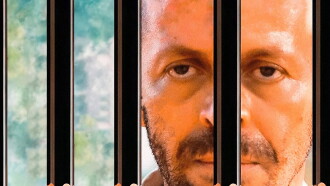
In the 1930s, novelist and politician Graciliano Ramos is accused of being a communist sympathizer. He is then arrested and sent to the Ilha Grande prison, where he experiences the disturbing treatment reserved for common prisoners.
01 June 1971
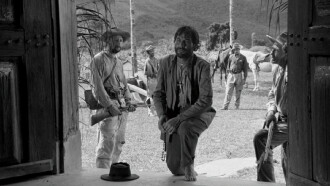
In 1594 Brazil, a frenchman becomes a prisoner of the Tupinambás. While waiting to be executed, the foreigner learns the habits of the indigenous people and joins a woman who tries to help him escape.
28 November 1995
An aging Brazilian actor teams up with a film student on a trip to Mexico, in order to find out an unknown movie his mother allegedly watched before she committed suicide.
28 May 1962
In Bahia, an educated black man returns to his home fishing village to try and free people from mysticism, in particular the Candomblé religion, which he considers a factor of political and social oppression, with tragic outcome.
16 July 1965
Augusto Matraga is a violent agressive farmer who, after being betrayed by his wife and trapped by several enemies, is beaten up and left for dead, being rescued by a couple of humble small farmers who nurse him for a long time until he is well again.
20 November 1962
Five segments about the hardships faced by people living in slums on hills in Rio de Janeiro.
02 January 1997
Documentary that addresses, through the testimony of directors and actors, the work of Dib Lutfi, considered one of the greatest photographers of Brazilian cinema.
26 August 1957
A talented songwriter of sambas is forced to face the social injustices of the city around him.
16 May 2016
A deep investigation, in the way of a poetic essay, on one of the main Latin American movements in cinema, analyzed via the thoughts of its main authors, who invented, in the early 1960s, a new way of making movies in Brazil, with a political attitude, always near to people's problems, that combined art and revolution.
20 February 1994
After an extended period directing original screenplays, dos Santos returned to the creative engagement with literature that was the wellspring of his early masterpieces, offering a combinatory adaptation of five stories by the renowned Brazilian novelist João Guimarães Rosa.
15 May 1998
1943, World War II. The northeastern coast of Brazil is an strategic region for the Allies. Giancarlo, an Italian immigrant married to a Brazilian woman, lives nearby the Parnamirin Field, the largest military base built by the USA outside of their territory.