Owen Land Trailers
In the Land of Owen TrailerGrand Opera: An Historical Romance TrailerRemedial Reading Comprehension Trailer
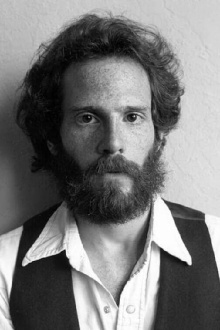
George Landow (1944 – June 8, 2011), also known as Owen Land, was a painter, writer, playwright, photographer, and experimental filmmaker. Shortly after the release of his film On the Marriage Broker Joke... (1977), Landow rearranged his name to Owen Land, an anagram of "Landow N.E." He has also worked under pen names Orphan Morphan and Apollo Jize.
According to film historian Mark Webber, Land made early films as a teenager, and his later films, made mostly during the 1960s and 1970s, are some of the first examples of the "structural film" movement. Land's films usually involve wordplay, and have been described by Webber as having a humor & wit that separates his films from the "boring" world of avant-garde cinema. Webber also said that he was inspired by Joyce, Beckett, and Ionesco. While the humorous aspects of his films makes them appealing to audiences who are not familiar with the perceived hermetic and insular world of avant-garde film, many of his works function as sharp parody of the experimental & "structural film" movement. The book Two Films By Owen Land (Lux, London) features the complete scripts of Landow/Land's films Wide Angle Saxon and On the Marriage Broker Joke as Cited by Sigmund Freud in Wit and its Relation to the Unconscious or Can the Avant-Garde Artist Be Wholed?, as well as footnotes written by Land interpreting the many references and elements of these two films and a filmography by Mark Webber. Released in May 2011, the book "Dialogues - a film by Owen Land" (Paraguay Press, Paris) features the complete script of his last film, as well as two interviews with the artist.

Most Popular Owen Land Trailers
Total trailers found: 36
15 March 1979
Grand Opera marks a stock-taking of Benning's work and his life, presenting a personal and artistic autobiography woven together with a series of events dealing with the historical development of the number pi, Benning's travels, and homages to Michael Snow, Hollis Frampton, George Landow (Owen Land), and Yvonne Rainer.
19 July 2010
Feature-length compilation program presenting 37 out of 41 original fluxfilms produced and directed in the 1960s by Fluxus artists, including George Maciunas, Nam June Paik, Yoko Ono, Robert Watts, Paul Sharits, et al.
08 December 2009
A short documentary about notorious filmmaker Owen Land (aka George Landow) and his most recent film Dialogues (2009).
16 February 2009
Dialogues is Land's last film: A chaotic, self-reflexive experimental narrative about many, many things-- namely Land himself.
01 January 1975
An interpretation of The Confessions of Saint Augustine featuring an ordinary middle-aged man who undergoes a conversion experience whilst watching an experimental film.
11 November 1966
Film in Which There Appear... is a six-minute loop of the double-printed image of a "China girl" or "Shirley card", her image off-center, making visible the sprocket holes and edge lettering on the film.
02 May 1967
A shot of a Southern Belle waving to a group of tourists on a pleasure boat ride is looped, multiplied and then melted, creating psychedelic abstract images.
07 June 1976
A reworking of an earlier film, Institutional Quality, in which the same test was given. In the earlier film, the person taking the test was not seen, and the film viewer in effect became the test taker.
06 July 1978
A revision of Bardo Follies, Diploteratology suggests that “death (destruction of the original image) is not an end but merely the next stage.
01 January 1972
As Landow and his students were testing a new video camera, an elderly man began to talk to them about new technology.
01 January 2009
The Land Camera Collective presents a (nearly) shot-by-shot remake of the Owen Land 1977 classic experimental film 'On The Marriage Broker Joke as Cited by Sigmund Freud in Wit and Its Relation to the Unconscious, or Can the Avant-Garde Artist be Wholed?
01 January 1974
A radical Christian group's lecture tour of US colleges was filmed in the cinema verité tradition, with hand held camera, sync and wild sound.
01 January 1975
After singing a vivacious song of love in the aisle of a supermarket, the performer kneels down to ask forgiveness for those involved in the commercial food industry, which substitutes natural produce with non-nutritious commodities.
01 January 1968
Early 16mm film by Meredith Monk also presented as an installation piece to play continuously forward and backward for an unrestricted time period.
01 January 1963
In his first 16mm film, Landow proposes that if we accept the reality offered to us by the illusion of depth on the flat plane of the screen, we can then assign reality to anything at will.
01 January 1971
A found, utilitarian object, the overtly moralizing educational film “How to be a Good Citizen,” is elevated to the status of ‘art’.
24 May 1983
“The idea behind it is: Feminists claim that men objectify women’s bodies. So this was a revenge"
16 September 1999
A rough-cut of selected scenes, edited as a sampler to be used in fundraising towards completion of the film "Undesirables".
01 January 1970
Landow rejects the dream imagery of the historical trance film for the self-referential present, using macrobiotics, the language of advertising, and a speed-reading test on the definition of hokum.
01 January 1977
“Freud established that jokes were structurally akin to dreams in their use of condensation, displacement, representation by opposites, punning and ‘nonsense’.
01 January 1962
“Are Era was filmed off of television sets, of TV and news announcers, similar somewhat to Fleming Faloon.
01 January 1961
“That was a film about a person who had a mystical religious experience. The idea entitled is the early stage of foetal development, the point when the foetus can become either male or female, so it’s a hermaphroditic stage.
01 January 1964
“The sore – which is not static, but a series of exposures of a healing infection – is called Not a Case of Lateral Displacement.
01 January 1963
“There is a TV screen superimposed over his face, his face being the screen and the screen being the image.
01 January 1965
“Both sides are the same time (well,almost). It’s really simultaneous – practically. Except at the end a car burns and that is the same car we have been looking at on the other track,already a burnt out wreck around which kids dance.
01 January 1963
“Fleming Faloon Screening does not document filming of Fleming Faloon. It is only a screening, contrasting the movie images with the interior of the room.
01 January 1961
“I made several films while still in high school, one of which was called Faulty Pronoun Reference, Comparison and Punctuation of the Participle Phrase* (or something like that) and was about grammar.
01 January 1973
A rapturous audio-visual mix that “deliberately seeks a hidden order in randomness.” The film combines the face of a woman in ecstatic, contemplative prayer with shots of an animal rights activist, and a scantily clad model advertising Russian cars at the International Auto Show, New York.
01 January 1965
1963-65, colour, silent, 17 minutes
8mm original transferred to 16mm
16mm blow up made by Anthology Film Archives in 2001.
01 January 1961
“They were more or less subjective camera films.The camera was my eye, involved in simple daily sorts of activities.
01 January 1969
“The soundtrack was Baroque harpsichord music composed by Georg Böhm.It was shown privately, and at the Film-Makers’ Cinematheque on Wooster Street.
02 January 1966
Following a series of title cards, a man in sunglasses briefly flutters his hands like fairy. Owen Land states that this film was not made by George Landow, and believes it should be credited to John Cavanaugh.
27 September 1969
Constructed around a found soundtrack in which a strict female voice delivers a test of perception and comprehension, Institutional Quality’s sound and image relationship become detached as the filmmakerloses interest in his subject.
01 January 1965
16mm film loop 'Film In Which There Appear...' is shown, then separate 16mm film of a cigar commericial, then back to first loop.
30 May 1968
Two artists create grotesque characters; Two-dimensional drawings which somehow have a life of their own, that exist in the same space as real objects.
05 June 1984
In The Box Theory, Owen Land, the uncanny American structuralist, king of the absurd and a religious addict, recreates the image of the Indian girl, holding the butter box with the image of herself, to produce an ad-eternal video zoom.