Most Popular Paul Holzki Trailers
Total trailers found: 22
12 March 1929
An impression of the state of the world in 1929, contrasting similarities and differences in religion, customs, art and entertainment from all over the world.
01 June 1921
Malatti's father has unexpectedly survived the fall from the train and now vows to take cruel revenge on McAllan.
01 January 1921
The old man and McAllan then got into a physical altercation on the roof of a train that was moving at full speed, in which Malatti's father fell.
22 October 1920
In Calcutta, McAllan meets the beautiful Indian woman Malatti, with whom he immediately falls in love.
03 April 1930
Steffi is in love with the unemployed musician Pepi. Still, her father the musical instrument retailer, Ignaz Korn, wants her to marry one of his card playing buddies, the butcher Burgstaller.
11 August 1930
The young married couple Sigvard and Isabella Löfgren are constantly being sought by different companies where they are trading on the bill.
21 April 1938
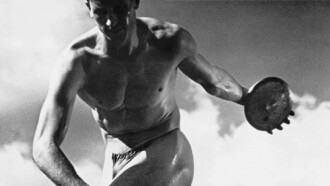
Starting with a long and lyrical overture, evoking the origins of the Olympic Games in ancient Greece, Riefenstahl covers twenty-one athletic events in the first half of this two-part love letter to the human body and spirit, culminating with the marathon, where Jesse Owens became the first track and field athlete to win four gold medals in a single Olympics.
19 October 1927
Die elf Teufel / The Eleven Devils was made in Berlin in the summer of 1927, in the last throes of the silent movie era.
01 January 1919
12 May 1927
A young woman in Berlin is offered a job at a night club in Budapest. There she is abducted and brought to a brothel in Athens.
22 October 1920
The American engineer McAllan is appointed site manager for a major project in Asia. He is to oversee the branch line of the railway line from Calcutta to Beijing.
26 February 1929
Rudolf Nelson and the Weintraub Syncoptators lead thru a short musical revue, featuring eccentric dancers, singers, and a small chorus-line.
02 January 1930
Sound film with Karl Gerhard and music by Jules Sylvain.