


Most Popular Pyotr Vitsinsky Trailers
Total trailers found: 10

Three Comrades Trailer (1935)
13 February 1935
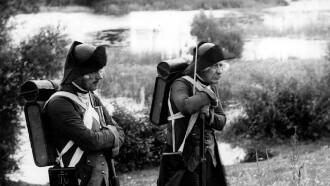
A new construction manager, Zaitsev, arrives in a small town. Two of his former comrades from the Red Army work here: Glinka, the director of the paper factory, and Latsis, the head of the timber rafting operation.
The Sky Slow-Mover Trailer (1946)
20 December 1946
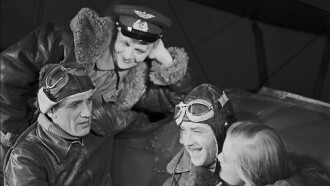
Three pilots are best friends and good fighters. During the WWII they are taking an oath to refrain from love until the end of the War.
Enemies Trailer (1938)
19 September 1938
The eve of the 1905 Russian revolution was unquiet at the Skrobotova and Bardin factory. In response to the fair demand of the workers to dismiss the cruel and rude master, the masters close the factory and call in the troops.
Russian Ballerina Trailer (1947)
28 January 1947
A graduate of a choreographic school is looking for a new style for her part in the ballet "Sleeping Beauty".

Treasure of the Wrecked Vessel Trailer (1935)
09 December 1935
A group of divers are trying to bring up the wrecked ship from the Black Sea bottom.
Dubrovskiy Trailer (1936)
16 February 1936
Peasant rebelling, pictures of folk anger - here accent that had to put Ivanovo in a new film. The manuscript of novel was found post mortem Pushkin in his papers.
Defeat of Yudenich Trailer (1941)
24 April 1941
About the struggle of the red Army and the revolutionary workers of Petrograd against the white guards in 1919.
For the Soviet Motherland Trailer (1937)
26 October 1937
The film takes place in 1921 on the Soviet-Finnish border. Shyutskorov detachments broke into Karelia, killed Soviet activists, burned houses .
Rainis Trailer (1949)
26 January 1949
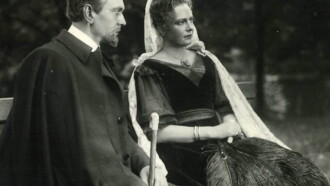
A biopic of Rainis (born as Jānis Pliekšāns), a Latvian poet, playwright, translator, and politician, whose works had a profound influence on the literary Latvian language, and the ethnic symbolism he employed in his major works has been central to Latvian nationalism.
