Qais Al-Zubaidi Trailers
Kings and Extras: Digging for a Palestinian Image Trailer
Qais Al-Zubaidi (قيس الزبيدي) is an Iraqi screenwriter, director, cinematographer and editor born in Baghdad in 1945. He studied editing and image at the Higher Institute of Cinema of Babelsberg in Germany. He first worked on German documentaries for the Higher Institute of Cinema and for Deutsche Film-Aktiengesellschaft (DEFA) studio. Many of his documentaries, including Far from the Homeland (1969) and Testimonies of Palestinian Children in Wartime (1972), were shot in Syria and focused on Palestinian people. He has also edited famous Arab films such as Crown of Thorns directed by Nabil Al-Maleh, The Knife directed by Khaled Hamadeh, Beirut, Oh Beirut director by Maroun Bagdadi, and The Night directed by Muhammad Malas.
Most Popular Qais Al-Zubaidi Trailers
Total trailers found: 18
02 January 1982
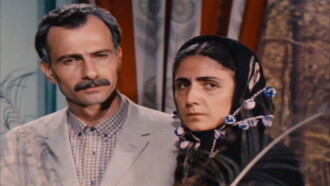
Return to Haifa is based on Kanafani’s novel the plot of which takes place in 1967, when Palestinian refugees living in the newly occupied territories had an opportunity to visit the places from which they had been expelled in 1948.
01 January 1970
Three Palestinian men strive to escape the hardships of life in a refugee camp. Under the scorching sun, the men enlist the help of an old man, Abu Al-Khaizuran, to smuggle them in an empty water tank across the desert.
26 June 2024
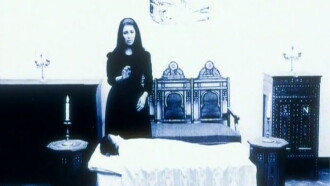
An oneiric film poem about a murder in occupied Palestine, in which Qais Al-Zubaidi used drawing, poetry, music, phonograph and pantomime with his technical virtuosity and formal expressionism.
02 January 1968
Directed by Qais Al-Zubaidi.
01 January 1987
The film depicts the many Lebanese and Palestinian Resistance acts carried out by different factions against the Israeli occupation in Lebanon.
02 January 1990
Directed by Qais Al-Zubaidi.
01 January 1978
Using film footage from various sources, Kaiss al-Zubaidi creates a description of the everyday lives of Palestinians in the occupied West Bank.
09 July 1980
Directors belonging to the PLO film organisations were barred from entering territories under Israeli administration.
02 January 1972
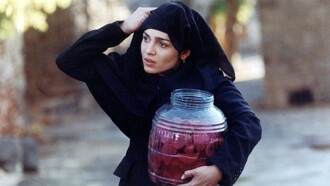
Syrian-Palestinian film The Knife (1971), based on Palestinian revolutionary Ghassan Kanafani‘s novella All That’s Left To You; an allegorical story of Palestinian attachment to land and family, and the sorrow over their loss.
02 October 1992
In the destroyed city of Quneitra is the grave of a resistance fighter for Palestine. His son, the director, tries to restore the dead man's history by mixing echoes of his mother's memory and his desire to give his father a more honorable death.
01 January 1974
A mamluk called Gaber, in order to take advantage of the rift between the Caliph of Baghdad and the prince he works for, volunteers to be a messenger for the prince.
09 June 1969
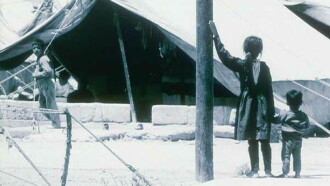
A film documenting Al-Sabineh camp for Palestinian refugees in Syria, with an unprecedented experience at the time, as he took the children after filming to show them the footage he filmed of them, the camp and its people, and recorded their reactions, laughter and speech, and added them to the film.
06 May 2026
The films in the PLO Media Unit were supposed to show a self-determined image of Palestinian reality – and they went missing during the Israeli invasion of Beirut in 1982.
12 October 1972
Children express their experiences of war and diaspora through drawings and testimonials.
02 January 1974
The Yazerli is the foreman who provides work to day laborers. The film’s poetic, non-narrative structure simulates the fractured thoughts of a young boy who is forced to leave school and find work on the docks.
01 January 1974
A revolutionary journalist tries to expose a corrupt, opportunistic politician who is making shady deals.
01 January 1984
al-Zubaidi uses GDR material to tell a rather linear story of Palestine, deploying the archive for illustration and evidence.
02 January 1984
Directed by Qais Al-Zubaidi.