Raymonde Carasco Trailers
Le Cinématon invisible de Raymonde Carasco TrailerLe Contrebandier des profondeurs TrailerCiguri – Tarahumaras 98 - La Danse Du Peyotl Trailer
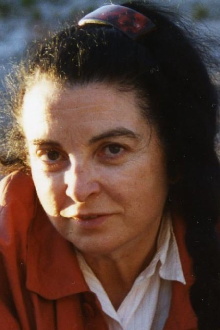
Director, author, and professor of philosophy and film studies Raymonde Carasco (1939-2009) left behind a remarkable body of work that remains little known today. Her attempts at combining film and anthropology, which she eventually gave up, arose from an interest in Sergei Eisenstein, about whose approach to editing she had written a dissertation under the guidance of Roland Barthes. Inspired by Antonin Artaud’s book Voyage to the Land of the Tarahumara (1947, published in English in 1976 as The Peyote Dance), she traveled to Mexico, where she spent more than years with this group of Native Americans. Together with her husband, the cinematographer and film editor Régis Hebraud, she filmed an entire series of ethnographic films: Tarahumaras 78 (1979), Tarahumaras 79 – Tutuguri (1980), Los Pintos (1982), Tarahumaras 85 – Los Pascoleros (1996), Artaud et les Tarahumaras (1996), Ciguri 98 – The Peyote Dance (1998), Ciguri 99 – Le dernier Chaman (1999) and La Fêlure du temps (2004)

Most Popular Raymonde Carasco Trailers
Total trailers found: 28
23 December 1978
Reel 4 of Gérard Courant's on-going Cinematon series.
11 April 1995
To attain knowledge, man and woman had to be willing to give up their innocence," says Boris Lehman. Life Lesson is a poetic and philosophic reflection on the theme of paradise lost.
01 January 1987
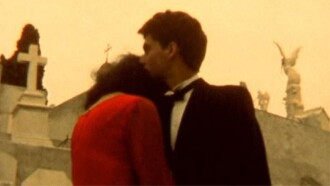
The veneer of the story is a tale of chance love: two French expatriates strike up a chance romance when they meet on a ship headed back to South America.
23 May 1984
The shooting diary of a film shot in France and in the United States. Using photos of Paris and of New York City, excerpts of his former films, statements by friends of his and shooting sequences of the film itself, tormented filmmaker Marcel Hanoun has made a heterogeneous and unclassifiable film about the difficulty of filming.
02 February 2003
Third chapter of La fêlure du temps. "It's enough that Gloria tells you the first time: if you want to work that way, do it.
03 February 2003
Fourth chapter of La fêlure du temps. "We work the sueño, the pure sueño: first, see, see the dis"
20 December 1978
Cinématon is a 156-hour long experimental film by French director Gérard Courant. It was the longest film ever released until 2011.
07 April 1979
This film chronicles a meeting: that of the Tarahumara Indians and a camera that looks at the people that are etymologically called "foot runners.
01 November 1989
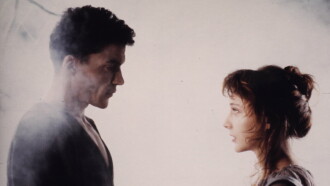
Joa (Bulle Ogier), an archaeologist from Mexico, comes to Paris in search of her sister Anna (Mireille Perrier), of whom she is suddenly without news.
18 July 1985
This film was shot in August 1984 in NOROGACHIC, the heart of the Sierra Tarahumara (the same place where Antonin Artaud in 1936, claims to have attended the rites of Tutuguri after crossing "The Mountain of Signs").
01 January 1996
Meet the last great shaman of peyote and secrets of healing. These are the winter rites opening the Route du Ciguri, the final stage of Antonin Artaud's Taharumara experience.
04 February 2003
Fifth chapter of La fêlure du temps. "Yes, the dead, I see him very well. He tells me of the necessity to do that ritual.
31 January 2003
La fêlure du temps (2000-2003) is the last of the works of Raymonde Carasco focused on the Tarahumara.
01 January 1996
This film is a confrontation between the texts Antonin Artaud wrote about the Tarahumaras and the films Raymonde Carasco made with the Tarahumaras (from 1977 to 1994) on the track of Antonin Artaud, in Norogachic, the only place explicitly mentioned by Antonin Artaud.
23 June 1980
This film was shot in summer 1979. The repeated ritual of Tutuguri that Tranquilino the saweame sang and danced six times in a short, strictly accurate duration.
01 January 2011
"Erasmo Palma: Matachín dancer, Tarahumaras songwriter, resource for anthropologists, our informer and friend since 1978.
06 July 1977
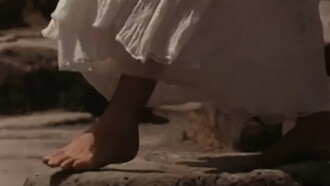
By combining a journey to the locations for Eisenstein’s unfinished opus Que Viva Mexico! with images of an Indian girl walking, Carasco has created a cinematic topos across multiple historical eras.
01 January 1996
This film was shot during Easter 1985. It shows the preparation and staging of the Passion in the village of Norogachic, Mexico.
01 January 2011
“The most culturally mixed of the Tarahumara dances, a hermaphrodite dance says Raymonde. We may have captured a little of Artaud’s vision in the Le rite du peyotl chez les Tarahumaras.
01 January 1983
An intimate exploration of Raymonde Carasco’s father.
29 August 1978
The movie shows a smattering of images from the story of Wilhelm Jensen's Gradiva. The subject is sublimated desire.
23 November 1978
Portrait of French filmmaker Raymonde Carasco shot in Hyères (France) on September 3, 1978 at 2:30 PM.
01 January 1998
A documentary cycle involving the Rarámuri or Tarahumara people of Northern Mexico. This film addresses rites of winter as well as peyote and bakaka rites.
01 January 1982
To mark the celebrations of Holy Week, the Tarahumara Indians of Mexico invented (or found) dance-rites in which men paint the face and body.
01 February 2003
Second chapter of La fêlure du temps. "As a child, I loved to dance. I remember a time we lived in "
01 January 1999
Rites of winter, rites of peyote. A creative documentary based on texts by Antonin Artaud read by Jean Rouch, and the words of the last shaman’s peyote, translated by Raymonde Carasco.