Richard Duce Trailers
Camera Sleuth TrailerA Wife's Life TrailerYou Can't Win Trailer
Canadian born Richard Duce was a film art director employed by MGM during the 1940s and early 1950s. He worked near solely on short films.


Camera Sleuth TrailerA Wife's Life TrailerYou Can't Win Trailer
Canadian born Richard Duce was a film art director employed by MGM during the 1940s and early 1950s. He worked near solely on short films.

Total trailers found: 66

24 October 1941
On Mickey's birthday, Miss Pipps, the school teacher, serves cake and ice cream during school hours. Sour old Mr.
08 December 1945
Two expert badminton players demonstrate how the best play the game, including some slick trick shots.
29 May 1948
In this comedic Pete Smith Specialty short film, a homeowner experiences a series of mishaps while taking a day off from the office.

22 June 1940
This Passing Parade entry tells the story of Dr. Joseph Goldberger (1874-1929), a Hungarian immigrant who devoted his life to finding the cause of pellagra, a disease that killed hundreds of thousands in the southern United States.
09 May 1942
This short looks at the illness anthropophobia, the fear of people. In 1901, young Catherine Starr, who lives in a small English coastal town, has an argument with her fiancé.
15 November 1941
This MGM Passing Parade series short tells the story of Julian Poydras, whose encounter with a girl at Mardi Gras had a profound effect on his later life.
02 February 1946
This Pete Smith Specialty comedic short details the troubles the average woman faces with maintaining beauty and fitness.
30 October 1943
A Yugoslav man, dying after being shot while attempting to help defend his village, writes a letter of encouragement and hope to his unborn child, explaining what he was fighting for in resisting the Nazi invasion of his homeland.
01 January 1942
The Devil works with Adolf Hitler to cause inflation in the United States.

08 February 1941
This MGM Crime Does Not Pay series short looks at the U.S. Department of Immigration's efforts to halt the smuggling of illegal aliens into the country.
18 December 1943
Robert Benchley answers questions ranging from across the political spectrum.
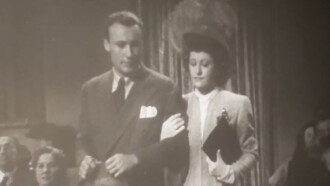
08 July 1944
This Pete Smith Specialty short takes a humorous look at the inconsiderate pests whose annoying habits make enjoying a movie impossible.

24 January 1948
Narrator John Nesbitt laments the disappearance of the rural one-room schoolhouse in America. He reminisces about his own days as a student in such a school and how his teacher, Miss Turlock, influenced so many students.

12 January 1945
A police detective uses fluorescent powder to catch a pickpocket and her gang.
01 November 1941
In this Pete Smith Speciality, the audience is asked a series of multiple-choice questions on various subjects.

02 November 1946
This comedic Pete Smith Specialty short examines the folly of using "home remedies" for various ills.

22 June 1940
In this Crime Does Not Pay series short, a young woman wants to save her baby, but is afraid of telling her parents and has no money to pay the hospital costs involved.
08 August 1940
Questions and answers on various subjects, from Lady Godiva to the Panama Canal.
06 October 1945
This John Nesbitt's Passing Parade short takes a look at the typical American barbershop throughout the years.

11 June 1946
In this John Nesbitt's Passing Parade short, a man traces his history by the succession of cars his father owned.
22 April 1943
Plan for Destruction is a 1943 American short propaganda film directed by Edward Cahn. It looks at the Geopolitik ideas of the ex-World War I professor, General Karl Haushofer, who is portrayed as the head of a huge organization for gathering information of strategic value and the mastermind behind Adolf Hitler's wars and plans to enslave the world.
25 March 1944
This patriotic short film promotes America's war effort at home. The story looks at a fictional small town's main street, seeing where additional workforce, for increased production of materials needed by the military, might come from.
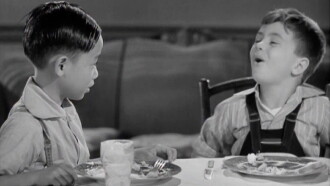
15 February 1941
Mickey's mom is about to give birth, but he gets worried when he reads that every fourth child born is Chinese.
26 April 1941
While playing baseball, Mickey runs into the street to catch a fly ball and is struck by a car. When the gang visit him in the hospital they are appalled to find the ward populated by many other children injured in automobile accidents.
01 March 1941
A 3-D short subject in which the narrator goes to a creepy old house in search of his missing aunt. There he encounters the Frankenstein monster, a witch, a wooden Indian who comes to life, and assorted other monsters and frightening characters, all of whom manage to throw something toward the camera.

25 October 1941
A man's sanity is a point of contention as he confesses to murdering an elderly man, driven by the victim's pale blue 'vulture eye', culminating in guilt-induced auditory hallucinations of the victim's beating heart.
15 September 1945
A young man graduates from the police academy at the top of his class. He then teams up with some local thieves and uses his knowledge of police procedures to pursue a career of undetected crime.
09 June 1945
This Crime Does Not Pay entry focuses on fake spiritualists. A mother is worried about her son, who is missing in action.
01 September 1950
In this comedic Pete Smith Specialty short, average housewife Mrs. George T. Hardnose's day is recalled.
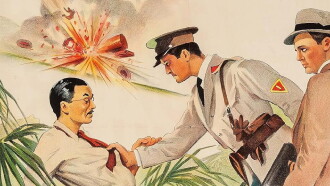
20 June 1942
This Crime Does Not Pay short shows how cooperation among all the nations of the Americas helps the war effort.
05 May 1945
In this MGM Crime Does Not Pay series short, a criminal idolizes the life of a famous gangster - unaware that his hero met a tragic end.
04 December 1943
Joe Doakes is lamenting to his wife the lack of variety in his meals. In particular, he misses eating stewed tomatoes, the fruit which he believes incorrectly is being rationed as a war measure.
27 October 1945
A young woman who is unable to pay her rent gets some unexpected help when the other tenants throw a last-minute rent party in her apartment.
05 October 1940
The gang offers to help their pal Waldo attract customers to his lemonade stand. Redecorating their clubhouse as a lavish nightclub, the kids stage an elaborate floor show, with Darla Hood as the star vocalist.
04 May 1940
After their mother remarries, two brothers cause chaos at their Aunt's home.
17 August 1940
This entry in MGM's "Crime Does Not Pay" series deals with shady companies selling fake merchandise.

12 July 1941
Spanky and the gang discover a demonstration of a "human-like" robot named Volto and are inspired to create a robot themselves to do their chores for them.
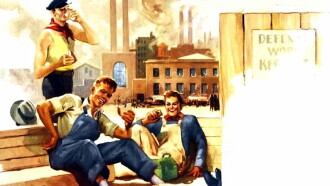
28 February 1942
This Crime Does Not Pay series entry dramatizes the idea that during wartime, people should not discuss anything related to their work when in public.
21 June 1941
In this Pete Smith Specialties short, two professional dancers beautifully demonstrate the rumba and conga while actors humorously display some incorrect techniques for those dances.
12 June 1943
Young couple Joe and Mary Thompson love each other and their children despite the struggles that they have that are typical of most young couples early on in their married life, such as the basics of trying to make ends meet.
28 April 1951
In this Pete Smith Specialty short, we see how real-life investigator Jo Goggin used a motion picture surveillance camera to gather evidence and disprove a fraudulent insurance claim.
19 January 1946
This MGM Passing Parade series short recounts how English chemist John Walker invented the wooden friction match during the 1820s.

03 November 1945
This John Nesbitt's Passing Parade short tells the story of 18th Century French physician Dr. Philippe Pinel, who initiated enlightened, humane treatment of the mentally ill.
09 December 1941
This Best Short Subject Academy Award winning film begins in the spring of 1940, just before the Nazi occupation of the Benelux countries, and ends immediately after the Japanese attack on Pearl Harbor.
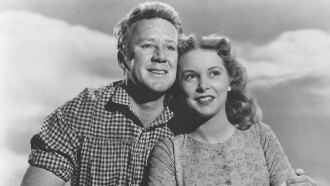
04 August 1947
A mysterious Civil War veteran courts a Missouri farmer's daughter amid postwar unrest.

01 February 1946
A showgirl working for an inventor battles crooks, who want to steal his ideas.
26 July 1941
In this MGM Crime Does Not Pay series short, a man and his racketeer buddies devise a scheme to bilk those already seemingly desperate for money of what little they have.
03 November 1945
This entry in the Crime Does Not Pay series focuses on the U.S. Food and Drug Administration's effort to ensure that drugs are fully tested before they are sold to consumers.
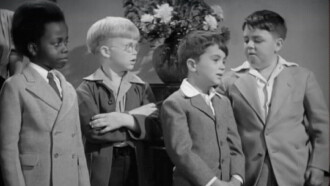
13 December 1941
The Our Gang kids worry that Darla's new stepmother will be an evil stepmother like of fairy tale fame.
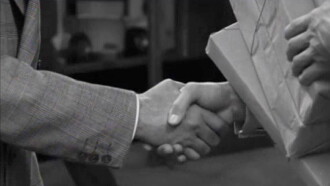
24 January 1942
This John Nesbitt's Passing Parade short explores the origins of various customs such as shaking hands, kissing, and why ships are christened.
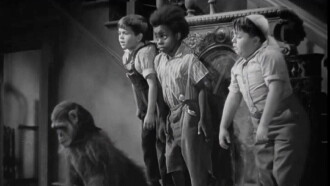
04 April 1942
After Buckwheat tells the gang he's seen a big monkey, Spanky, Froggy and Mickey decide to teach him once and for all not to lie.
03 July 1943
This Passing Parade series short examines the origins of three popular Mother Goose nursery rhymes.
18 September 1942
The story of Carlo Pozzo di Borgo, a boyhood friend of Napoleon Bonaparte's who later turned against him.
06 September 1941
This short film shows how the war department utilizes a Ph.D., a chimp, and three dogs to help design aptitude tests for men applying for work.
29 April 1944
Robert takes a train ride to Washington, DC, on "important business."
24 August 1940
Part of MGM's "Crime Does Not Pay" series, this short film focuses on crimes revolving around pension scams.
31 July 1943
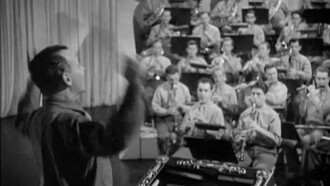
This short uses a musical suite to show Americans what they are fighting for in World War II. As an orchestra in military dress plays different "chapters" of the work, relevant excerpts from MGM films show the history of America.
03 July 1943
This serious Pete Smith Specialty series entry encourages industry to hire people with disabilities to help with the war effort.
03 March 1945
This short film takes a look at the tools and methods used to forecast the weather.
