Sheila McLaughlin Trailers
The Meadow of Things TrailerThe Big Blue TrailerSeduction: The Cruel Woman Trailer


The Meadow of Things TrailerThe Big Blue TrailerSeduction: The Cruel Woman Trailer

Total trailers found: 10
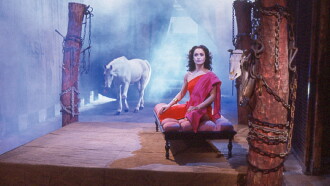
30 January 1986
Wanda, a dominatrix who runs an S&M gallery on the Hamburg waterfront, must choose between her lesbian lover and an American trainee.

01 January 1984
Stylized, black and white biography of Frances Farmer by author Lynne Tillman and Sheila McLauglin.
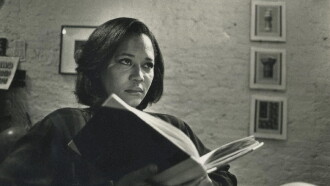
13 April 1988
Agatha is an international lawyer, Jo a filmmaker. The two women are lovers. While Jo is on the road showing her films, Agatha discovers and reads her diaries.

01 April 1983
In near-future New York, ten years after the “social-democratic war of liberation,” diverse groups of women organize a feminist uprising as equality remains unfulfilled.

01 January 1981
With HOW TO FLY, Bowes abandoned plot entirely, finding other forms of structure. He wanted to show that stories do not have to obsessively organize and explain data, and that television’s hundreds of simultaneous, fragmented narratives – news, fiction, commercials, sports, etc.
13 February 1988
Not to be confused with Luc Besson's film of the same title from the same year. Documentarian Andrew Horn's second narrative feature.
01 May 1978
Over three silent sequences, the short film shows moments of sustained, internal tension just before an emotional outburst on the part of the protagonists.
16 February 1988
Clonetown 1974 to 1979: a terrorist defector named Charon sits on the edge of oblivion and commentates on the imminent putrification of an abducted car dealer.
20 May 1978
Based on “Emma Zunz,” a short story by Jorge Luis Borges, the film moves through the internal voices of Emma’s character, whose evolution between crime, revenge and justice assumes—read from the context of the social struggles of the 60s and 70s—a decidedly political character.
