Shūji Terayama Trailers
Where is Tomorrow, Shuji Terayama TrailerVideo Letter TrailerChildren of the Gods Trailer
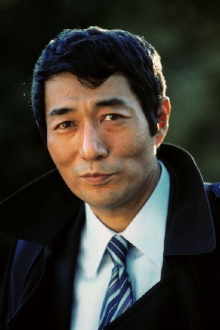
Shūji Terayama (December 10, 1935 – May 4, 1983) was an avant-garde Japanese poet, dramatist, writer, film director, and photographer. According to many critics and supporters, he was one of the most productive and provocative creative artists to come out of Japan. He was born December 10, 1935, the only son of Hachiro and Hatsu Terayama in Hirosaki city in the northern Japanese prefecture of Aomori. His father died at the end of Pacific War in Indonesia in September 1945. At the age of nine, his mother moved to Kyūshū to work at an American military base while he himself went to live with relatives in the city of Misawa, also in Aomori. At this same time, Terayama lived through the Aomori air raids that killed more than 30,000 people.
Terayama entered Aomori Prefectural Aomori High School in 1951, and in 1954 went to prestigious Waseda University's Faculty of Education to study Japanese language and literature. However, he soon dropped out because he fell ill with nephrotic syndrome. He received his education through working in bars in Shinjuku. His oeuvre includes a number of essays claiming that more can be learned about life through boxing and horse racing than by attending school and studying hard. Accordingly, he was one of the central figures of the "runaway" movement in Japan in the late 1960s, as depicted in his book, play, and film "Throw Away Your Books, Run into the Streets!
In 1967, Terayama formed the Tenjō Sajiki theater troupe, whose name comes from the Japanese translation of the 1945 Marcel Carné film "Les Enfants du Paradis", so can be translated as "children of heaven", however its correct translation is "Ceiling Gallery" and has a meaning similar to the English expression "Peanut Gallery". The troupe was dedicated to the avant-garde and staged a number of controversial plays tackling social issues from an iconoclastic perspective. Some major plays include "Bluebeard", "Yes", and "The Crime of Fatso Oyama", among others. Also involved with the theater were artists Aquirax Uno and Tadanori Yokoo, who designed many of the advertisement posters for the group. Musically, he worked closely with experimental composer J.A. Seazer and folk musician Kan Mikami.
He was also involved in poetry and at 18 was the second winner of the Tanka Studies Award.
Terayama experimented with ‘city plays’, a fantastical satire of civic life.
Also in 1967, Terayama started an experimental cinema and gallery called 'Universal Gravitation,' which is in fact still in existence at Misawa as a resource center. The Terayama Shūji Memorial Hall, which has a large collection of his plays, novels, poetry, photography and a great number of his personal effects and relics from his theatre productions, can also be found in Misawa. In 1976, he was a member of the jury at the 26th Berlin International Film Festival.
Terayama published almost 200 literary works, and over 20 short and full-length films.
He was married to Tenjō Sajiki co-founder Kyōko Kujō, but they later divorced, although they continued to work together until Terayama's death on May 4, 1983 from cirrhosis of the liver.

Most Popular Shūji Terayama Trailers
Total trailers found: 53
14 June 1975
An experimental short featuring people and nails.
01 January 1984
Lacking a coherent plot, We're All Riding on a Circus Elephant depicts the collapse of western civilization as a free-form collage advocating group anarchy and actor improvisation.
20 February 1976
The smallpox virus has created its own unique atmosphere in Terayama’s film where the skin of a bandaged adolescent and the surface of the filmic image are subjected to a bizarre ‘disturbance’ as snails cross the screen and nails are hammered into the skull of the ailing patient.
05 June 1974
A dreamlike portrayal of a hangover after a decadent party.
01 January 1983
This is Shuji Terayama memorial performance of The Hunchback of Aomori from 1983 (featuring Akihiro Miwa).
03 June 1981
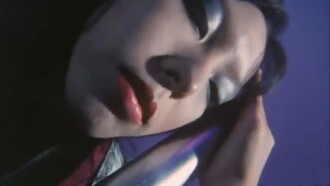
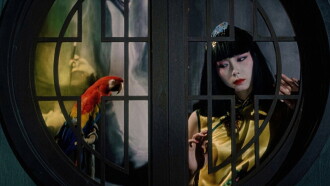
A girl named O loves a rich, and much older man. She is subjected to a variety of humiliating experiences to prove her unconditional obedience to him in a Chinese brothel.
19 March 1966
Easily bored, but still innocent and naive countryside girl discovers partying in Tokyo is a ton of fun.
28 November 2013
Yukichi Matsumoto's 2013 stage adaptation of Shuji Terayama's "Lemmings". Two cooks share a room, one of which talks with his mother's head: it lives beneath their tatami mats.
19 July 1980
A pilot crash-lands in the African wilds, and loses his memory. He finds an old man living in the jungle with his grand-daughter.
01 January 1993
This four-volume boxset released by Image Forum compiles the breadth of Shuji Terayama's experimental short film work into an extensive DVD collection.
01 January 1983
This second version of the play follows Wan and Tsu, two apprentice cooks who, as they eavesdrop on their neighbors one day, are shocked by the sudden disappearance of a wall separating them from the next flat.
24 April 1971
An experimental, psychedelic odyssey through Japanese subculture experienced via the eyes of a disillusioned young man, who must contend with intense familial dysfunction, psychosexual alienation, and existentialist malaise.
01 January 1978
Shuji Terayama and J.A.Seazer's phantasmagoric folk-psych-symph-prog-rock opera. Historical Tenjo Sajiki performance from 1978.
01 October 1977
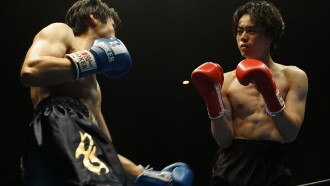
In the midst of a match, Hayato, a successful boxer, has had enough of the sport. He lets himself get knocked out, and quits boxing, leaving his wife and living alone with his mangy dog.
08 September 1984
A surreal, isolated village sees its inhabitants gradually leave behind their mutual traditions and superstitions as they leave for the city.
28 December 1974
A director faces creative block while working on his latest film – a reimagination of his adolescence growing up in a mountain village in rural Japan.
16 May 1961
A young reporter falls for a beautiful waitress, but fate conspires against their burgeoning romance when the latter is involved in a car accident and loses her memory.
27 June 1979
Three stories. A solitary sailor falls from his boat and washes ashore on a tropical island. While seeking rescue, he's found by a nearly naked woman who is playful and compliant.
07 October 2017
Set in the near future around Shinjuku, Tokyo. Shinji got out from a youth detention center. Barikan suffers from stuttering and extreme shyness.
27 January 1971
In a Japanese colony, children overthrow their parental guardians and attempt to form a new society. Their plan spirals out of control and they are soon lost in a web of sexual deviation and violence.
25 May 1968
A teenage goldsmith with a dark past tragically falls in love with a young nude model.
03 November 1979
Akira is haunted by a "bouncing ball" song that he remembers his mother singing when he was a small child, and now on the verge of a sexually active adulthood, he wants to find the origins of the song.
18 April 1970
An outlaw pushes the residents of Edo's red light district to rebel against a growing number of stifling, moralistic laws.
21 October 2017
Set in the near future around Shinjuku, Tokyo. Shinji got out from a youth detention center. Barikan suffers from stuttering and extreme shyness.
08 June 2026
In a post-apocalyptic world, a love triangle involves three models under the spell of a demiurge fashion designer.
01 January 1977
A naval officer makes love to his wife while his son, the director of the film, watches them.
01 January 1971
Paper-Scissor-Rock wars draws an episode where the two generals portray the Second World War, mostly through the rock-scissors-bag, but also by some absurd torture techniques that bring to mind some sort of Japanese artificial 70s jack ass.
02 February 1978
Using bluescreen video techniques, Terayama playfully—and with a silent film theatricality—posits a series of postmodern vignettes featuring realities-within-realities as his protagonist attempts some kind of relationship with a nude woman on the screen-within-the-screen.
01 January 1967
Documentary about the relationships between mothers and their children.
29 November 1960
Gang of robbers quarrel about the loot, but when one of them gets killed, his younger brother seeks them out to ice them one by one.
19 February 1961
A vengeful contractor hires a series of young killers to target a woman muckraker. Trouble brews when an amateur marksman shows up his eclectic competition.
14 June 1977
As a family goes on with their day, the shadows on their walls lead a completely different life.
01 January 1994
He pulls out a pair of scissors that tends toward the sky. So begins his journey through time, space and memory.
01 January 1973
Shûji Terayama's commercial for the Japanese Racing Association.
28 August 1977
Shuji Terayama starts a poem, and then ships his pencil to Herbie Yamaguchi in the UK. Herbie ships the pencil back to Terayama, who then finishes his poem.
30 August 1960
Amidst the 1960 Japanese-American mutual security treaty, alienated young nihilist Takuya struggles to find his footing between his do-nothing wealth and the outer Western extremism as major student protests take place.
01 January 1964
An experimental fantasy short dedicated to questioning whether or not man is a prisoner of time.
11 December 1977
In this Borgesian satire on knowledge and technology, bibliophilic desire leads to the construction of a pedal-powered reading machine.
30 September 1962
A union-busting Yokohama dockworker learns that the loyalties that rule his life are based on shaky foundations.
01 January 1983
"La Marie-Vison" tells the perversely fascinating tale of Marie, a transvestite prostitute who lives in elegant squalor with her dedicated servant.
01 January 1978
A man claiming to be the heir of an estate in northern japan finds himself at the doors of his mansion, only to find it overrun by servants and maids playing pretend as master or mistress, while the real master is nowhere to be found.
14 June 1977
Visions of characters by the seaside from one's memory are erased by the filmmaker's hand.
15 March 1978
Third is an aimless young man who hangs around with a couple of girls who are amateur hookers. One day, while acting as their pimp, he gets into a conflict with a young gangster and winds up killing him.
02 February 1978
A “reading film” of delirious image and text, Les chants de Maldoror takes its title and inspiration from Comte de Lautréamont’s 1869 proto-Surrealist poetic novel which, for instance, describes beauty as the chance encounter of a sewing machine and an umbrella on an operating table.
28 October 1973
an avant-garde theatrical work and collection of stage poems created by Japanese poet, playwright, ai
01 January 1983
This remarkable compilation follows an exchange of video letters that took place between Shuji Terayama and Shuntaro Tanikawa in the months immediately preceding Terayama's death.
01 June 1975
Experimental short film about two men carrying a door.
01 January 1974
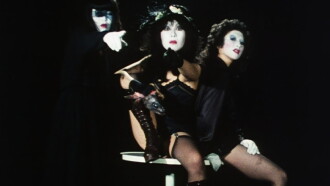
Three showgirls playfully mock the audience for attending a projection of an art film.
02 December 2017
The documentary to find the "true Shuji Terayama".
02 June 1981
This sumptuous-yet-austere liberal re-working of Cien años de soledad by Gabriel García Márquez, arranged on a five-part stage surrounded by the audience, was historically the latest production of Tenjo Sajiki.
01 January 1974
Originally made for the 100 Feet Film Festival hosted by Image Forum. However, to test the limits, Terayama Shūji willfully made use of 3 projectors to project 300 feet of film at the same time.