Sidney Howard Trailers
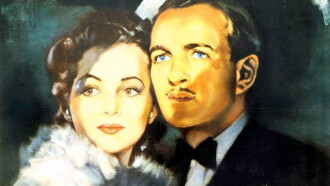
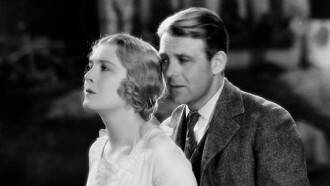
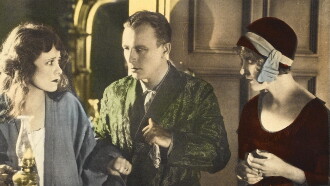
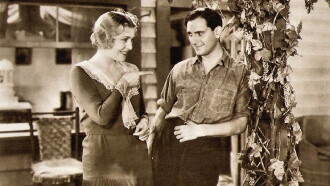
A Breath of Scandal TrailerThey Knew What They Wanted TrailerHe Stayed for Breakfast Trailer
Sidney Coe Howard (June 26, 1891 – August 23, 1939) was an American playwright, dramatist and screenwriter. He received the Pulitzer Prize for Drama in 1925 and a posthumous Academy Award in 1940 for the screenplay for Gone with the Wind.
Sidney Howard was born in Oakland, California, the son of Helen Louise (née Coe) and John Lawrence Howard. He studied playwriting at Harvard University under George Pierce Baker in his legendary "47 workshop." Howard volunteered with Andrew's American Field Service, serving in France and the Balkans during World War I. After the war, Howard made use of his proficiency at foreign languages and translated a number of literary works from French, Spanish, Hungarian, and German. He was a liberal intellectual whose politics became progressively more left-wing over the years.
Howard's first success was with his realistic romance They Knew What They Wanted 1924 that established his reputation as a serious writer. The story of a middle-aged Italian vineyard owner who woos a young woman by mail with a false snapshot of himself, marries her, and then forgives her when she becomes pregnant by one of his farm hands. Theater critic Brooks Atkinson called it "a tender, original, merciful drama." They Knew What They Wanted won the 1925 Pulitzer Prize for Drama, was adapted three times into film (1928, 1930, and 1940) and later became the Broadway musical, The Most Happy Fella.
One of his greatest successes on Broadway was an adaptation of a French comedy by René Fauchois, The Late Christopher Bean. Yellow Jack, an historical drama about the war against yellow fever, was praised for its high-minded purpose and innovative staging when it premiered in 1934.
Hired by Samuel Goldwyn, Howard worked in Hollywood at MGM and wrote several successful screenplays. Despite his well-known left-wing political sympathies he became a shrewd Hollywood insider. In 1932, Howard was nominated for an Academy Award for his adaptation of the Sinclair Lewis novel Arrowsmith and again in 1936 for Dodsworth.
In 1935, Howard wrote the Broadway stage adaptation of Humphrey Cobb's novel Paths of Glory. With its unsparing depictions of battlefield brutality, the play failed at the box office. As a World War I veteran, however, Howard believed it necessary to show the horrors of armed conflict. The film version of the novel, directed by Stanley Kubrick, did not appear until 1957. Howard's screenplay for Gone with the Wind echoed Paths of Glory with an unflinching look at the cost of war.
Howard died in the summer of 1939 at the age of forty-eight in Tyringham, Massachusetts while working on his 700-acre farm. He was crushed to death in a garage by his two-and-one-half ton tractor as he was trying to crank it.
Howard was the posthumous winner of the 1939 Academy Award for an adapted screenplay for Gone with the Wind. (He was the only writer honored for the writing of that screenplay, despite the fact that his script was revised by several other writers.) This was the first time a posthumous nominee for any Oscar won the award. He was also posthumously inducted into the American Theatre Hall of Fame in 1981.
He is buried in the Tyringham Cemetery.

Most Popular Sidney Howard Trailers
Total trailers found: 22
15 December 1939
The spoiled daughter of a Georgia plantation owner conducts a tumultuous romance with a cynical profiteer during the American Civil War and Reconstruction Era.
19 May 1938
A fairly accurate historical account of Walter Reed's search for the cause of "Yellow Jack" or Yellow Fever and those who risked their lives in the pursuit.
05 May 1933
A domineering matriarch is less than happy when her son brings home his new bride. She immediately sets to work at sabotaging their marriage as well as the engagement of her younger and weaker son.
25 December 1930
A poor but basically honest flower woman agrees to impersonate a wicked opera star.
01 December 1930
A wife's psychiatrist tells her that she is being dominated by her husband. Her solution is to divorce him.
03 September 1937
A kingdom's ascending heir, marked for assassination, switches identities with a lookalike, who takes his place at the coronation.
03 November 1929
Suave thief Colman is sent to Devil's Island, where he becomes romantically involved with the wife of sadistic warden Digges.
03 February 1932
A trio of money-hungry women rent a luxurious penthouse, spending their dough on drink and debonair clothing, backbiting and catfighting as they steal each other's boyfriends.
19 October 1940
While courting a young woman by mail, a rich farmer sends a photograph of his foreman instead of his own, which leads to complications when she accepts his marriage proposal.
23 September 1936
A retired auto manufacturer and his wife take a long-planned European vacation only to find that they want very different things from life.
02 May 1929
Bulldog Drummond is a British WWI veteran who longs for some excitement after he returns to the humdrum existence of civilian life.
16 March 1960
A European princess jeopardizes her crown when she falls for an American millionaire.
17 November 1933
When the painter Christopher Bean dies, some unscrupulous art dealers try to get several of his paintings cheaply from a family who have no idea of their value.
07 December 1931
A medical researcher is sent to a plague outbreak, where he has to decide priorities for the use of a vaccine.
11 July 1930
A distinguished English gentleman has a secret life--he is the notorious jewel thief the press has dubbed "The Amateur Cracksman".
11 November 1939
Man about town and First Class cricketer A.J. Raffles keeps himself solvent with daring robberies. Meeting Gwen from his schooldays and falling in love all over again, he spends the weekend with her parents, Lord and Lady Melrose.
28 February 1930
Middle-aged Napa Valley grape-grower Tony posts a marriage proposal to San Francisco waitress Lena enclosing a photo of his handsome younger brother Buck.
02 December 1928
Carol runs a restaurant out of her house, while her husband George collects the ferry's tolls. Unbeknownst to Carol, George is allowing his bootlegger brother to use the house as a hiding place for his liquor.
31 August 1940
Set in Paris, this romantic comedy revolves around the beautiful estranged wife of a wealthy banker who hides a handsome and fiery Communist fugitive in her apartment.
29 December 1922
A captain saves a kidnapped magnate from a nursing home run by foreign agents.
04 February 1928
An Elderly fruit grower sends a photo of his foreman, not himself, to a waitress he wishes to marry. She falls in love with the foreman.
17 May 1930
Tony, a prosperous Italian vineyardist in California, advertises for a young wife, passing off a photograph of his handsome hired man, Buck, as himself.