Tetsuya Watari Trailers
Villain TrailerYamato TrailerLady Joker Trailer
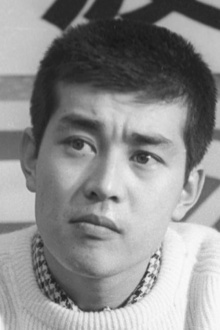
He graduated from Aoyama Gakuin University. Watari belonged to the karate club at university. He made his screen debut in 1964, in Isamu Kosugi's Abare Kishidō, and received one of the Elan d'or Awards. At Nikkatsu, Watari appeared in such films as Tokyo Drifter and the Outlaw series.
Watari was mentored at Nikkatsu by Yujiro Ishihara. When Nikkatsu shifted to focusing on Roman Porno films in the early seventies, Watari was one of many actors who left the studio.
Watari was due to play the main role in Kinji Fukasaku’s film Battles Without Honor and Humanity, but because of illness he was not able to appear. In 1974, he was forced to step down from the lead role of Katsu Kaishū in the Taiga drama Katsu Kaishū on NHK, again because of illness, after appearing in only nine episodes. In 1976, Watari won best actor of Blue Ribbon Award for his role in Kinji Fukasaku`s film Yakuza Graveyard.
In Japan, Watari is probably still best known for his role as Keisuke Daiomon in the detective series "Seibu Keisatsu" on TV Asahi. He also appeared in the popular detective drama "Taiyō ni Hoero!" as a replacement for Yujiro Ishihara in 1986.
Watari became the president of Ishihara Promotion after Yujiro's death in 1987 but in 2011 he resigned due to his declining health.
On June 10, 2015 he was hospitalised after suffering a heart attack and underwent surgery. Seven days later it was announced that he was in rehabilitation and would be discharged from hospital in about a month.
He had a younger brother, Tsunehiko Watase, who was also an actor. As a singer, Watari is known for his hit song "Kuchinashi no Hana" and he appeared in the Kōhaku Uta Gassen in 1974 and 1993.
He died of pneumonia on August 10, 2020, at the age of 78.

Most Popular Tetsuya Watari Trailers
Total trailers found: 88
13 December 2000
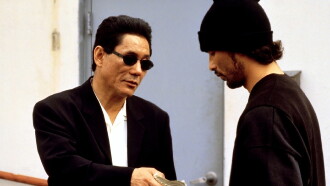
A Japanese Yakuza gangster's deadly existence in his homeland gets him exiled to Los Angeles, where he is taken in by his little brother and his brother's gang.
17 December 2005
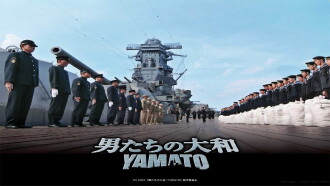
Directed by Junya Sato and based on a book by Jun Henmi, "Yamato" has a framing story set in the present day and uses flashbacks to tell the story of the crew of the World War II Japanese battleship Yamato.
03 November 1967
It had been a year and four months since Mitsuo was last on a movie set. Welcomed back by director Ishizaki and his film crew, Mitsuo is excited to star as the lead in "My Sweetheart".
22 May 1971
Set in Kawasaki in 1925, Challenge at Dawn is based on the Tsurumi Riot Incident, which actually ocurred in Yokohama that year and was sparked by corruption and yakuza involvement in the construction industry.
28 August 1968
In a high school, two men are fighting over a beautiful female teacher who has been assigned as an English teacher.
25 January 1992
Begins during the Yellow Turban rebellion that initiated the downfall of the Han dynasty. Liu Bei is striving to find a way to bring order to a chaotic world.
01 January 2002
Ryuji Inahara changed the name of the Inahara-gumi to the Inahara-kai, and accordingly unified the emblem of the Inahara-kai.
01 October 1965
Hiroshi is the second officer on board the Hakuromaru. Lead by his captain, he heads out to town to recruit new crew members for their next voyage.
13 August 1966
A moodo/akushon yakuza picture with heavy emphasis on poignant seishun romance.
02 November 1968
On a cold winter day, Goro Fujikawa (Tetsuya Watari) and Masahiko murder the mob boss of Meishin-Kai.
14 March 1969
Goro has always been a lone wolf. When he arrives at an industrial city in Keihin, there is certain restlessness in the air.
03 October 1966
A remake of the 1957 classic "Man Who Raised a Storm" with Watari Tetsuya in the title role.
28 June 1969
Unlike traditional gangster movies, it is a gangster swashbuckler that mixes romance and humanity with a yakuza lover as the main character.
07 March 1970
Rivalry between two young gangster groups who seek to extend their influence.
22 January 1969
It is the end of the Taisho era (1912-1926), and at the Hanazuki-tei theatre in Asakusa, the famous performance of storyteller Koiso Kikuji and performer Kataoka Koshin is reaching its climax when the Tawaraya family interferes.
23 August 1969
Kazama and three others defeated Yoshie Sangyo, but the Nishio group was disbanded due to public pressure, and the territory belonged to the Hirata group.
29 September 1973
When his pistol is stolen, police detective Murakami is humiliated, especially when the gun is later implicated in a crime.
10 April 1966
After yakuza boss Kurata dissolves his own criminal empire, a rival kingpin offers a position to Kurata's top operative, Tetsuya "Phoenix Tetsu" Hondo.
30 December 1988
After the fall of the Tokugawa Shogunate, there was a series of battles fought while the former supporters of the Tokugawa shogunate retreated to the north where they actually started a sovereign nation that was recognized by more than one European country.
17 September 1966
One morning, Kazue is nearly knocked over by a motorbike in front of an instrument store, breaking all the records that she was carrying.
06 February 1971
Young man returns from prison and sets out to destroy the gang that killed his friends and boss of his former gang.
03 January 1967
Young female teacher Kyoko Miyake relocates to a small seaside town with her runaway little sister, but their new life is complicated by hoodlum-like Jiro Yamazaki.
18 February 1984
An anthology that embodies the essence of Nikkatsu action films with a stylish flair, this movie follows an aging hitman (Jō Shishido) on a quest to find a former rival he once shared the screen with.
18 November 1967
After World War II life in Japan was hard. There was lawlessness, rapine, never enough food or money.
21 September 1968
In 1943, critical developments in the Pacific War have placed Japan at a disadvantage, although the fiery breaths of war hadn't yet reached Okinawa Normal School for women.
15 February 1975
A self-destructive man becomes a powerful member of the yakuza but quickly loses his self-control. Based on the true story of Rikio Ishikawa.
14 November 1998
Kounosuke Mibu and Tae Horikawa are unable to forget each other, even though they met and fell in love 20 years ago.
15 September 2000
Screen icon Sayuri Yoshinaga stars in this historical melodrama about geishas in the southern city of Nagasaki set during the 1920s.
19 June 1976
Dramatic story of one man trying to make a difference.
15 July 1972
Centred on Aonari Hyokichi, a young literary man with aspirations to become a writer, and the surrounding people, including Kira Tsuneo and Tobigashikaku.
31 October 1991
A ronin named Azami Onijuro travels the Nikko Highway, he is being followed by the bounty hunter Daihachi and Yukata Danzen.
23 February 1972
The story of the desperate struggle between the police and a large crime syndicate.
13 January 1968
Goro had grown up in the yakuza world. As an active member of the Mizuhara family crime syndicate, he expressed his loyalty by always putting himself in the forefront of every battle.
28 April 1968
Goro (Tetsuya Watari) wants to put his dark past behind. He heads to Hirosaki City to offer his condolences to Yumeko and to reunite with Yukiko (Chieko Matsubara), but finds that Yumeko is fatally ill.
14 December 1968
A youthful Nikkatsu drama about a Japanese painter who travels to Australia and falls in love.
05 October 1968
Rokurō starts a part-time job on a fishing boat, but the ship has an engine failure in the middle of the Pacific Ocean.
10 October 1967
A young yakuza hitman named Goro does a job and needs to hideout away from Tokyo for a while. He hangs out with loose women and hard men and always manages to stay one step ahead of the law.
15 September 1971
Takei Goro leaves the gang to quit the yakuza world, but the gang won't allow it and relentlessly pursues Takei.
12 August 1970
In a match where professional baseball referee Yuzo Tagami was observing a young referee, Hara, a player who got angry at the indecisive judge, knocked the referee down.
01 December 1973
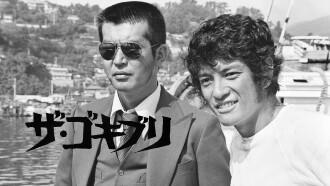
Based on the comic Gokuburi Deka.
30 October 1976
A police investigator cracks down on yakuza business, but once he realizes the police are in negotiations with certain factions, he sides with his own syndicate of choice.
31 December 1969
A real all-star cast turns out for this modern yakuza yarn.
01 August 1968
Goro Fujikawa (Tetsuya Watari) was indebted to Mitsugimoto. Sawada, a low rank yakuza with a gambling problem owed Mitsugimoto three million yen.
14 September 1967
1967 Japanese movie
19 October 1996
“Night Train to the Stars” is a biography of the fascinating life of Kenji Miyazawa, one of Japan's most beloved fantasy novelists.
01 June 1966
College life starts off great for Michiko. She and her friend join the Italian Culture Research Club that performs canzone, a genre they are both in love with.
09 July 1966
A deep mist envelops the port city of Yokohama. The scent of crime is everywhere. As an executive member of a drug trafficking syndicate, Kano is pretty high up in the food chain, but "status" bears no value to him.
17 November 1973
Tai Kato’s early 20th century set yakuza epic about an ordinary merchant girl (Hiroko Maki) who crosses paths with an assassin (Tetsuya Watari).
03 July 1971
In the late Taisho era. Umeshima Jinbei, the president of the Kanto Umeshima Kai, divided the area into the Kuroda family to the south and the Takeuchi family to the north in order to protect the security of Kame no Ii, which had opened up in place of the Yoshiwara brothel that had been burnt down in the earthquake, and had the Kuroda family rule their respective territories.
14 August 1965
The brother of an up-and-coming kendoka is mysteriously murdered while working on a new model of motorboat.
17 March 1973
Kingoro Tamai moves with his wife and son to the port city of Wakamatsu. He organizes the Tamai-gumi, a stevedore group, to vie for work with two other powerful groups.
12 July 1975
Global South guerrillas hijack the Japanese oil tanker Arabian Light, threatening to blow it up in Tokyo Bay, unless the Cabinet complies with an economically devastating ultimatum.
14 April 1965
University karate club member Kikuo is actually the son of a yakuza boss. However, he disliked his father's business and never spoke about his family at school.