
The Vitaphone Corporation Movie Trailers
Page 7/7
Showing results: 361-387 of 387


Surprise! Trailer (1935)
26 July 1935
The Duncan Sisters (Rosie and Vivian) and their college dorm mates sing a song to their alma mater while packing up to leave college at the end of school.
Rambling 'Round Radio Row #6 Trailer (1933)
31 March 1933
Host Harry Rose mixes a "cocktail" of musical acts.
Bosko Shipwrecked! Trailer (1931)
19 September 1931
Bosko is shipwrecked on an island where he is chased by a lion and pursued by simian cannibals.
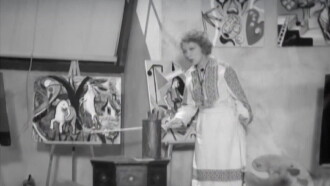
Rushin' Art Trailer (1936)
01 January 1936
An expert on Russian art apparently doesn't know as much about it as he thinks he does.
Double or Nothing Trailer (1940)
20 April 1940
In this Broadway Brevities short, a stunt double is hit on the head and imagines himself in a series of movie scenes with doubles for various stars.
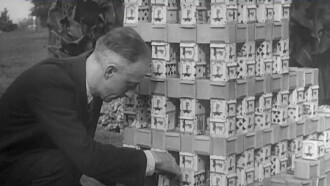
Believe It or Not (Second Series) #2 Trailer (1931)
24 October 1931
Ripley shows an aged Japanese statesman, a strange fish with legs, the 'Rubaiyat' in a finger ring, how a house of cards is torn up, and a giant typewriter in Atlantic City, New Jersey.
The Spirit of 1918 Trailer (1926)
07 October 1926
In this early demonstration of the Vitaphone sound system, conductor Herman S. Heller conducts the Vitaphone Symphony Orchestra in the title work.
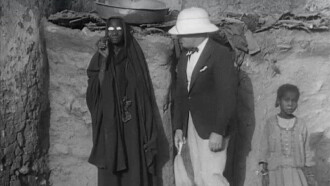
Believe It or Not (Second Series) #1 Trailer (1931)
26 September 1931
This first entry in the "Believe It Or Not" series of shorts visits northern Africa. Included are a look at the Tuareg people of the Sahara Desert, a waterfall whose under-surface builds up because of lime deposits, a clock that strikes 13, and the Tree of Abraham, estimated to be 3500 years old.
Barber Shop Blues Trailer (1933)
30 September 1933
A barber shop owner wins a sweepstake. He remodels his shop and hires Claude Hopkins and his orchestra to play for his customers.
Young and Healthy Trailer (1933)
04 March 1933
A king is bored with the stupid people in his court. He goes out in search of young people.
Can You Imagine? Trailer (1936)
11 July 1936
This short shows various curiosities of people and nature across the United States, in the style of the "Believe It or Not" series.
Hail Columbia Trailer (1934)
28 August 1934
This short film provides highlights from American history, focusing on George Washington's farewell to the troops to the War of 1812.
The Movie Album #2 Trailer (1932)
04 June 1932
This short subject shows excerpts from three unidentified silent films (although several stars are identified) with humorous commentary unrelated to the actual plots.
Cryin' for the Carolines Trailer (1930)
22 April 1930
Spooney Melodies were a series of live-action musical shorts produced by the Leon Schlesinger Studios during the 1930s that capitalized on the popularity of organ music played in Palace-style movie theaters and were intended to be played as the short before the main feature.
The Musicale Trailer (1930)
15 January 1930
A variety-style short built around the eccentric comedy and piano-playing of Al Trahan, featuring supporting performances from Yukona Cameron and Helen Hawley.
Mischa Elman Trailer (1926)
06 August 1926
Violinist Mischa Elman performs a set of two of the most recognizable popular classic violin pieces: "Humoresque" composed by Antonín Dvorák, and "Gavotte" by François-Joseph Gossec.
The Voice from the Screen Trailer (1926)
27 October 1926
The film introduces and discusses the technical aspects of making talking pictures. It is the first film using the Vitaphone sound film system developed at Bell Laboratories.
The Music Makers Trailer (1929)
03 July 1929
A man hides inside a giant phonograph machine and imitates various recording artists for a pair of flappers.
The Yacht Party Trailer (1932)
29 September 1932
On a set resembling a yacht, Roger Wolfe Kahn leads his orchestra in several popular tunes of the day.
Blossom Seeley and Bennie Fields Trailer (1927)
11 July 1927
The curtain opens; behind it are two pianos where Charles Bourne and Phil Ellis, billed as the Music Boxes, are seated playing.
Hollingsworth and Crawford in 'Bed Time' Trailer (1929)
20 March 1929
A physician's wife becomes violently jealous of her husband when he receives a late-night call from a female patient.
Cavalcade of Girls Trailer (1950)
12 August 1950
A look at the women of 1900 to 1950. Ladies accomplishments through the years, shown with rare footage of different eras.
Herschel Henlere in the Madcap Musician Trailer (1929)
30 November 1929
Henlere plays piano in the style of various “masters” and other instruments as a one-man band.
Irene Rich in 'Lead, Kindly Light' Trailer (1928)
23 July 1928
While conducting a street corner meeting in the slums, a recent Salvation Army convert encounters her crooked former lover.
Mr. and Mrs. Jack Norworth in 'The Nagger' Trailer (1930)
01 June 1930
A woman demands an explanation from her husband about his meeting with a mysterious woman.
The Victim Trailer (1931)
25 November 1931
Frank Orth is a husband who is hen-pecked both by his wife and by her mother. He comes home on his birthday and finds his wife has given him a birthday party, and that her gift to him is a cemetery plot, and his mother-in-law thinks it is past due, and should be used soon.
Fashion's Mirror Trailer (1930)
26 May 1930
Duval's Fashion House is struggling, Mr. Duval believes in large part because of his playboy son, Jack, not pulling his weight in the business.