Thomas Heise Trailers
Heimat Is a Space in Time TrailerDocumentary filmmaking: Christoph Hübner talks with Thomas Heise TrailerDetection Trailer
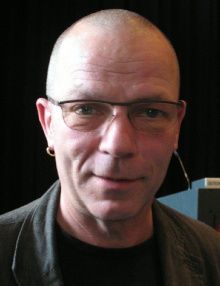
Thomas Heise was born in Berlin, capital of the German Democratic Republic, in 1955. After school he trained as a printer. After his military service in the East German armed forces he began to work as an assistant director at the DEFA - Studio for Feature Films in Potsdam Babelsberg in 1975. Between 1978 and 1983 Heise studied at the Academy of Film & Television in Potsdam-Babelsberg (HFF/B). His first film, the documentary Wozu denn über diese Leute einen Film/Why a Film About These People - produced entirely with materials bought on the black market - was banned from public screening. Since 1983 he has worked as a free-lance writer and director in the areas of theatre, audio drama and documentary. Until the end of the GDR all his documentary efforts were however either blocked by what was – in official jargon – called 'operative means' or destroyed or confiscated.
Since the beginning of the 1990s Heise's documentaries have attracted national and international attention. Since 2007 he's been teaching as a Professor for Film and Media Art at Hochschule für Gestaltung Karlsruhe. Thomas Heise's earlier films dealt with social phenomena in the GDR and the country's bureaucratic apparatus. From the late 80s his focus has moved to the changes individuals, families and regional communities have had to undergo in the aftermath of the German reunification. The works of the filmmaker encompass a wide range of contemporary socially relevant topics such as privatisation, the re-organisation of the formerly industrial sphere, unemployment and rightwing radicalism to name but a few.

Most Popular Thomas Heise Trailers
Total trailers found: 27
20 October 2004
Documentary by Thomas Heise filmed in East Berlin in 1987/88.
31 December 1985
Thomas Heise documents the everyday life of the "People's Police Force" in Berlin Mitte.
06 October 1990
The lower level of Lichtenberg Station in Belin in early October 1989: the beginning of the end for the GDR.
18 October 2002
In Saxon-Anhalt, near the town of Zerbst, set away from busy roads, next to a deserted military landing strip, is the village of Straguth.
06 April 2011
Solar System is a film about disappearance. It is a portrait of daily life in the indigenous community of the Kollas in Tinkunaku in the mountains of northern Argentina.
26 March 1998
The documentary relates how in the second half of the 20th century the agent Berthold Barluschke was first a henchman of the State Security Service of the GDR and then of the West German Federal Intelligence Service.
31 December 2012
With his background in Brechtian theater and the material-like, pure poetic style of his documentaries, Thomas Heise has created his very own kind of filmic expression.
13 December 2012
DETECTION. Consideration of past, present and future of a small village in Germany. For over a century — wars and states went by — the military is the largest employer.
14 November 2012
CONSEQUENCE tracks the tiring working day between Christmas Eve and New Year at a small German crematorium operating 24/7.
31 December 1980
"This was my first student documentary. I shot it over the Easter vacation in 1980 on 16mm, black-and-white reversal film.
15 February 2005
Thomas Heise, noted documentary filmmaker from the former GDR, takes a trip to France to visit his brother Andreas.
08 May 2000
Heise's first work produced specifically for television: a small film, the portrait of a pub on Rosenthaler Straße in Berlin Mitte, an homage to a kind of proletarian feeling of belonging together.
28 October 2016
Bucharest, October 1989: a secondary school student disappears without a trace. Weeks later, he resurfaces at a meeting of the Communist Youth where he is denounced for certain "reprehensible actions" and excluded from the organization.
26 September 2019
Director Thomas Heise picks up the biographical pieces left by his family, and composes an epic picture of four generations of his family, of a country, of a century.
26 April 2014
Documentary about a juvenile prison in Mexico City.
12 February 2009
"Pictures from the late eighties in the GDR on up to the immediate present in the year 2008 in Germany.
06 March 2011
In Bettina Büttner’s exquisitely lucid documentary Kinder (Kids), childhood dysfunction, loneliness, and pent-up emotion run wild at an all-boys group home in southern Germany.
05 September 2009
24-hour television documentary about Berlin and its inhabitants, reporting in real time on the everyday lives of more than 50 protagonists from a wide range of professions, social classes, religions and ethnicities.
24 November 1991
Ten years after breaking off the film "Anka and ..." nearly all the protagonists of that time have disappeared.
18 February 2000
Eight years after the first cinematic encounter with right-wing extremist youths in Halle Neustadt, Thomas Heise revisits the protagonists and their families at the turn of the century.
25 September 2008
The third part of Thomas Heise's time-lapse observation, in which he accompanies the people of Saxony-Anhalt.
15 February 2012
Thomas Heise’s film reframes Pope Benedict XVI’s September 2011 visit to Erfurt not as a triumphal “Pope-mania” spectacle but as a meticulously orchestrated state ritual.
06 March 2006
Over seven years, director Thomas Heise revisits five young actors from his 2007 Berlin staging of Heiner Müller’s “Anatomy Titus.
11 November 1992
A group of young people in Halle-Neustadt moving aimlessly between the concrete blocks once built as a socialist model housing estate.
31 December 1984
Thomas Heise's documentary portrays the meeting of officials and citizens in the district office of Berlin-Mitte in 1984.
01 October 2010
Under the artistic direction of director Andreas Dresen, 20 renowned documentary filmmakers, experienced television writers, and teams tell stories about the country and its people.