Torajirō Saitō Trailers
Ōwarai Jiro chō ikka: Sanshita nitei kenjū TrailerWatashi wa uso wa mōshimasen TrailerI Love Money More Than Anybody Trailer

Ōwarai Jiro chō ikka: Sanshita nitei kenjū TrailerWatashi wa uso wa mōshimasen TrailerI Love Money More Than Anybody Trailer

Total trailers found: 70

07 December 1954
Classic kaidan ghost story set in the Edo period
27 October 1954
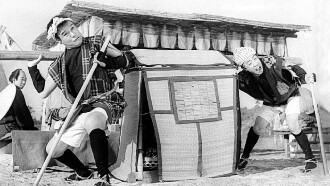
Comedy directed by Torajiro Saito about swordsmen in the era of feudal Japan.
10 July 1940
The only son of a sushi chef hates sushi and decides to leave home to search for a job and make his own way.
06 September 1955
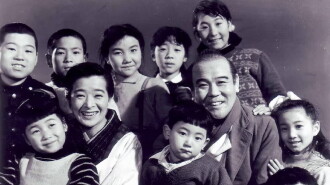
A frenzy of goodwill, tears, laughter, and a lot of fun, caused by thirteen children under the guise of a good-natured fruit vendor and his wife.
18 September 1938
This is the only surviving “Mito Komon Manyu-ki” film. This release also known as "Adrift Tour Memoir" or literally "Mito Komon's Pleasure Trip" is an 80-minute compilation of the first (東海道の巻 or "Tokaido no maki") and second (日本晴れの巻 or "Japan's Fine Weather Reel") parts (147 minutes), which were re-edited and screened at a time when presentable films were dried up immediately after the defeat of the war.

31 December 1950
A young boy named Chomatsu (Misora Hibari) lives with an old man Denbei near the grounds of Asakusa temple as bell ringers.
21 June 1938
An irreverent take on a medieval Noh drama, Hokaibo sees Enoken play the titular monk whose lusts drive him to murder.
19 July 1929
A young couple flee their disapproving parents, get lost of Mt. Akagi and find a cache of gold protected by the ghost of a gangster.
14 October 1927
Two criminal brothers try to go straight but face opposition from one of their criminal cohorts. Considered to be a lost film.
15 January 1952
Set in a bustling 1950s parlor, a beautiful counter clerk falls for a wealthy businessman’s son, only to have their romance derailed by a ruthless loan shark and a mounting family debt.

01 April 1953
The story of a ghostly thief in Edo who calls himself the fireball guy.
01 December 1950
A man working in a museum steals the Emperor's hat on display.
13 July 1930
The adventures of a modern day descendant of a famed Edo era thief are the basis for this short supernatural comedy romp.
26 May 1929
A melodrama about an orphan and her mother who are separated and lose contact, but are later reunited.
14 March 1939
My Daughter's Only Wish tells the story of a poorly paid and clumsy office clerk, played with much comedic talent by Atsushi Watanabe.
05 October 1933
A silent 3-reel comedy short that uses the 1933 film King Kong as a backdrop to the story. It was produced by Shochiku Studios (who released the original 1933 film in Japan on behalf of RKO).
01 May 1955
Hibari Misora musical.

27 December 1945
Newly released from the army, five men return to Tokyo to find no place to live in the bombed-out city, food and necessities rationed out by people who don't care, and a thriving black market.
03 January 1957
After finding a winning lottery ticket, the daughter and wife convince their father who’s been acting like a millionaire that it’s all just a one-night dream, hoping to cure his gambling habit.
23 March 1935
Kodakara Sodo (The Treasure That Is Children) is a 1935 black and white Japanese silent film with benshi accompaniment directed by Torajiro Saito.
09 September 1950
A young, talented singer (Misora) is orphaned, not once but twice, and has to turn to a rather unlikely, and unwilling, parental figure, while avoiding her wealthy, absentee father, his hired goons, and the neighborhood fortune teller (Enoken) who's after the reward money.
11 November 1958
The second "Bottomless Ninjutsu War" feature.
22 December 1953
A parody based on Kabuki plays about thieves led by the famous Soshun Kochiyama.
14 July 1953
The feudal lord Kisaragi Yae no Kami (Minami Komyo) searches for a child he had with a low-borne woman, that was sent away from his home 16 years ago while carrying a special seal.
01 May 1956
A rival diner opens next door, the model student third son fails his college entrance exams, and the good-natured dad finds himself in a whirlwind of trouble as internal and external crises come one after another.

