Toshi Ichiyanagi Trailers
Discovery of Image – The Era of Toshio Matsumoto TrailerFlux-Concert Trailer
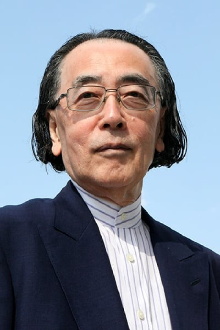
Toshi Ichiyanagi (一柳 慧 Ichiyanagi Toshi, born 4 February 1933) is a Japanese composer and pianist.
Ichiyanagi was born in Kobe. He studied with Tomojirō Ikenouchi, Kishio Hirao [fr; ja], and John Cage. One of his most notable works is the 1960 composition Kaiki, which combined Japanese instruments, shō and koto, and western instruments, harmonica and saxophone. Another work, Distance (1961), required the performers to play from a distance of three meters from their instruments. Anima 7 (1964) stated that chosen action should be performed "as slowly as possible".
Ichiyanagi was married to Yoko Ono from 1956 to 1963.
Ichiyanagi is the recipient of the 33rd Suntory Music Award (2001) and the Foundation for Contemporary Arts John Cage Award (2018). He has been honored with Japan's Order of Culture.
Most Popular Toshi Ichiyanagi Trailers
Total trailers found: 39
07 July 1973
A freestyle biopic of Ikki Kita, the ultranationalist intellectual whose ideas inspired the failed military coup in 1936.
01 October 1965
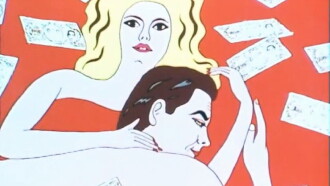
After Alain Delon murders Elizabeth Taylor, he and Brigitte Bardot face attacks from The Beatles, hired by Richard Burton to kill the French couple and take revenge for his wife's death.
01 July 1962
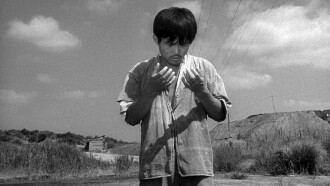
A man wanders into a seemingly deserted town with his young son in search of work. But after a bit of bad luck, he joins the town's population of lost souls.
17 October 1986
Erotic thriller about a porn photographer who has to deal with a psychopath.
13 March 1969
Two interwoven stories. The first is a biography of anarchist Sakae Osugi which follows his relationship with three women in the 1920s.
31 August 1967
A man sets out to search for his brother among the survivors of Hiroshima after an anonymous letter.
15 May 1962
A short documentary by Hiroshi Teshigahara about his father, the sculptor Sofu Teshigahara, preparing an exhibition.
24 March 2011
Part documentary, part fiction this film revolves around the life of the haiku poet Seigetsu Inoue who wandered Ina Valley for about 30 years from the end of the Edo period to the Meiji era.
20 March 1971
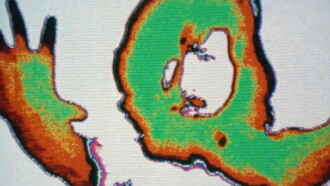
Writes Matsumoto, "I used the Erekutoro Karapurosesu (Electro Color Processor), which is mainly used in the field of medicine and engineering, to create moving image textures Metastasis, I was interested in layering images of a simple object and its electronically processed abstraction.
23 November 1965
Struggling with his true emotions, dreams, memories of the past and the reality Shizuo is about to marry, but is torn between his wife-to-be and the love to his mother.
31 December 1967
A small white box. Everything happens in that little world. A woman's face comes out from the side of the room and roars, birds peck at human flesh, trains run through, and a couple quarrel begins.
15 February 1973
Expansion remixes the images of Matsumoto’s Esctasis into an more colourful psychedelic short.
01 January 1975
There's more to picture than meets the eye in this journey into oriental metaphysical imagery. Starting (in a very Christian manner) with the Word, the film draws an explosion of visible forms, as if a sign of the shattering of shapes in the mundane world.
01 July 1975
ĀTMAN is a visual tour-de-force based on the idea of the subject at the centre of the circle created by camera positions (480 such positions).
29 September 1984
Based on the novel of the same name by Yoshio Kataoka.
26 June 1975
At Any Place 1, 1975, film, 16 min, color. Casted over the sky, images of people are suggested as shs
26 September 1970
Rikiya Shoda is an engineer working for the Atomic Agency in Japan. One day, his wife Nanako returns home with a lost teenager called Ayu.
03 November 1963
"In medical terminology, absence of genitalia in females is referred to as "gynatresia". In other words, an extreme defect that goes beyond a mere illness" Adachi's follow-up to Bowl using the figure of a woman suffering from an unusual sexual aliment has often been taken as a controversial allegory for the political stalemate of the Leftist student movement after their impressive wave of massive fiery protests failed to defeat the neo-imperialist Japan-US Security Treaty.
03 December 1981
A documentary profiling a Japanese taiko drumming group based in the remote Sado Island, Japan. The film blurs the line between real-life documentary footage of the troupe's training and practice regimes, and staged performances of their varied musical acts, with sets designed by artist Tadanori Yokoo and an additional experimental electronic music score by Toshi Ichiyanagi.
17 November 1971
In this intricately layered Japanese film, the nature of actresses and what they gain from acting is explored.
01 January 1982
The entire human body is made of cells, and health is maintained through the continuous process of old cells making way for new cells.
05 October 1963
The film consists of fragmentary images, of water flowing in stone-paved gutters, narrow alleys and the rooftops of buildings, afternoon and night views of the city glimpsed through a car window, the fishing harbor and the ruins of a church destroyed by the atomic bomb.
01 January 1989
The red blood cells that carry oxygen throughout the body have a lifespan of 120 days. The living body continuously produces blood to ensure a plentiful supply of red blood cells.
31 December 1968
A spontaneous romance blooms between Kawamura, a professor touring Europe, and Naoko, a married woman living in Paris, scarred by the Nagasaki atomic bombings.
01 December 1977
A Documentary on the Japanese baseball player Sadaharu Oh
09 December 2017
A five-part documentary chronicling Toshio Matsumoto, the legendary filmmaker known as a pioneer of experimental cinema in Japan and also active as a film theorist, who exerted a profound influence on innovative film expression from the 1950s onward.
11 February 1970
Why Not is hypnotic, compulsive and claustrophobic. It is bathed in a cold, pervasive eroticism, which, oblique and displaced at first, finally becomes explicit in one of the most bizarre masturbation sequences ever filmed.
09 April 1980
Jun has come to Tokyo from his family home, an island which resembles a ship. He works in a machine shop and is attempting to develop a career as a cartoonist in his spare time.
01 January 1963
Presentation of polymer chemistry-based synthetic fiber, and the manufacturing facilities and production process used by Toray, Japan’s leading textile maker.
01 January 1962
Cameraman Yonesaku Kobayashi (1905-2005) is a pioneer of scientific films of Japan. He and producer Sozo Okada made many scientific educational films, and in 60's - 70's, many avant-garde composers composed music for these films.
01 January 1964
Cameraman Yonesaku Kobayashi (1905-2005) is a pioneer of scientific films of Japan. He and producer Sozo Okada made many scientific educational films, and in 60's - 70's, many avant-garde composers composed music for these films.
01 January 1968
A short animated film by Furukawa Taku.
01 January 1961
Originally commissioned to record urban redevelopment in Osaka’s Kamagasaki district, Hideo Arai transcends reportage to capture a haunting portrait of displacement during Japan’s economic miracle.
01 January 1963
Cameraman Yonesaku Kobayashi (1905-2005) is a pioneer of scientific films of Japan. He and producer Sozo Okada made many scientific educational films, and in 60's - 70's, many avant-garde composers composed music for these films.
20 September 1969
The humble line has a life of its own. As it travels from one point to the next it can take whatever route it fancies.
24 March 1979
On March 24, 1979, The Kitchen presented a two-part program dedicated to the work of various Fluxus artists.
06 February 2012
For Deborah Hay’s SOLO, Larry Heilos designed the control systems for eight radio-controlled carts that moved around the Armory floor, which were then covered with wooden boxes to make platforms for dancers to stand or lie on.
01 January 1975
Shot on 16mm film, this experimental piece is inspired by a short story by Ango Sakaguchi about a doomed romance set against the backdrop of blooming cherry trees.
01 January 1986
A medical film that explores the mechanism of bones, which support the body and act as a calcium storehouse to maintain balance within the body.