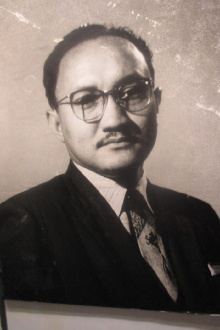
Usmar Ismail Trailers
The Three Maidens Trailer
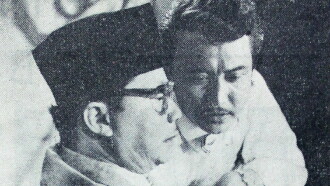
Usmar Ismail (born March 20, 1921 - January 2, 1971) was an Indonesian film director, producer, and screenwriter. He is dubbed the godfather of Indonesian films. The date of Indonesia's National Film Day (March 30), is dated from the first day of shooting Darah dan Doa (1950), Ismail's third film.
His talents further developed while working at Keimin Bunka Sidosho (the Japanese Cultural Center Headquarters). There, he collaborated with Armijn Pane and other cultural figures to stage theatrical performances.
In 1943, he founded and became the chairman of the theater group Sandiwara Penggemar "Maya" along with Abu Hanifah, Rosihan Anwar, Cornel Simanjuntak, Sudjojono, H.B. Jassin, and others.
After the proclamation of independence, Usmar served in the military and became actively involved in journalism in Jakarta. When the Dutch returned with Allied forces, he joined the Indonesian National Army (TNI) in Yogyakarta with the rank of major. Along with his colleagues Sjamsuddin Sutan Makmur and Rinto Alwi, they established a newspaper named Rakyat. In the field of editorial work and journalism, Usmar was one of the founders and editors of Harian Patriot, the editor of the monthly magazine Arena in Yogyakarta (1948), and Gelanggang in Jakarta (1966-1967). He also served as the chairman of the Indonesian Journalists Association (1946-1947).
During his time as a journalist, Usmar was imprisoned by the Dutch for allegedly engaging in subversive activities. At the time, he was working as a political reporter at Kantor Berita Antara and was covering the Dutch-Indonesian negotiations in Jakarta. This incident occurred in 1948.
In his later career, Usmar developed a more serious interest in filmmaking. He became actively involved in organizations related to theater and film. He served as chairman of the Yogyakarta Cultural Deliberation Body (1946-1948), chairman of the Yogyakarta Artists Theater Association (1946-1948), chairman of the Indonesian National Theater Academy in Jakarta (1955-1965), and chairman of the National Film Deliberation Body (BMPN). BMPN played a key role in urging the government to establish the "National Film Development Policy" in 1967. He was known as a co-founder of the Indonesian National Film Company with Djamaluddin Malik and other film entrepreneurs, eventually becoming its chairman from 1954 to 1965.

Most Popular Usmar Ismail Trailers
Total trailers found: 37
02 January 1955
An impending visit from a VIP causes chaos and confusion in the small, isolated village of Sukaslamet.
20 December 1958
The residents of a dormitory led by Bu Siti each have their own personal issues. Tari, a dance student, falls in love with a man old enough to be her father.
30 September 1950
It tells the story of an Indonesian revolutionary who falls in love with one of his Dutch prisoners.
01 January 1969
Partoyo, a big-time businessman, abandons his family because of work. A sociopolitical snapshot of Jakarta in the changing governance.
01 January 1958
Suro becomes obsessed with Ujung as a tool to take power over the village. His ambition stumbles when his daughter, Marni, falls in love with Kasan, an ordinary peasant from the same village.
01 January 1959
Husein is brought to trial after trying to commit suicide. He refuses to give an explanation until he is forced to.
15 May 1962
Revolves around a conflict between two step -siblings Omar and Salim. Salim who lives in the village works on a rubber plantation inherited by their father.
01 May 1954
A hero of revolution returns to civilian life to find the new society very different from the ideals he fought for.
05 June 1970
Irma a.k.a Ananda must struggle through the obstacle of her life for which she might or might not earns something better for her life.
29 December 1970
The wife of a European photographer on assignment in exotic Bali falls for an enigmatic ex patriot under the spell of a mystical death cult.
05 March 1954
Prior to his death, Mutalib tycoon ordered his son Dullah to search for a legacy that is listed on the secret map.
09 May 1957
The film tells a story about a family with six children. The father is often angry with everyone except the eldest child (Mieke Wijaya).
13 March 1968
Anwar returns to his village and actively preaches about going on the holy pilgrimage. Kyai Anwar sees him as a rival and calls Anwar a fake clerk and won’t allow his daughter, Rokayah, to have a relationship with Anwar.
01 January 1960
Devoted to the heroes who fought for their homeland’s freedom in the 1947 Indonesian war of liberation.
02 January 1957
Set after the Indonesian War of Independence, Maman arrives to his village only to meet Mat Codet, the leader of a rogue gang who just escaped prison.
13 July 1949
Abdulkadir is a scrooge. He works as a loan shark. His daughter, Suliati, is going steady with Ahmad.
19 September 1957
Armansyah Perkasa Alam, a rising movie and radio star, receives a lot of fan letters that he uses to indulge his playboy behaviour.
05 October 1967
On the trail to catch the killer of his brother, Achmad easily defeats a bandit who challenges him. This impresses Citra, a child, who since then follows Achmad wherever he goes.
22 May 1952
Iskandar is a talented clarinet player who trains under an old musician named Sobari. He also has moral support from his girlfriend.
10 November 1961
This is the heroic story of Mochamad Toha, who successfully blew up a Dutch ammunition depot in Bandung and ruined their defences.
21 September 1961
A rich man (Rendra Karno) comes to the Gelanggang Dagang to woo the pretty sales promotion girl (Baby Huwae).
18 May 1966
Djoni is a promoter who likes to scam artists by being very persuasive. He is trusted to arrange a performance that is meant as a fundraising gala.
23 November 1949
The arrogant young man, Harsono debauches Suryani and leaves her for the city. Harsono's brother, Sutopo takes responsibility by marrying the girl who he is actually in love with.
01 January 1960
The title was taken from a popular Minang folk-song by Gumarang Orchestra, conducted by Asbon. This film was not released.
04 March 1955
Husin bin Said (Udjang) suddenly got the inspiration to become a shaman. He put up a nameplate. So in droves of people came asking for help: people who intend to become cultural attaches, members of parliament, wives of officials whose husbands are dating again, producers, aspiring film stars, etc.
05 August 1964
During the revolution, Japan is defeated but has yet to surrender so a 14-year-old boy insists on joining the army, to avenge his father, who is incarcerated in Nusa Kambangan for murder.
23 July 1958
Arman’s father denies his request for a toy gun, but his mother allows it. With that toy gun, Arman forms a squad called “Berani Mati” or “Ready to Die” with his friends, Hamdan and others.
05 February 1962
Follows a young woman who is kidnapped by a group of bandits, only to fall in love with their leader.
19 February 1953
During the time of the confrontation, a group of young men led by Harun broke through the barricades of the Dutch navy patrol and landed at Mentawai Island.
13 August 1963
The title “Hurricane and Storm”, is seemingly a translation from Sturm und Drang, a psychological term for puberty or a transition period for an individual's mental state.
24 August 1956
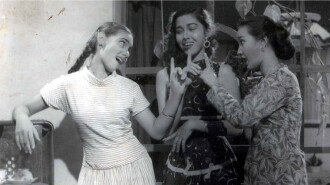
Three sisters—Nunung, Nana and Nenny—are being raised by their grandmother in Jakarta after their mother's death.
14 September 1951
After the revolutionary war, Leman is asked by Barjo to join him in collecting donations from businessmen.
01 January 1951
An unexpected encounter between an estranged father with his former family that he had left for another woman.
16 March 1951
Depicting the celebrated recapture of the town of Yogyakarta from Dutch forces in March 1949, by Indonesian youth of the resistance and members of the Indonesian army.
02 January 1953
During the revolution, Jaka takes refuge and entrusts his house to Husin. Husin then rents the house to someone else and Maryam has to face this bitter fact.
15 May 1965
After hearing the mandate of Sukarno during the Second Asian-African Conference, an author named Suromo searches an art form to express the people’s hardship.
01 January 1953
Set in the 1930s, and narrated like a ballad from the past, "The Tiger from Tjampa" tells of how a young man, Lukman, seeks to avenge his father’s murder by learning pencak silat, a traditional form of self defence, based on the movements of animals.