Vittorio De Seta Trailers
Mark Donskoy, King and Jester TrailerVittorio De Seta: The Filmmaker Is an Athlete TrailerWhat Do You Know About Me Trailer
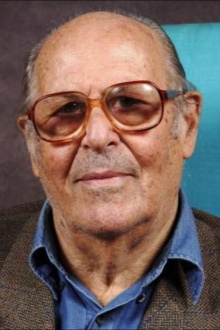
Vittorio De Seta (15 October 1923 – 28 November 2011) was an Italian cinema director and screenwriter, considered one of the Italian cinema's great imaginative realists of the 1960s. De Seta made ten short documentaries between 1954 and 1959, before directing his first feature-length film, Banditi a Orgosolo (Bandits of Orgosolo).
His early documentaries focus on the everyday life of many of Sicily's poorest workers, and are notable for their lack of voice-over narration, quiet mood, and striking color.
Most Popular Vittorio De Seta Trailers
Total trailers found: 33
01 January 1967
In this documentary, giants of italian cinema such as Rossellini, De Sica, Fellini and Zavattini talk about the importance of cinema after WW2, and about huge moments of social rebellion.
31 October 1969
When her husband returns from his work abroad with a guest, a young girl, his wife suspects a liaison.
31 December 1995
Interview by Ciprì and Maresco with Vittorio De Seta and Fofi.
01 April 1955
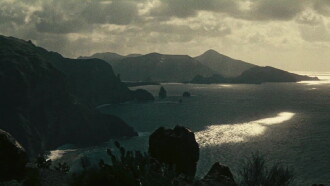
The first light of dawn. The sound of a boat and the screech of birds fill the wide expanse of sea. Black rocks emerge from the water, the “sciara” – the volcanic scoria – of Stromboli, the underwater sulfurous emanations, the layers of reddish rock eroded by the sea.
01 August 1955
A short film which retells the story of Jesus Christ's death and resurrection.
17 November 1961
A Sardinian peasant is implicated in the murder of a policeman and, although innocent, he doesn’t give himself up, lacking faith in the judicial system and fearing that he may lose his sheep while awaiting trial.
01 June 1959
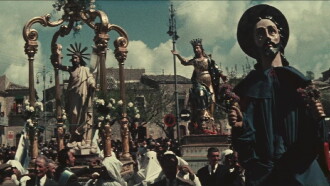
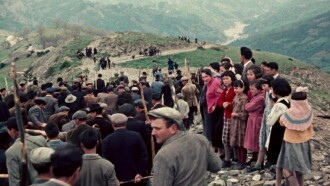
Vittorio De Seta travels to Alessandria del Carretto, a small town in the province of Cosenza, to capture a unique celebration known as the “Feast of Silver.
01 April 2011
Documentary about the Soviet film director and his changing fortunes during the Stalin years.
01 June 1958
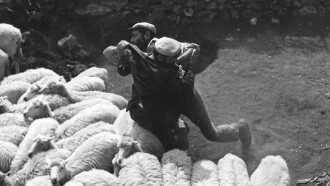
Against the background of flocks of sheep at pasture, mules walking down unpaved roads, tractors in the fields, and isolated figures in a deserted village, a caption explains that Barbagia is a vast region in Sardinia; Orgosolo, Oliena and Mamoiada are villages of shepherds and the men spend most of the year far away, with their flocks.
01 December 2008
Collective film for the 60th anniversary of the Universal Declaration of Human Rights, with 30 directors each helming a segment about one of the 30 articles of the Declaration.
13 December 1956
Sold as slaves to a wealthy Roman, Lea and Esther, two Carthaginian sisters, are offered as gifts to the ambitious daughter of a proconsul and end up involved in spite of themselves in a dangerous game of power.
22 November 2004
Alan Lomax (1915-2002) was a song collector who recorded ordinary people, who gave their heart and soul in front of his microphone.
16 October 2009
Until the 1970s, Italian cinema dominated the international scene, even competing with Hollywood. Then, in just a few years, came its rapid decline, the flight of our greatest producers, a crisis among the best writer-directors, the collapse of production.
01 June 1958
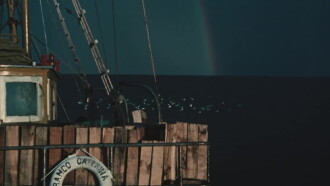
The unpredictable nature of the sea governs the world of Sicilian fishermen as they work, rest, and seek refuge from a storm.
01 June 1958
The striking landscapes of rural Sardinia provide the backdrop to this lyrical look at the hardscrabble lives of the region’s shepherds in winter.
18 December 2008
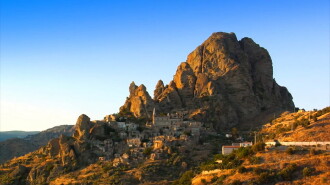
A desert village perched on a mountain of Aspromonte. A young farmer teaches the craft to a laborer from Senegal.
22 September 1966
A young writer descends into madness. Alienated, neurotic, and plagued by guilt, Michele retreats from reality, loses interest in work, and comes to the brink of suicide before being sent to an asylum for shock therapy.
02 February 2005
By tracing the places of Vittorio De Seta films and looking for people who had contact with him, as the Cozzo Disi sulfur miners, Ganzirri swordfish fishermens and shepherds who attended in drama Banditi a Orgosolo, the documentary focuses on great change started in local cultures of the Southern Italy from 1945.
22 March 1955
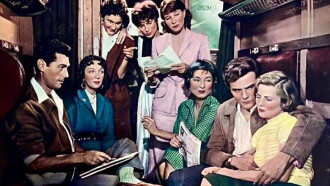
Robert and his fiancée Lucienne were due to go on vacation together to a tented village in Sicily. Robert is forced to postpone his trip and only joins Lucienne a few days later, taking advantage of the departure of a following group.
26 January 2009
"Il mondo perduto" collects six documentaries that Vittorio De Seta shot in 1954 in Sicily and four other important short films that he directed between 1958 and 1959 in Sardinia and Calabria.
01 September 2006
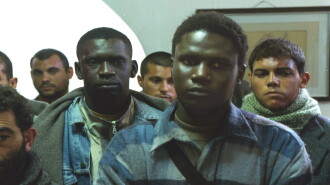
The story of a young Senegalese man who treks the Sahara, takes an immigrant boat bound for Italy, the attempts to eke out a living there - finally deciding to return to his native place.
02 January 1973
In a school on the extreme outskirts of Rome, a young teacher, instead of neglecting his half-empty classroom, decides to tackle the problem looking for the children who do not attend classes.
01 November 1955
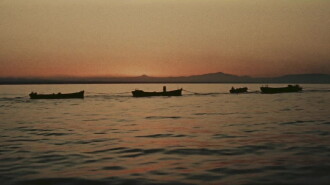
Sicily, Granitola, 1955. At the first light of dawn, the fishermen set out in their boats for open water, timing the rhythm of their oars to murmured chants.
01 April 1993
Vittorio De Seta's documentary about the Calabria, revisiting the territory he documented in I Dimenticati in 1959.
28 October 1955
A short anthropological documentary from 1954. Director De Seta was fortunate enough to document swordfish fishing; by 1956 it no longer existed.
21 December 1955
Filming amid the flaxen wheat fields of Sicily, Vittorio De Seta documents the everyday rituals of farmers during harvest time.
01 August 1955
Harshness and beauty exist side by side in this look at the lives of sulfur mine workers and their families in southern Italy.
24 August 2010
This portrait of a film director unlike any other attempts to capture the essence of Vittorio de Seta’s rapport with the humble people he filmed and elegantly brought to Cinema Scope’s big screen in color from the 1950s onwards.
01 January 1960
The subsea well constructed in Gela in 1959 by Eni was the first of its kind in Europe. The facility consisted of two interdependent complexes: a steel platform on the sea floor and a support ship.