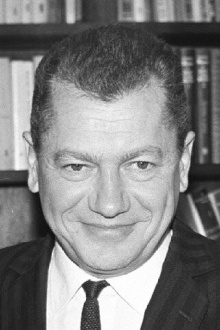
Wojciech Jerzy Has Trailers
Description Found Years Later TrailerŚlady TrailerSaragossa Trailer
Wojciech Jerzy Has was a Polish film director, screenwriter and film producer. Wojciech Jerzy Has was born in Kraków, with Jewish origin on his father's side, and Roman Catholic on his mother's. During the wartime German occupation of Poland, Has studied at the Kraków Business and Commerce College and later clandestine underground classes at the Kraków Academy of Fine Arts - until it was disbanded in 1943. When the war ended, he went on to study at the reconstituted Academy of Fine Arts in Kraków. In 1946, Has completed a one-year course in film and began producing educational and documentary films at the Warsaw Documentary Film Studio, and in the 1950s moved on to work at Poland's premier filmmaking academy, the National Film Studio, in Łódź.
Has made his debut with Harmony (Harmonia, 1948), a medium-length feature, and began making full-length feature films in 1957. In 1974, he was appointed as professor in the directing department at the National Film School in Łódź. Throughout his long and prolific career, he directed such notable films as The Saragossa Manuscript, The Doll and The Hour-Glass Sanatorium (also known as The Sandglass).
Early on in his career, Has gained a reputation as an individualist who avoided political overtones in his art. He produced his most important films throughout the period when the Polish Film School was at its most prominent; however, his work possessed its own stylistic feeling that was independent of the over policial themes that dominated the prevailing Polish School. In practically every film, Has sought to create hermetic environments, in which the problems and storylines of his protagonists were always of secondary importance to the particular world he had created, characterized by an accumulation of random objects that formed unique visual universe.
Has's oeuvre is commonly associated with Surrealist painting in Polish criticism. This is reinforced by the director's dream poetic and his use of objects, which are also characteristic of many canvasses by the Surrealists. Has also created a number of intimate psychological dramas during his career, such as How to Be Loved and Farewells, focusing on damaged individuals who have difficulty settling into life. In his work, he was fascinated by outsiders and people incapable of finding their place in reality.
Two currents remain evident in Has's output: one was his cinema of psychological analysis, the other his films of visionary form, in which he most often used the motif of a journey.

Most Popular Wojciech Jerzy Has Trailers
Total trailers found: 34
27 February 1966
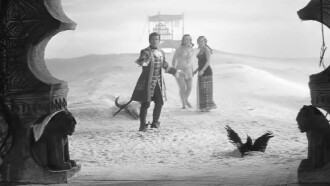
During the Napoleonic wars, a Spanish officer and an opposing officer find a book written by the former's grandfather.
13 October 1958
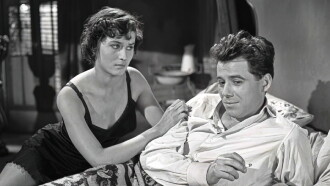
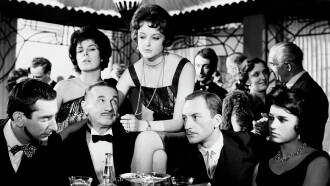
The story takes place before World War II and centers on Pawel, a member of a conservative, middle-class family, and his love for Lidka, a taxi dancer.
11 December 1973
Jozef visits a dilapidated Sanatorium to see his father. Jozef undertakes a strange journey through the many rooms of the sanatorium, each which conjures worlds composed of his memories, dreams and nightmares.
12 December 1983
Three vignettes showing a marriage crisis and a subsequent divorce.
09 December 1957
Follows the lives of people shortly after World War 2 as they try to adjust to their new lives. Completed in 1946, it was banned from release by the communist government of Poland until 1957 in edited form.
26 December 1988
Story about the young Balthazar thrown from one remarkable event to the other. On his way through a plague hit the landscape, he meets the Kabbalists, priests - and himself.
12 September 1983
A well-known professor of medicine finding himself at the threshold of autumn of his life, takes stock of his achievements and experiences.
20 January 1958
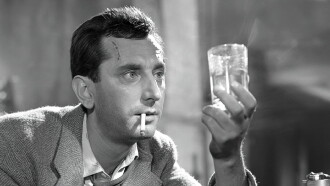
A day in the life of an alcoholic. With the help of his girlfriend Krysia, Kuba attempts to regain control of his life.
07 November 1968
Set in the 19th century Warsaw. The indolence of aristocrats who, secure with their pensions, are too lazy to undertake new business risks, frustrates Wokulski.
01 January 1947
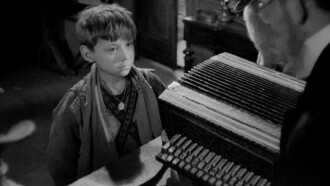
The son of a poor shoemaker dreams of the titular accordion. He is ready to give up his shoes, jacket, and savings in order to get the instrument displayed in an antique shop.
02 March 1994
Karol sits for hours in a wardrobe in a rented room on the attic, looking back on his whole life. He was brought up by a single mother who loved his only child with a sick desperate feeling and limited all his world to her own person.
11 January 1963
An actress travels from Warsaw to Paris and during the trip reflects on the last few years of her life.
26 October 1962
The inability of a truck driver to relate to normal life after an accident for which he feels himself responsible.
28 May 2023
A multi-dimensional portrait of one of the most distinctive artists in the history of Polish cinematography.
01 January 1947
Battered Warsaw is getting back to life after the WW2 destruction. The ruins of the Old Town become homes once again.
23 September 1985
A young journalist is arrested for freethinking ideas and placed in a cell with a famous safe-breaker and a former cleric, who murdered his mistress' husband.
31 December 1950
Documentary about the life of farmers in Poland.
20 October 1986
A recently resurrected corpse recounts his life story, focusing on his strange relationship with a murderous alter-ego.
25 December 1966
An elderly man returns to Poland to find his long-lost son, missing since World War II. In his quest the man is forced to contemplate the elusive and coded nature of truth itself.
08 February 1960
A subjective adaptation of a well-known autobiographical novel by Zbigniew Unilowski (screenplay by Wojciech Jerzy Has with dialogues by Stanislaw Dygat).
16 September 1992
Medical student Sara has visions; she notices telekinesis abilities in herself. She is afraid to admit to anyone that after each loss of consciousness she finds traces of the murders and mutilations she has committed.
01 January 1952
Report on the Meeting of Young Builders of People's Poland, which took place in July 1952 in Warsaw.
23 March 1961
An actress visits her hometown to attend the funeral of her grandfather. She realizes that the places and people from her past differ from her cherished memories.
01 January 1997
The documentary talks about the origins, development and achievements of the Polish film school. People from the environment of the "Filmówka" in Łódź, among others.
01 October 2001
Thirty-year-old nurse Teresa spends her days caring for elderly, dying people. Janusz, a young man she met at an amusement park, enters the life of this bitter and disillusioned woman.
01 January 1952
Students at a school in Podkarpacie spend the entire spring and summer collecting herbs, and in the fall they enjoy the projector they earned themselves.
01 February 1953
A kind of early documentary tour of a museum of musical instruments.
01 January 1955
A film about the Song and Dance Ensemble at the J. Strzelczyk Mechanical Works in Łódź.
06 June 1998
Making-of documentary made for Polish television on The Saragossa Manuscript
01 January 1952
A miniature parable about a young boy who misunderstands the function of a bird feeder.
01 January 1949
Short documentary on Poland's first steam locomotive.
01 June 1951
This short documentary fascinatingly depicts a seldom-captured but economically fundamental process: the production and distribution of sugar.
31 December 1950
Documentary about the hometown of Wojciech Has.