Zbigniew Rybczyński Trailers
Kill It and Leave This Town TrailerZbig [Zbigniew Rybczyński] TrailerEin Film für Bossak und Leacock Trailer
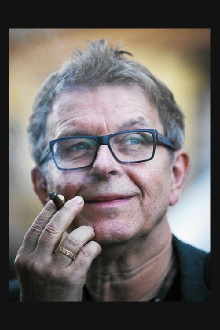
Zbigniew Rybczyński (Polish: [ˈzbiɡɲɛf rɨpˈt͡ʂɨj̃skʲi]; born 27 January 1949) is a Polish filmmaker, director, cinematographer, screenwriter, creator of experimental animated films, and multimedia artist who has won numerous prestigious industry awards both in the United States and internationally including the 1983 Academy Award for Best Animated Short Film for Tango.
He has taught cinematography and digital cinematography, and has worked as a researcher of blue and greenscreen compositing technology at Ultimatte Corporation. He is renowned for his innovative audiovisual techniques and for his pioneering experimentation in the field of new image technology.
In March 2009, Rybczyński returned to Poland. He took up residence in Wrocław, where he set up the Center for Audiovisual Technologies (CeTA) at the site of the city's historic Feature Film Studio. The center, which officially opened in January 2013, includes a state-of-the-art studio designed by Rybczyński for the production of multi-layer film images, and an institute for research into images and visual technologies.
After Rybczyński discovered and publicized corruption in CeTA, he was fired and subsequently declared the renunciation of his Polish citizenship.

Most Popular Zbigniew Rybczyński Trailers
Total trailers found: 39
01 January 1983
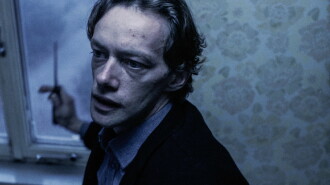
A killer is released from prison and breaks into a remote home to kill a woman, her handicapped son and her pretty daughter.
11 April 2014
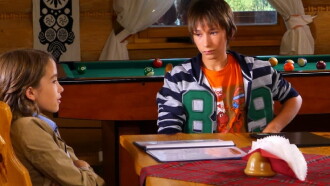
Embarking on a journey across southern Poland to find his long-lost father, twelve-year-old Tomek receives help from a mysterious youth named Gabriel.
02 February 1992
Against a set which has been designed in a Kafkaesque and claustrophobic way, Rybczynski has recreated a World of Kafka which corresponds well with Kafka's maze-like novels.
01 July 1988
Shows a couple (Adam and Eve) and various objects, simultaneously, in time, space and movement.
07 May 1987
A camera tracks through endless rooms while lives unfold.
30 June 1979
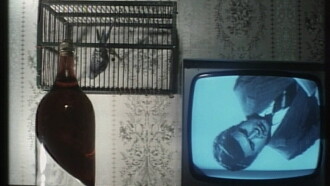
Zbigniew Rybczynski's experimental short film of a bottle of wine, a parrot in a cage, and a television with news.
31 July 1976
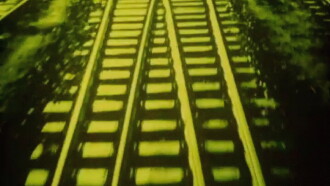
Based on Lokomotywa, a poem by Julian Tuwim. Made with the use of classical cartoon animation and combined photographs.
01 January 1968
Cheerful Ludwika sets off on an adventurous journey.
04 December 1985
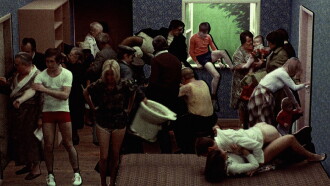
A static camera observes a room as it slowly fills with thirty-six characters from different stages of life, looping further through an absurd dance of social disconnection as each character moves in.
01 January 1980
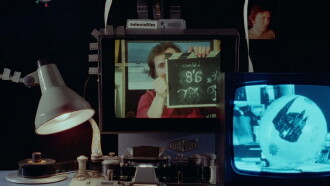
A film editor's setup. A man plays with a balloon.
20 January 1978
A peasant’s son rises through the ranks of post-war Polish society like none of his ancestors ever could.
27 November 2020
Fleeing from despair after losing those dearest to him, the hero hides in a safe land of memories, where time stands still and all those dear to him are alive.
30 June 1975
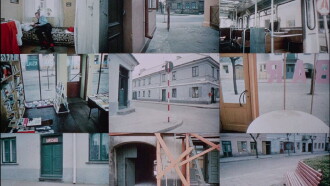
Nine cameras set up in a local neighborhood are displayed simultaneously as a man buys a new book.
30 June 1975
Film unfolds in five sequences, each depicting a facet of Barbórka celebrations—from the miners’ orchestra wake-up call and the medal-awarding academy through evening feasting and dancing.
01 June 1975
A couple's relationship develops in a combination of photomontage and animation.
28 April 1984
Another commission by Lorne Michaels for NBC's The New Show, this short film follows the attempts of a thirsty rotating cosmonaut to imbibe his wine.
01 January 1976
A story of a monster which, moving at an enormous speed, devours whatever comes across on its way: people, animals, cars, buildings.
02 January 1987
A tourist group is shown the latest in Soviet virtual reality technology through the Potemkin.
30 June 1976
A weary traveller falls asleep next to a sign reading Weg zum Nachbarn. As soon as he dozes off the world turns on its head.
30 March 1984
A portrait of the two documentary filmmakers Jerzy Bossak and Richard Leacock.
02 September 1972
Short film by acclaimed polish director Zbigniew Rybczynski. Included in The Workshop of the Film Fom
28 April 1984
A riff on Bunuel's classic, Lorne Michaels commissioned this Zbigniew Rybczynski work for NBC's The New Show, as a satiric look at the January 27th, 1984 White House reception for the Soviet Ambassador.
07 January 1994
A whirlwind tour of first-class animated shorts, The World's Greatest Animation assembles, for the first time, an eye-popping assortment of Academy Award winners and nominees from the years 1978-90.
28 April 1972
Early experimental film from Zbigniew Rybczynski that broke new ground in the use of pixelation, optical printing, animation and other compositional film devices.
30 June 1972
Zbigniew Rybczynski's series of pictures to the music of Kazimierz Serocki.
20 March 2021
Trapped revolves around a number of women from different walks of life whose destinies are tied together; being all under one siege.
16 June 1975
The life of a female weaver is thrown onto the socio-political canvas of pre-war and post-war communist Poland through the use of expressive allegorical and symbolic imagery in this imaginative take on the documentary form.
30 June 1973
Plamuz animates a cool jazz ensemble's jam session, splitting the screen into pulsing shards of color that dance to different instruments from one moment to the next.
01 January 1980
A 'creative documentary' about an Austrian skier who was known during the 70s. Examined from a biographical / visual standpoint.
21 June 1990
Zbigniew Rybczinski's video experiments set to classical music pieces.
01 January 1976
A film that uses animation as a tool to spastify the various stages of cinema development. It is a play with form and juggling of genres, with Zbigniew Rybczynski collaborating.
01 October 1975
An interesting psychological story about one day in the life of a girl. The heroine of the film can not find a common language with her parents, who do not have time to take closer care of the child and understand the difference of an unusually sensitive girl.
01 January 1989
An experimental video starring a man and a woman who perform a Paganini composition through a series of repeated edited images where they use of objects, noises and small vocalizations in order to emulate music, creating a series of unusual and amusing sequences.
01 January 1991
A visual reflection on Washington, D.C.
01 January 1981
A ‘paradocumental’ by Dziworski & Rybczynski.
01 January 1990
A cinematic impression presenting the director's vision of this New York borough. We see people jogging, exercising, and dancing in the streets.
01 January 1977
From Friday to Saturday is not far away, if only one turns ... signpost.
01 January 2001
A documentary on Zbigniew Rybczynski, spanning his entire career, from Kwadrat to his most recent Hi-Def works.