A reel of the Noh drama Momiji-gari, in which Danjuro Ichikawa played opposite Onoe Kikugoro V as an ogress who has disguised herself as the Princess Sarashina. Filmed by Shibata Tsunekichi in the open air on a windy day in November 1899, Danjuro would allow only the one take, so that when his fan blew away in mid-performance the scene had to stay. The film re-emerged at the Kikikan theatre in 1907 where it was a great success and inspired a wave of fiction filmmaking based on traditional Japanese narratives.
Watch the official Maple Leaf Viewing 1899 trailer in HD below.
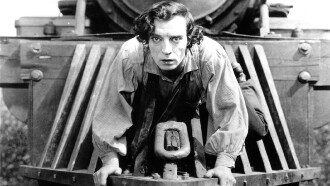
During America’s Civil War, Union spies steal engineer Johnny Gray's beloved locomotive, 'The General'—with Johnnie's lady love aboard an attached boxcar—and he single-handedly must do all in his power to both get The General back and to rescue Annabelle.
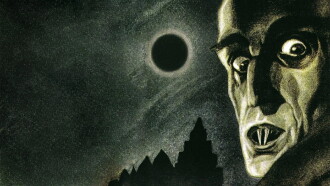
The mysterious Count Orlok summons a happily married real estate agent to his castle, located up in the Transylvanian mountains, to finalise a terrifying deal.
A film projectionist longs to be a detective, and puts his meager skills to work when he is framed by a rival for stealing his girlfriend's father's pocketwatch.
After the train station clerk is assaulted and left bound and gagged, then the departing train and its passengers robbed, a posse goes in hot pursuit of the fleeing bandits.
From Paris to Venice to Broadway to Hollywood, the lives of Cole Porter and his wife, Linda Lee Thomas were never less than glamorous and wildly unconventional.
The hilarious story of a restless young farm-thumb, Loke Groundrunner, and his tasty companion, Princess Bunhead, who go on an quest to combat Black Helmet Man and the Evil Thumbpire.
Nunu and Iago are in love with each other. The married guard Girgola wants to get hold of the woman. Girgola gets Iago arrested and makes Nunu marry his retarded brother.
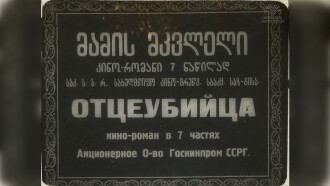
The first movie ever censored for political reasons. The title refers to the then contemporaneous Dreyfus affair in which a Jewish military officer was falsely convicted of treason, and it was alleged that he was framed due to anti-semitism.
"Down goes the Spanish flag, and up floats the Stars and Stripes. Down falls the symbol of tyranny and oppression that has ruled in the new world for four hundred years, and up goes the Banner of Freedom.
Shows the efficiency of modern life-saving methods and apparatus now in use by the fire departments. Shows the front of a building burning and two ladders raised against it.
Shot at the Kubut-za in Tokyo and a rare record of two classical kubuki actors, Onoe Eizaburo V and Ichimura Kakuki-za VI, A surviving poster for this film is illustrated by a woodblock print of the lead actors by ukiyo-e artist Yutaka Hitoshi, a frozen moment of the incipient transition from traditional art-forms of ukiyo-e and kabuki to the new, and all-dominating medium of katsudo-shashin (cinema).