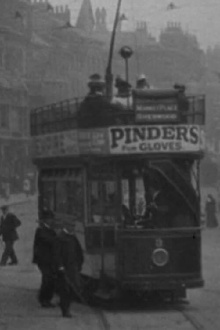
This fascinating record of Edwardian Nottingham was filmed from the driver's platform of a tram on a single journey through the city centre between its two main stations. The sequence follows the same route as today's Nottingham Express Transit tramway, taking the viewer along Listergate and Wheelergate into Old Market Square before turning right into Long Row and on into Queen Street.
Watch the official Tram Rides through Nottingham 1902 trailer in HD below.
Denys Colomb de Daunant (1922 - 2006) is a writer, poet, photographer and filmmaker known for being the author and co-writer of the film Crin-Blanc (1952) directed by Albert Lamorisse.
In the background is a row of three-masted sailing ships, at anchor, their sales furled. In the foreground, a simple pier that's more like a yardarm juts out above the water; about 15 boys of six or seven years of age are on the jutting wood, and they jump off into the water below.
The film shows a parade down Fifth Avenue, New York. In the foreground many children, both black and white, can be seen following alongside the parade.
They set off, looking for work in far-off places, but disappeared along the way. Inspired by Shiv Kumar Batalvi’s “birha” poetry, the film traces the longing on both sides: on the part of those who are missing, and those that wait for them to return.
Apparently filmed from just behind the driver, this evocative tour takes in the London Road, the Moor, Pond's Forge, Haymarket and Fargate: a three-mile journey.