It is a dramatic film, with its colossal explosion and smouldering remains. Within seconds of the chimney's collapse, crowds swarm in to inspect the site; issues of the crowd's health and safety are clearly not a concern, as people smile, wave and salute the camera.
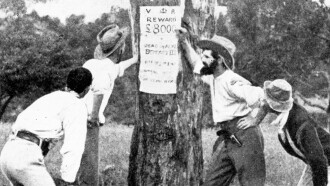
Just as Galeen and Wegener's Der Golem (1915) can be seen as a testament to early German film artistry, The Story of the Kelly Gang (1906) symbolizes both the birth of the Australian film industry and the emergence of an Australian cinema identity.
Depicts the exit of the President of the Republic Tomás Estrada Palma from the Presidential Palace, after giving the government to the Secretary of War of the United States, William H.
Despite the lurid title, no one gets shot in this long actuality from Lubin. Instead, it's another panorama, as indicated in the movie's alternative title, of the devastation wrought on San Francisco by the Earthquake and subsequent fire.
A train traveling through the Rockies is held up and boarded by two thugs. They rob the wealthy occupants at gunpoint and then make their getaway by handcar.
A pulp writer dozes off at his desk and dreams himself into a melodrama of love and rivalry. What begins as a familiar tale soon veers into absurdity—complete with outrageous twists, overblown villains, and even a gunshot to the head.